
Senior appetite loss rarely arrives all at once. More often it shows up as a few skipped lunches, a smaller dinner, a slow drift away from the foods that once brought pleasure. If you have started setting a plate in front of someone you love and watching most of it go cold, you already know how tender this moment is. It is worth paying attention to, and it is also something a family can meet with patience, warmth, and a handful of gentle changes at the table.
First, a word of reassurance and a word of caution. Appetite naturally changes as we age, and a lighter appetite is not always a crisis. But because a fading appetite can also have medical causes, it is worth asking a doctor to take a look, especially if it comes with weight loss, fatigue, low mood, or trouble swallowing. What follows is not medical advice. It is the practical, non-medical side of mealtimes, the everyday things a caring family or caregiver can do to make eating feel easy and inviting again.
Why senior appetite loss happens
There is rarely a single reason. More often it is a quiet stack of small ones, and naming them helps you respond with the right kind of care instead of worry.
- Taste and smell soften over time, so foods that once tasted vivid can seem flat
- Eating alone, day after day, drains the joy out of a meal
- Sore teeth or an ill fitting denture make chewing tiring
- Some people simply feel full faster, or stay full for longer
- Low energy makes shopping and cooking feel like too much
- Grief, a move, or a change in routine can quietly take away hunger
A few of these have roots only a professional can sort out. New medications can change how food tastes, dental pain has a dentist's answer, and a low mood deserves a caring conversation with a doctor. Ruling those out is the medical side. Everything below is the warm, everyday side you can start on today.
Gentle habits that make mealtimes easier
You do not need a new diet or a long list of rules. You need a few gentle habits, repeated with love. These are the everyday changes that tend to make the table feel easier.
Serve smaller plates, more often
A large, full plate can feel like a task rather than a treat. A small plate reads as easy and finishable. Offer five or six little moments to eat across the day, a few bites at a time, rather than three meals that feel like mountains.
Lead with favorites
This is not the season for eating by the rulebook. If your mother has always loved buttered toast, soft scrambled eggs, or a bowl of her own soup, start there. Familiar, beloved foods invite the first bite, and the first bite is usually the hardest.
Make the plate look inviting
We eat with our eyes first. A little color, a warm plate instead of a cold one, food cut into easy pieces, a cloth napkin. Presentation quietly says you are worth the trouble, and that message matters as much as the food itself.
Keep a gentle rhythm to the day
Appetite loves routine. Meals and snacks at roughly the same times, in the same welcoming spot, help the body remember when to feel hungry. A predictable rhythm asks less of everyone.
Pull up a chair
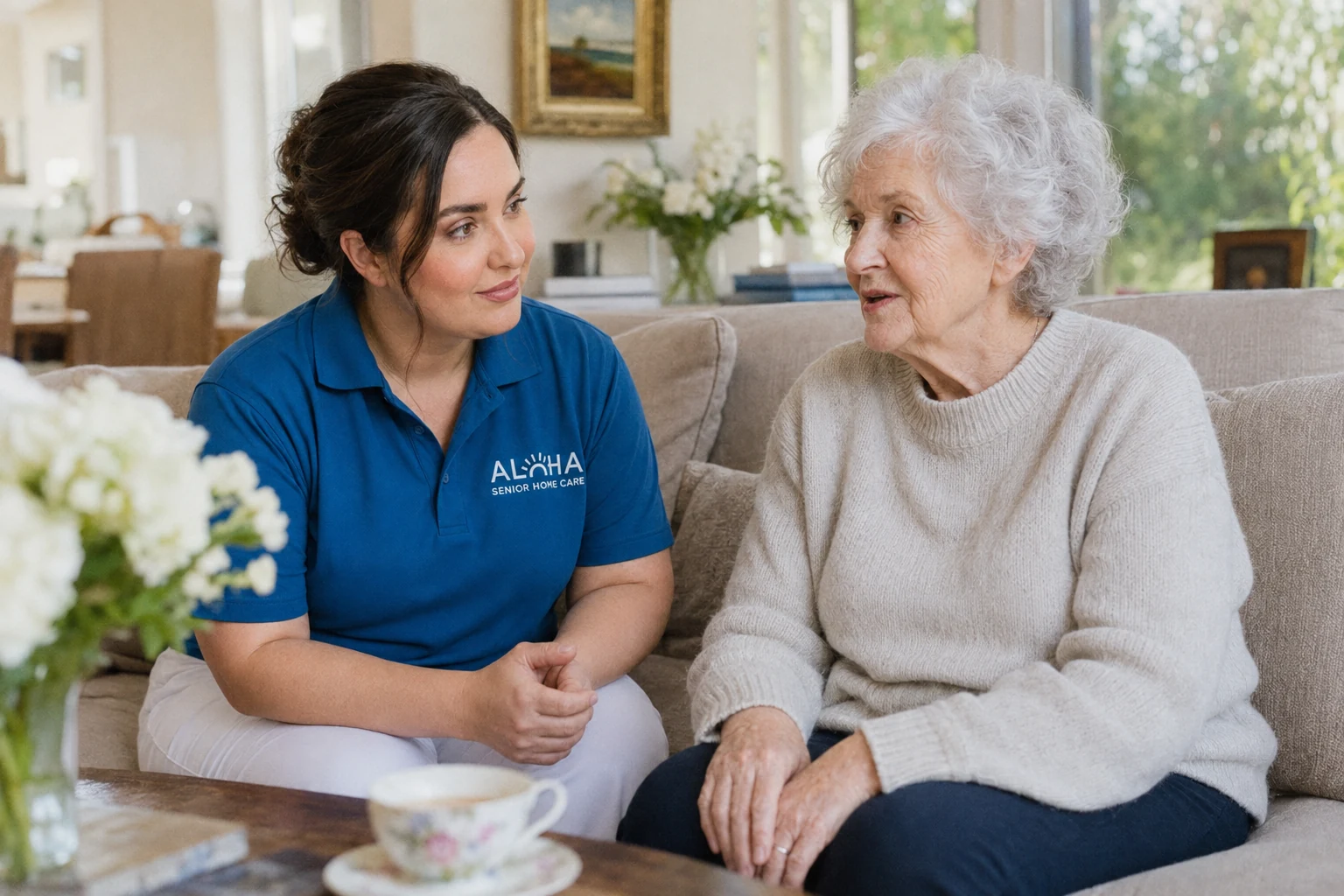
Company is the quiet ingredient. Eating alone can drain the pleasure from a meal, and a plate set for one is often the first to go cold. Sitting down together, even for a few minutes of conversation, often does more than any recipe. A shared table turns feeding into fellowship.
When cooking feels like too much, keep a few easy, nourishing options within reach:
- Soft, warm foods like oatmeal, soups, and stews that are gentle to chew
- Smoothies or milk based drinks that deliver a lot in a few sips
- Ready to grab finger foods: cheese, soft fruit, crackers, half a sandwich
- Full flavored home cooking, since bland food is the easiest to refuse
- Plenty of fluids through the day, offered in a favorite cup
Try a grazing plate
Set out a small tray of easy, bite sized favorites where your loved one relaxes: cheese, fruit, a few crackers, a handful of nuts. A plate within arm's reach, refreshed through the day, often gets nibbled far more than a formal meal ever would.
Some days the win is not a clean plate. It is one good bite, shared at an unhurried table with someone who is glad to be there.
How a caregiver can help at the table
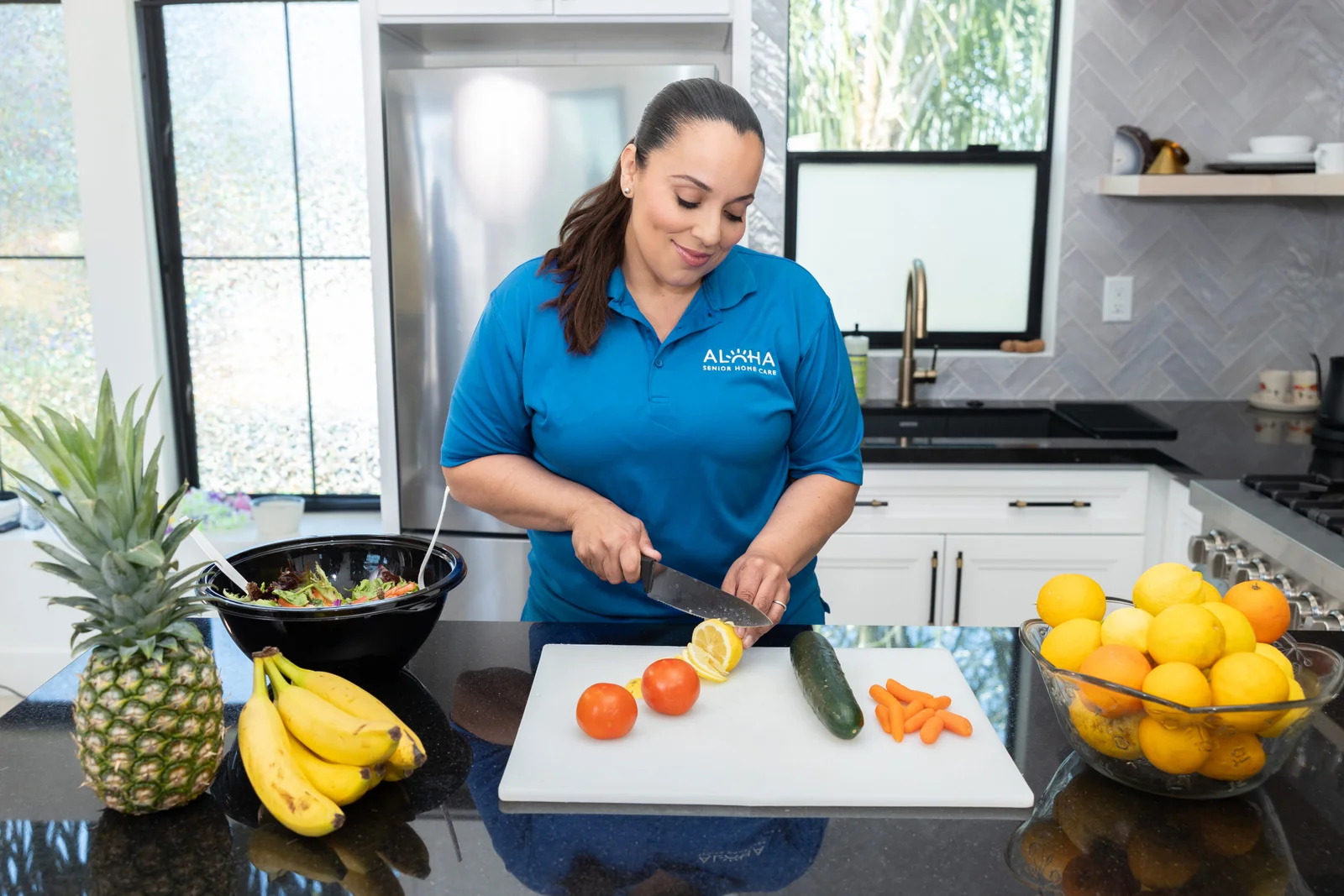
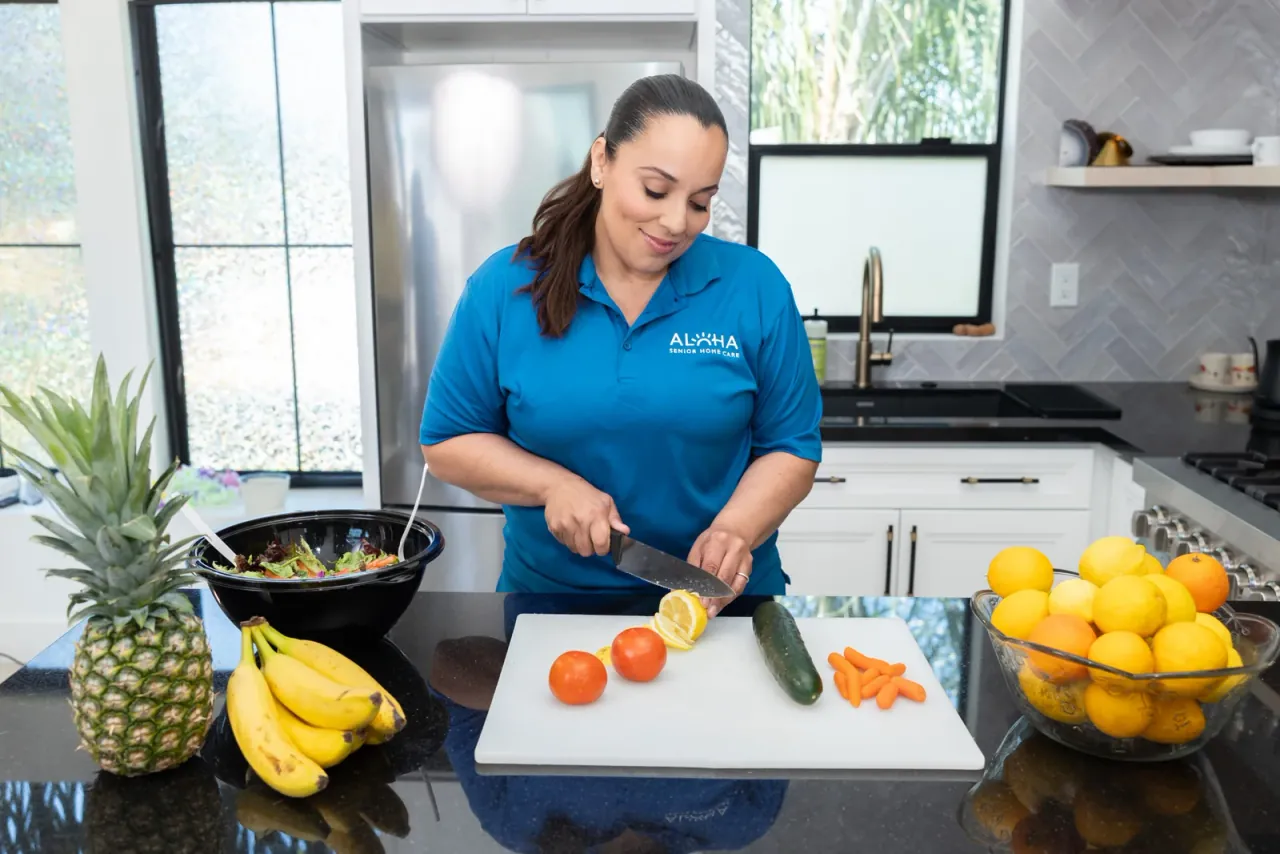
When shopping, cooking, and sitting down to eat all feel like too much, a little steady help can change the whole day. At Aloha Senior Home Care, our non-medical support around meals is simple and human: a caregiver who shops for the foods your loved one actually likes, cooks warm and familiar home meals, and, just as importantly, stays to share the table so no one eats alone.
Because we are nurse led and our caregivers are background checked, this is steady help you can lean on. Support can be there in the morning for breakfast, at midday, or in the evening, and help is available 24/7 when you need it. We keep to your loved one's rhythms and their tastes, not a script.
One honest boundary: this is everyday home cooking and good company, not clinical nutrition. If your loved one has a specific dietary need or a condition that affects eating, we gladly follow a plan set by their doctor or dietitian. We support that plan rather than replace it.
When it is time to talk to a doctor
Gentle changes at the table help with the ordinary drift of a lighter appetite. But some signs deserve a professional's eyes. Reach out to your loved one's doctor if you notice:
- Noticeable weight loss, or clothes that suddenly hang loose
- Trouble swallowing, coughing, or pain while eating
- New or worsening fatigue, confusion, or low mood
- A sudden drop in appetite that lasts more than a few days
- Mouth or tooth pain that makes chewing hard
None of this is meant to alarm you. It is simply the map of when warmth at the table needs a partner in the exam room. Trust what you see day to day, no one knows your person better than you.
Explore related support from Aloha Senior Home Care
Let's talk about mealtimes
If mealtimes have become a worry, we are glad to listen. Call Aloha Senior Home Care at (858) 399-1400 or reach out through our contact page for a free, no pressure conversation about gentle, non-medical support at home across San Diego County. No script, no obligation, just a caring next step.