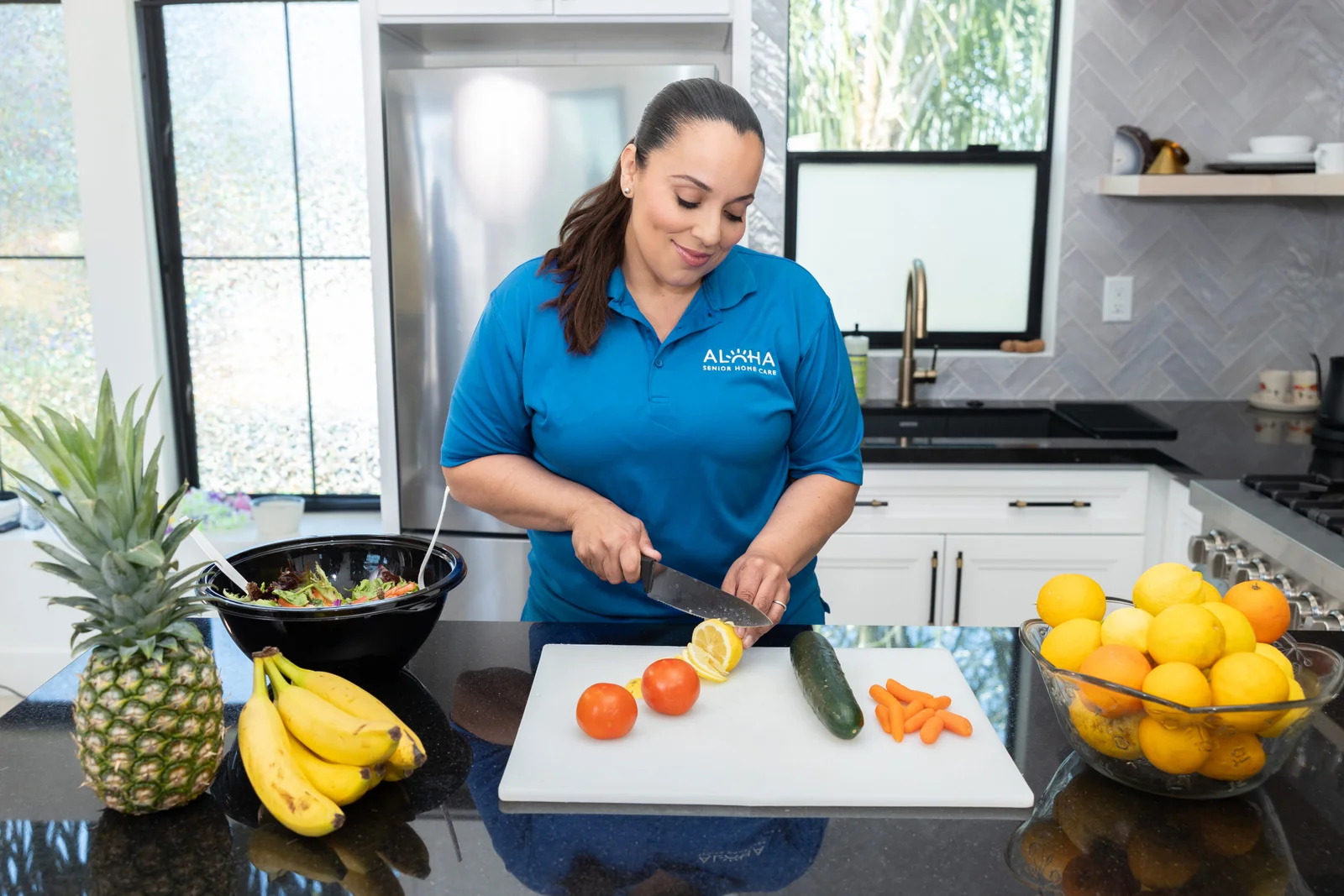
Some of the most comforting moments in a day happen at the table. Warm food, a familiar smell drifting from the kitchen, a little conversation over a plate that looks inviting. Making meals seniors enjoy is not about fancy recipes or strict rules. It is about simple, nourishing food that tastes good, feels familiar, and is easy to eat. When appetite fades or cooking starts to feel like too much, a few small and thoughtful touches in the kitchen can bring the pleasure of eating back.
Why appetite quietly changes with age
Appetite naturally shifts over the years, and it usually happens so gradually that no one notices at first. Taste and smell can dull, so food that once tasted vivid may seem flat. Energy runs lower, so standing at the stove feels like a chore. Eating alone, day after day, quietly takes the joy out of it for many people. Sore gums, dentures, or trouble chewing can make certain textures hard to manage. Much of this is a normal part of aging, and it often just means meals need to be gentler, easier, and a little more inviting. Even so, a sudden or lasting change in appetite or weight is worth mentioning to their doctor, and if chewing or swallowing has become a real difficulty, their doctor or a speech therapist is the right person to guide it.
Simple ideas for meals seniors enjoy
A good place to start is with foods your loved one already loves. Familiar dishes carry comfort and memory, and they are far more tempting than anything new or unusual. These are general, comfort focused ideas rather than dietary or medical advice, so let a doctor or dietitian guide any specific dietary needs. From there, keep it simple and nourishing rather than complicated.
- Soft, easy to chew options like scrambled eggs, oatmeal, soups, stews, and slow cooked vegetables
- Some protein at every meal in gentle forms such as yogurt, beans, fish, eggs, or shredded chicken
- Colorful fruits and vegetables that are cooked or cut small so they are easy to eat
- Smaller plates offered more often, since several light meals can feel less daunting than three large ones
- Familiar cultural or family recipes that simply taste like home
Make drinks and snacks easy too
Older adults do not always feel thirst the way they once did, so keep drinks within easy reach throughout the day. Water, milk, and diluted juice all count, and so do foods with a high water content like melon, cucumber, and broth based soups. A small bowl of cut fruit or a plate of crackers and cheese left on the counter invites gentle nibbling between meals, which adds up over a day.
Cook once, eat twice
On a good energy day, make a slightly larger batch of soup, stew, or a casserole and portion the extra into single servings for the freezer. On a tired day, a warm home cooked meal is then only a few minutes away, with no real cooking required.
Food is love, and the table is where a great deal of caring quietly happens. A warm plate and a little company can turn eating from a task back into a pleasure.
Small touches that make food more appetizing
How a meal looks and feels matters nearly as much as what is on the plate. A few small touches can make all the difference between a plate that is picked at and one that is enjoyed.
- Plate food with a little color and open space rather than piling it high, which can feel overwhelming
- Use contrast, like lighter food on a darker plate, so the meal is easy to see
- Warm the plate and serve food at a comfortable temperature
- Add gentle flavor with fresh herbs, a squeeze of lemon, or a touch of butter instead of heavy salt
- Sit down together so the meal is shared, calm, and unhurried
Keep mealtimes calm and unhurried
The setting shapes a meal as much as the food does. A quiet, well lit table with the television off helps your loved one focus on eating and on the person across from them. There is no need to rush. Older adults often eat more slowly, and a relaxed pace lets them enjoy each bite and feel satisfied in their own time. A predictable routine, with meals at roughly the same times each day, gives the day a gentle and reassuring rhythm.
How a caregiver in the kitchen helps
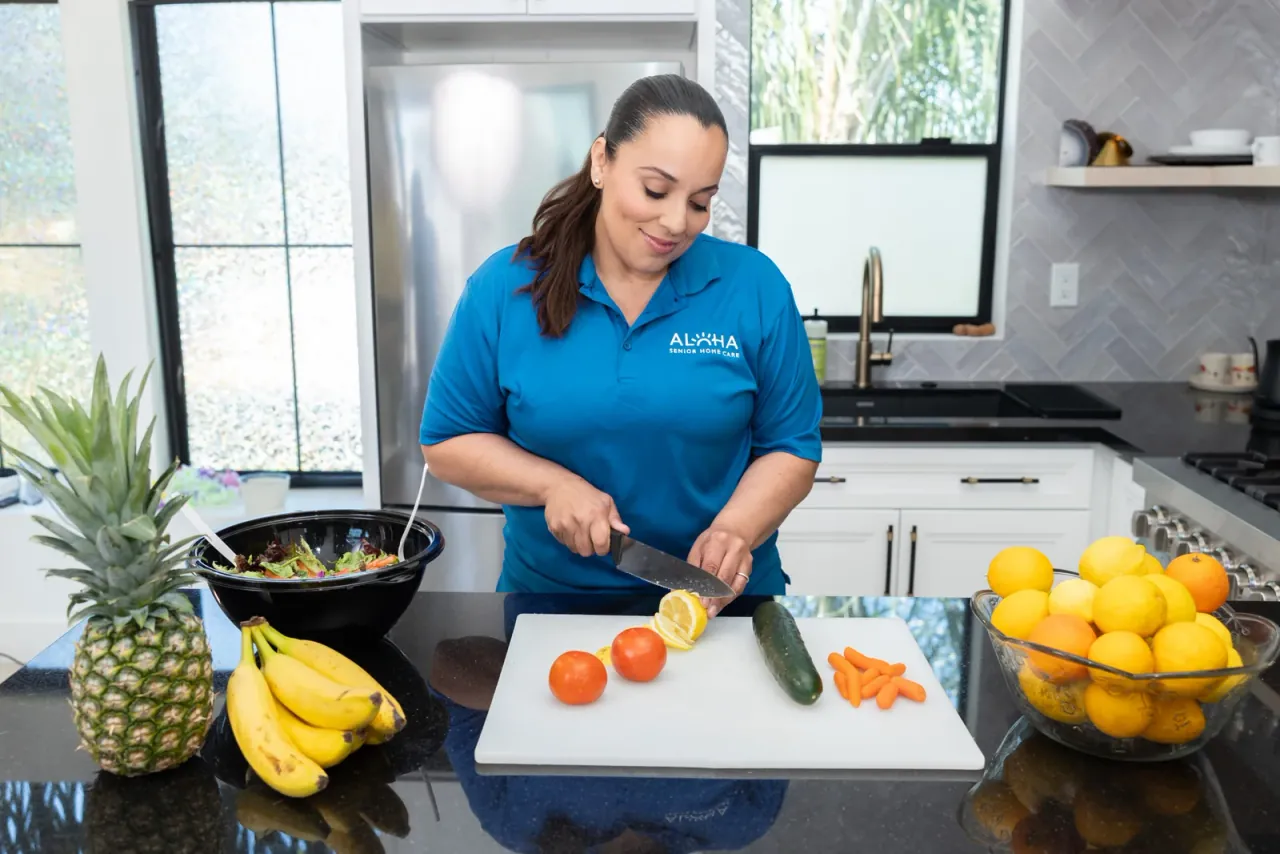
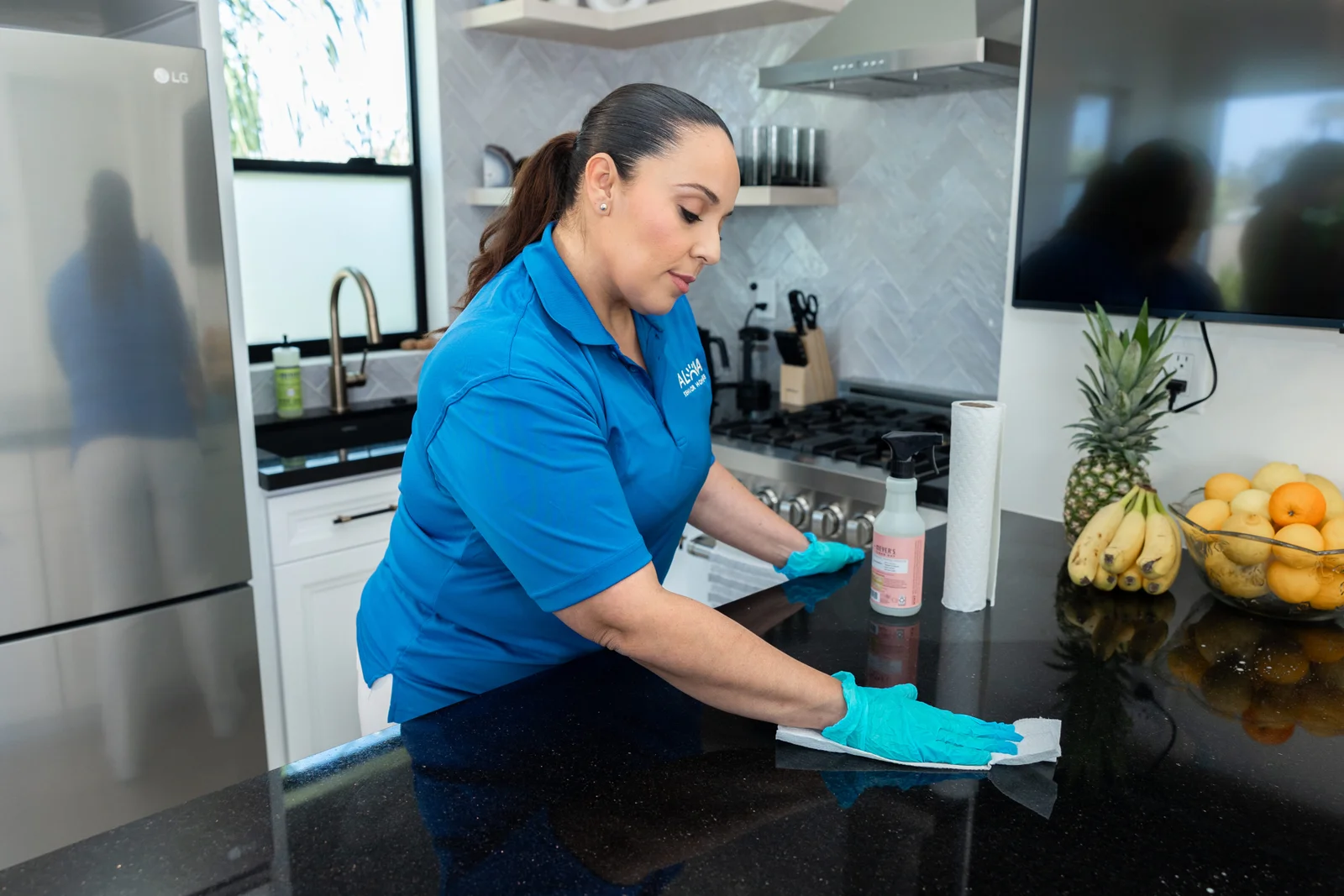
When shopping and cooking begin to feel like too much, a caregiver can quietly take on the whole rhythm of mealtime. At Aloha Senior Home Care, our nurse led, licensed California Home Care Organization provides non-medical support with the day to day work of eating well at home.
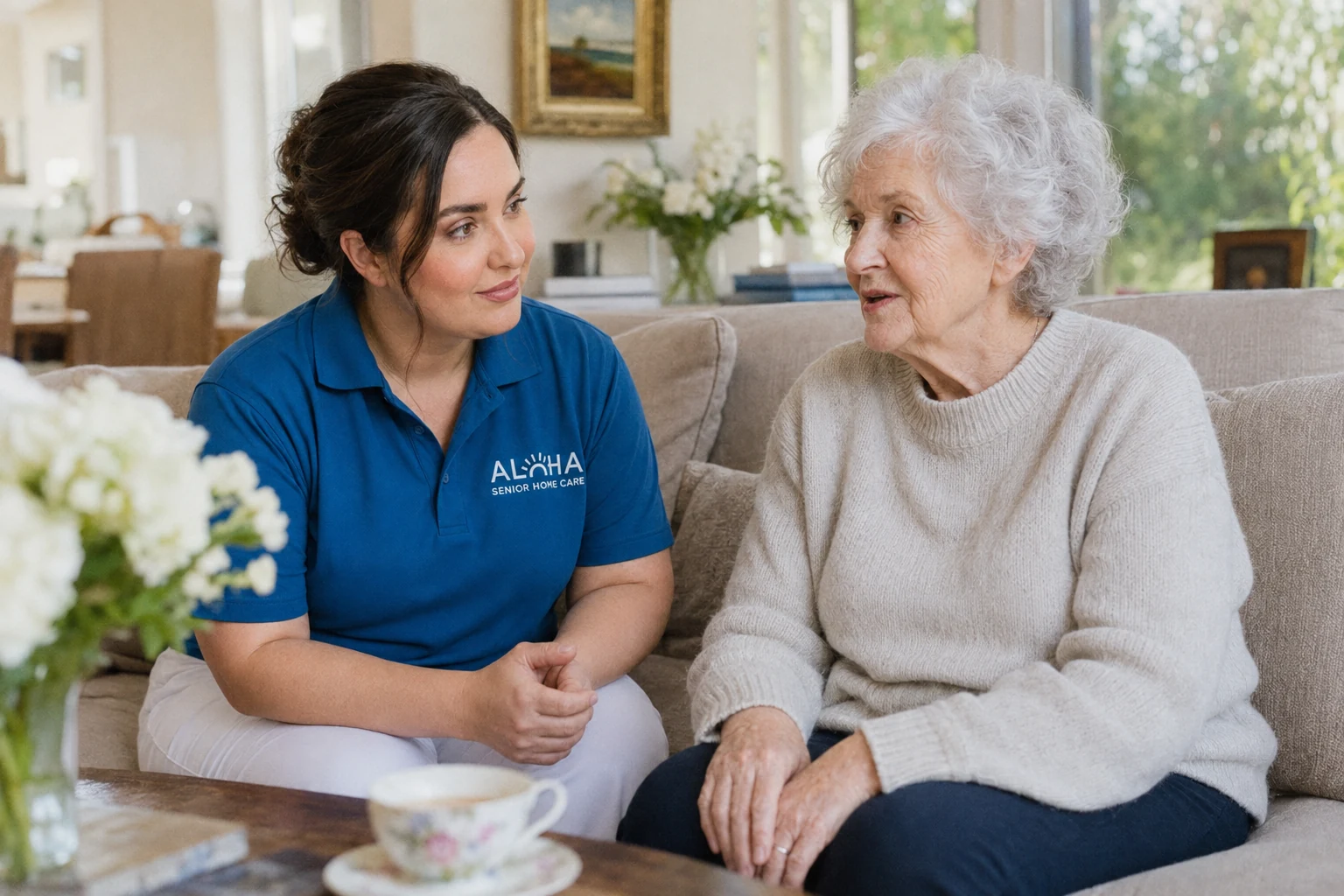
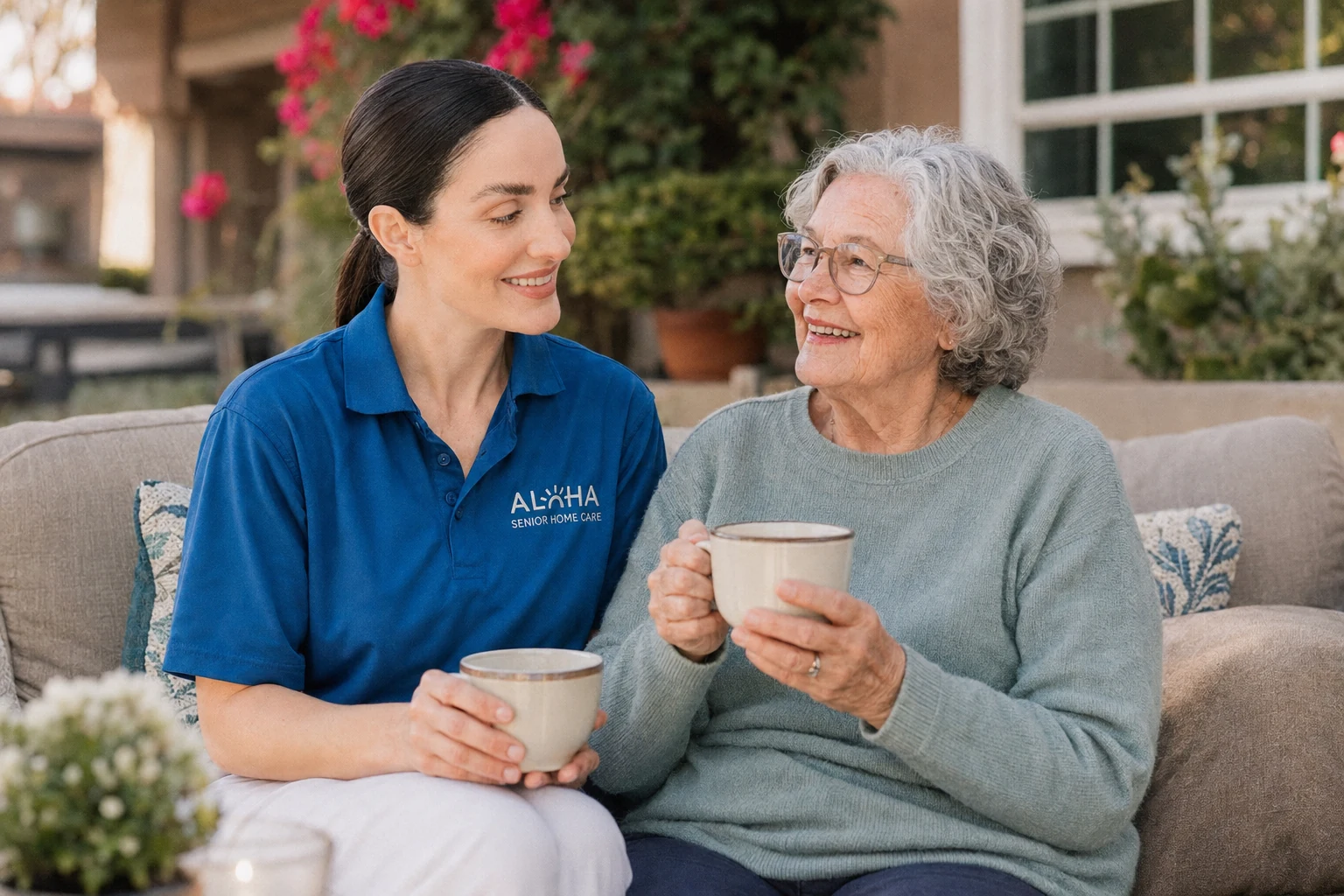
In practice, that can mean planning the week around foods your loved one actually likes, doing the grocery shopping, and cooking nourishing home meals in their own kitchen. Just as important, it means company at the table so that no one has to eat alone. Our caregivers are background checked, and support is available 24/7 across San Diego County.
This is general home cooking, not clinical nutrition or a medically ordered diet. If your loved one has specific dietary or medical needs, those belong with their doctor or a registered dietitian, and we are glad to prepare meals that follow a plan their care team has already set.
Explore how Aloha Senior Home Care can help at home
Let us talk about mealtimes
If mealtimes have become a worry, we are happy to listen. Call (858) 399-1400 or email hello@alohaseniorhomecare.com for a free, no pressure conversation about how a little help in the kitchen could fit into your family's day.