
The kitchen is often the heart of a parent's home. It is where meals get made, where coffee starts the morning, and where a lot of family memory quietly lives. It is also the room where kitchen safety starts to matter more as the years add up. A burner left on. A jar lid that will not budge. A step stool reached for when no one is watching. None of that means your mom or dad has to leave the home they love. More often it simply means the room needs a fresh, caring look. Here is a gentle walk through of what to notice, and how a caregiver can help without taking over.
Why Kitchen Safety Changes With Age
Getting older rarely takes the joy of cooking away all at once. It chips at the edges. Eyesight softens, so a low flame or a small spill is harder to spot. Hands lose a little grip, so heavy pans and tight lids become a struggle. Memory has its off days, so a pot can sit on the heat longer than anyone meant. Seeing kitchen safety this way, as a handful of everyday changes rather than one big problem, makes it much easier to talk about with someone you love.
Start at the Stove and Small Appliances
The stove is usually the first place to look, because it carries the most heat and the most habit. Years of muscle memory can hide the moment a burner stays lit. Walk through the cooking area together and notice what has quietly become harder. It helps to do this at a relaxed pace, on a day when no one is rushing to get dinner on the table.
- Turn pot handles toward the back of the stove so they cannot be knocked or grabbed by accident.
- Choose a kettle, coffee maker, or toaster oven that shuts itself off after a set time.
- Keep dish towels, paper, and plastic well away from the burners.
- Check cords and plugs for fraying, and retire anything that runs hot or smells odd.
- Make sure the smoke alarm works and is easy to hear from the next room.
A calmer stove habit
If a forgotten burner is the thing that keeps you up at night, look for a stove with an automatic shut off, or add a plug in timer to the coffee maker and kettle. It is a small change that takes the pressure off everyone, without making the kitchen feel medical or off limits.
Reaching, Lifting, and Clearing the Clutter
So much of a safe kitchen is really about the reach. When the everyday plates, mugs, and pans live too high or too low, a chair or a step stool becomes the tool of choice, and that is where trouble often starts. Bring the things your parent uses each day down to counter and waist height. Move the rarely used platters up top. Clear the walkway between the fridge, sink, and stove so it is easy to move around with a full plate or a warm pot.
The goal is never to take the kitchen away from someone. It is to keep it theirs, and workable, for as long as possible.
Spoiled Food, Good Light, and the Small Things
Two of the easiest wins are the fridge and the lighting. Sight and smell both fade with age, so food can spoil past the point your parent would notice. Once a week, someone can quietly check dates, clear anything past its prime, and wipe the shelves. Good light matters just as much. Brighter bulbs over the counter and sink, a soft nightlight along the path to the kitchen, and clear canisters that show what is inside all make the room easier to use. None of it is dramatic, and all of it helps.
- Check use by dates and clear anything past its prime once a week.
- Add brighter bulbs over the counter, sink, and stove.
- Keep a soft nightlight along the path to the kitchen for late night trips.
- Store everyday food in clear containers so it is easy to see what is there.
- Wipe up spills quickly so the floor never turns slick underfoot.
How a Caregiver Helps Keep the Kitchen Safer
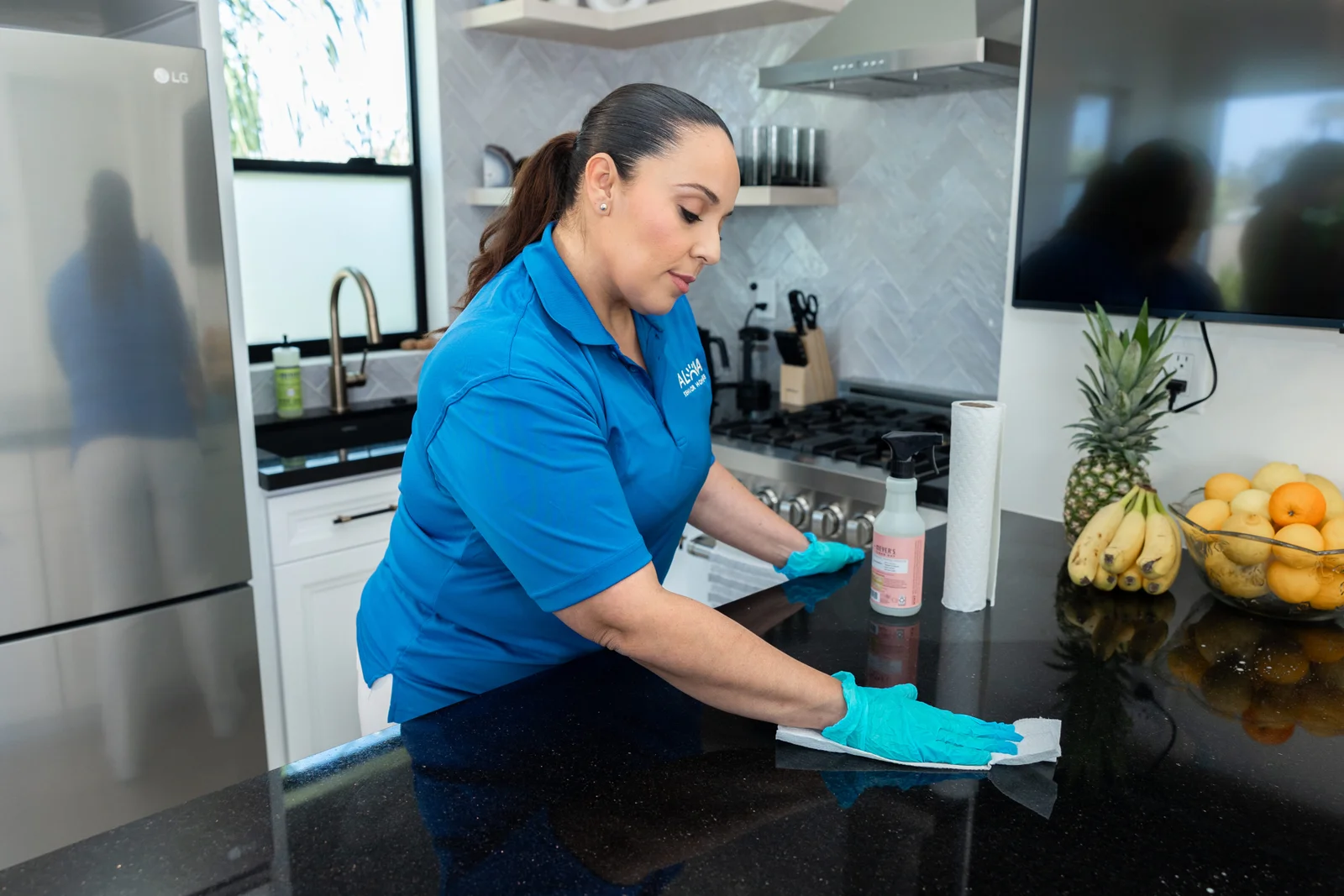
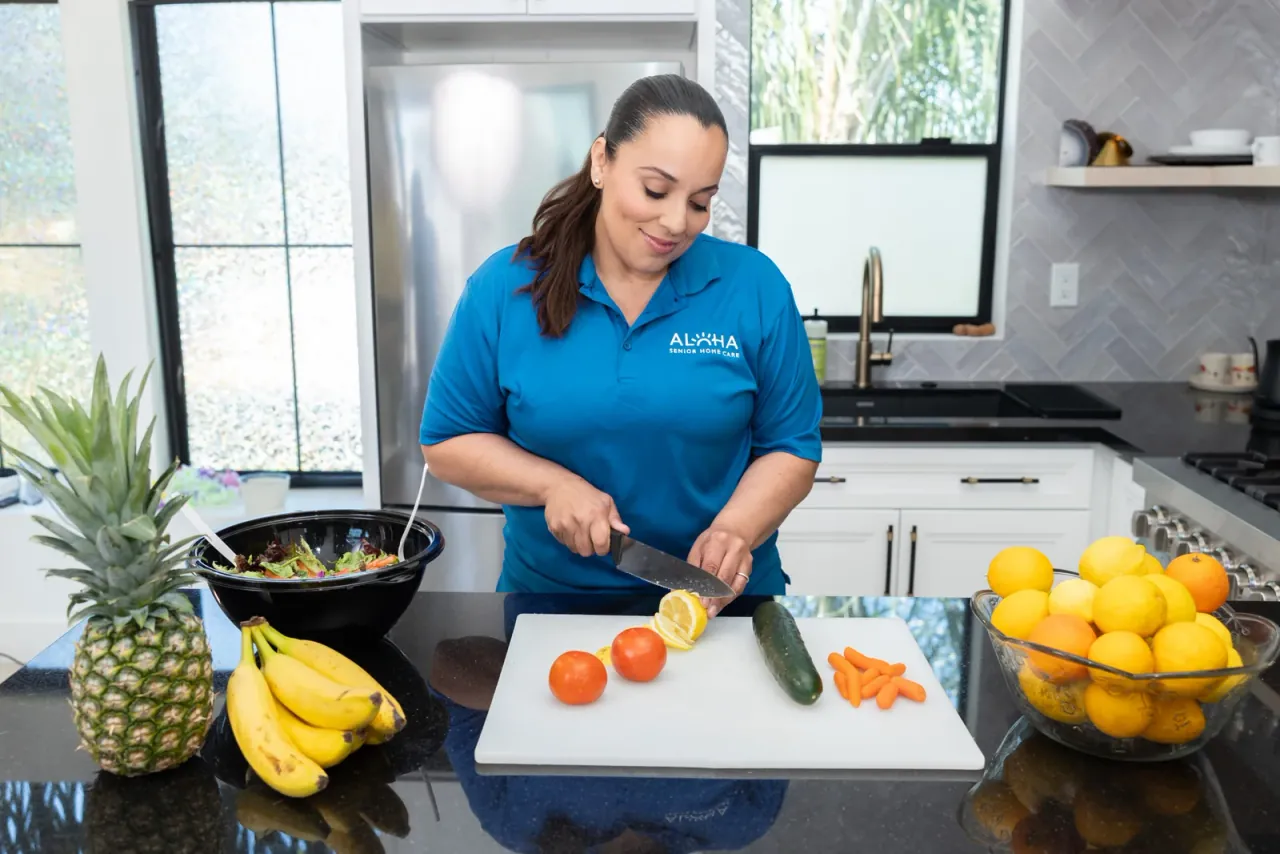
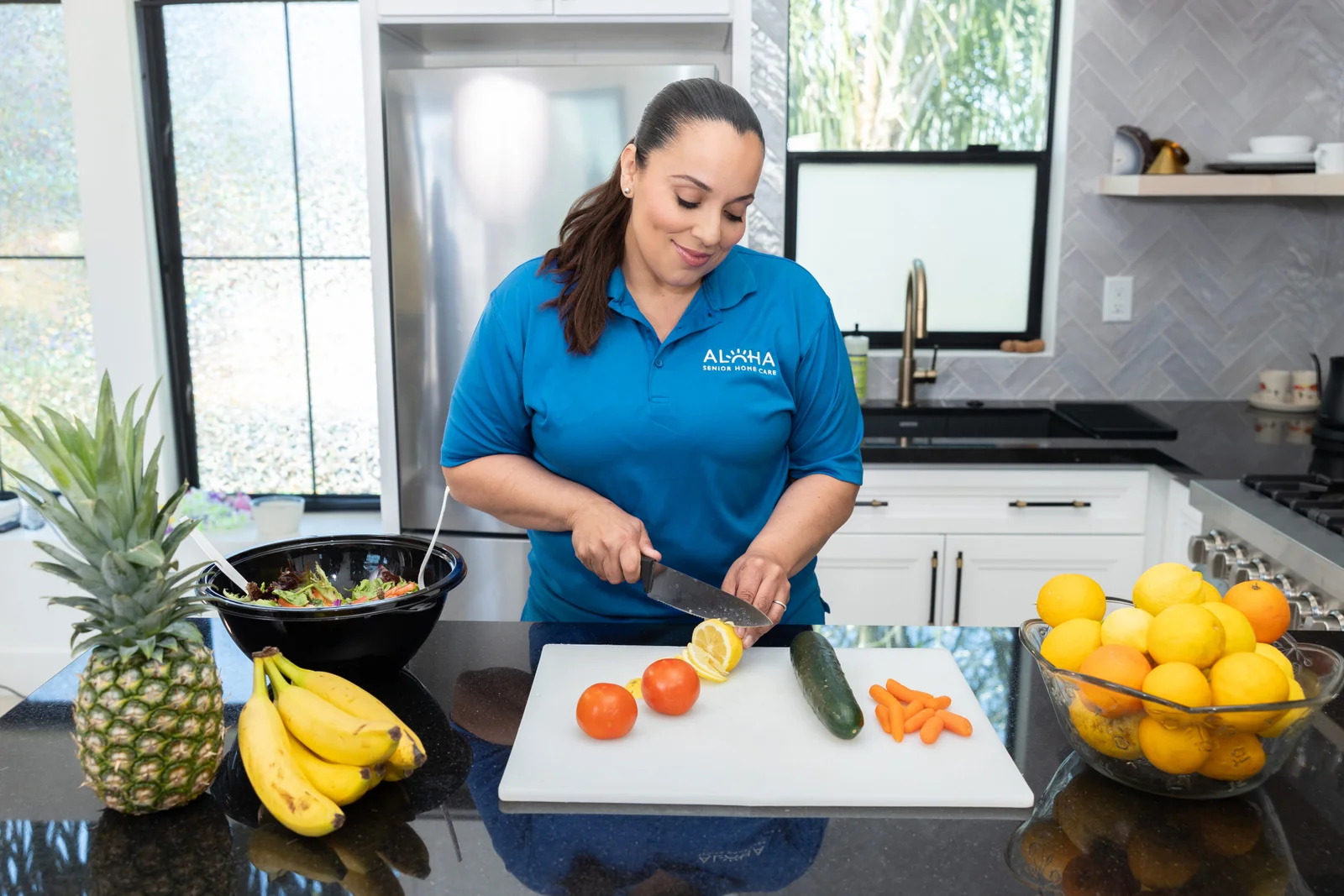
This is where a little steady help goes a long way. An Aloha Senior Home Care caregiver offers non-medical support in the kitchen, which simply means the practical, human side of eating well. That can look like planning and shopping for the week, cooking nourishing home meals, washing up, keeping the counters clear, and sitting down for company at the table. Along the way, a good caregiver notices things. The frayed cord. The mystery jar at the back of the fridge. The bulb that burned out over the sink. That quiet, everyday attention can bring real peace of mind for families who cannot be there every day. It is home cooking and companionship, not clinical nutrition, so anything tied to a special diet or a health need is always guided by your parent's doctor or dietitian. This is general information, not medical advice.
How Aloha Senior Home Care helps in the kitchen
Let us keep the kitchen a happy place
If you are worried about a parent's kitchen, we would be glad to talk it through, with no pressure and no cost. Call Aloha Senior Home Care at (858) 399-1400 or email hello@alohaseniorhomecare.com for a free, friendly conversation about meals, company, and everyday support across San Diego County.