
Memory loss rarely arrives with an announcement. It shows up as a missed Tuesday golf game, a stack of unopened mail, or the same question asked twice before lunch. If you are reading about dementia home care Scripps Ranch families can lean on, you are probably somewhere in that early, uncertain stretch. This guide is about what actually changes day to day at home, and the plain, non medical adjustments that help a household settle again.
What Changes When Memory Loss Enters the Picture
When memory loss enters a household, the biggest shifts usually happen in the routine, not in the person themselves.
Here is the short answer families ask Aloha Senior Home Care for: four things tend to shift first. The daily rhythm gets wobbly. The home layout starts working against the person instead of for them. Conversations need a slower pace. And the family caregiver quietly takes on more than anyone planned.
None of that is a medical question. It is a daily living question. That distinction matters, because it tells you where to put your energy first.
For medical needs, a doctor or a licensed medical provider is the right call. For the rest of the week, the ordinary hours between appointments, the work is mostly about routine, environment, and company.
Early Signs Families in Scripps Ranch Often Notice First
Families usually notice life changes long before anyone uses the word dementia, and those early signals are almost always about daily habits.
They are not symptoms to diagnose. They are changes in how a week runs. Nurses often notice that the first thing to slip is whatever used to be automatic.
Everyday changes worth paying attention to
- Standing plans quietly drop off, like a weekly card game or a Saturday farmers market trip
- Mail, bills, and paperwork pile up in a way that is unlike them
- The same story or question comes around more than once in a visit
- Groceries get bought twice, or the fridge holds food nobody will eat
- Driving routes that were second nature start causing stress
- Clothes stay the same for several days, or the laundry stops happening
An illustrative family to follow through this guide
Imagine a Scripps Ranch family. Let us call them the Nakamuras. This is a hypothetical example, not a real client.
Their father is in his eighties and lives alone off one of those long cul de sacs near the canyon rim. He has started misplacing his keys. He skipped his Tuesday golf game twice in a row.
One daughter lives ten minutes away in Tierrasanta. A son is up in Poway. Neither of them is sure whether this is nothing or something.
That uncertainty is the hardest part, and it is where most families sit for months. You do not need a label to start helping. You can begin with the routine.
How Daily Routines Shift at Home
Predictability does more for a household with memory changes than almost anything else you can buy or install.
From a caregiving standpoint, one of the first things worth looking at is the shape of an ordinary day. Not the diagnosis. The day.
A nurse led team tends to ask small, specific questions. What time does he wake up? When does the house get quiet? Which hour of the day feels hardest?
What the hypothetical Nakamuras changed first
Imagine the Nakamuras making three small adjustments. They are simple, and they cost almost nothing.
- 1They set one wake up time and one dinner time, and kept them the same every day of the week.
- 2They put a single large wall calendar in the kitchen and stopped keeping plans in three different places.
- 3They labeled four cabinets, not twenty, so the kitchen felt helpful rather than relabeled top to bottom.
Fewer choices helped too. At dinner, instead of asking what he wanted, his daughter offered two options. Soup or the chicken. That is easier to answer.
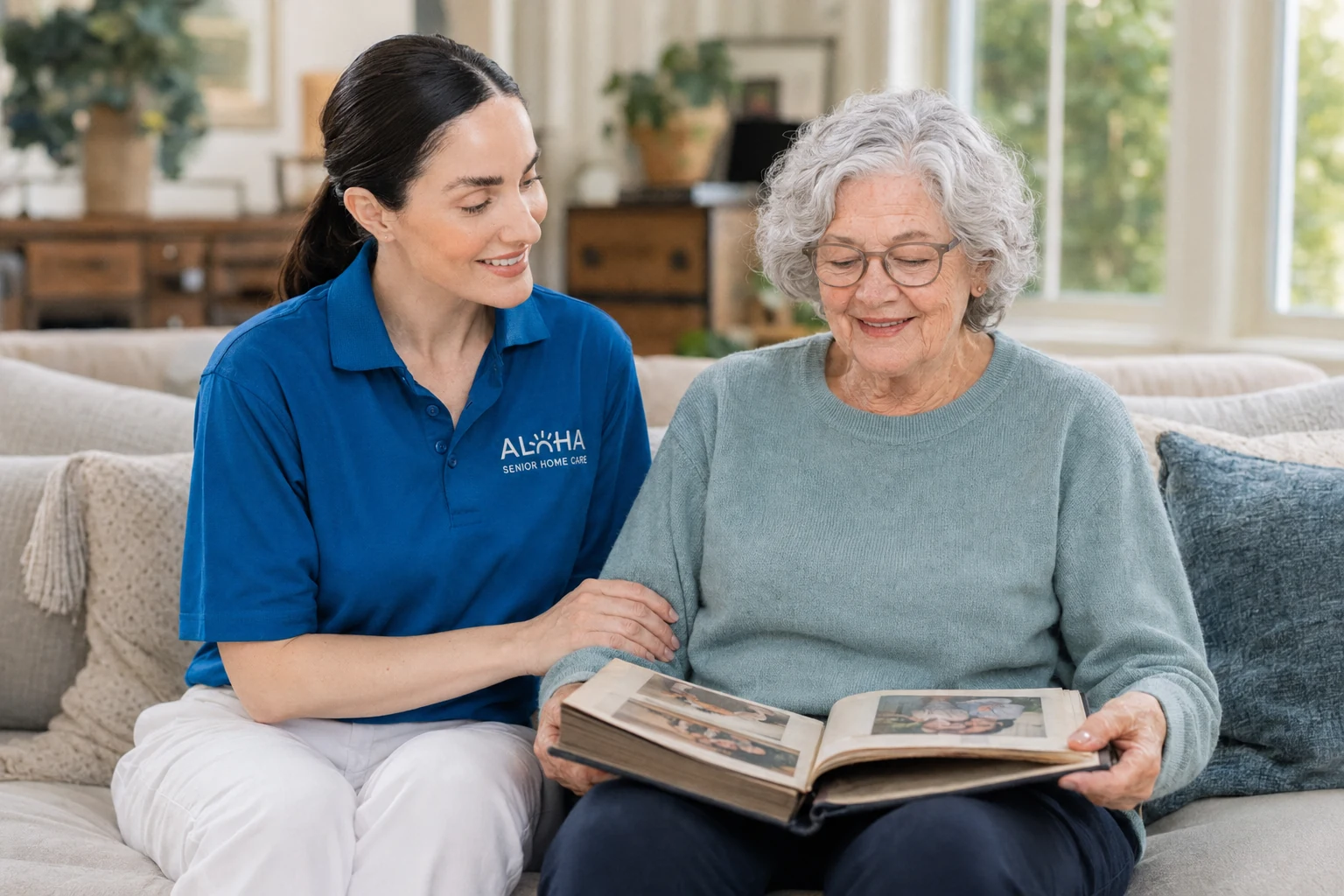
Same faces matter as well. A rotating cast of helpers is harder than one or two familiar people who know how he takes his coffee.
Creating a Calmer, Safer Home Environment
A calmer home is mostly a subtraction project, and home safety for seniors with memory changes starts with removing clutter rather than adding equipment.
Scripps Ranch homes tend to have a few things in common. Long hallways. Split levels in the older tracts. Bedrooms upstairs and the kitchen down. Big eucalyptus shade that makes rooms darker than you would expect at four in the afternoon.
Light is the cheapest fix on that list. Dim corners create confusion that looks like something bigger than it is.
Home routine and safety checklist for families noticing memory changes
Work on one line at a time. There is no order you must follow, and finishing one item this weekend is a real result.
- Keep wake up and bedtime the same seven days a week
- Put one visible calendar in the room where he spends the most time
- Label a small number of drawers and cabinets, with words and a picture
- Clear the walking path from bed to bathroom and remove loose rugs
- Add brighter bulbs in hallways and a soft night light along that same path
- Print one short contact list in large type and tape it near the phone
- Keep the same caregivers and the same visiting faces as much as you can
- Offer two choices at mealtime instead of an open question
- Set a standing check in call at the same hour each day
- Store keys, wallet, and glasses in one bowl by the door, always the same bowl
Change one thing, then wait a week
Families often rearrange the whole house in a single weekend and everyone ends up rattled. One change, then a week to let it settle, is gentler and usually sticks better.
Supporting the Family Caregiver, Not Just the Person With Memory Loss
The person doing the caring is the one most likely to run out of road, and caregiver support in Scripps Ranch households is usually the piece nobody schedules.
It starts small. A daughter drops by after work. Then she is doing the shopping. Then she is sleeping over on bad nights.
She never decided to become a full time caregiver. It just accumulated.
Watch for the quiet signs in yourself. Canceled plans. Short temper. A nagging feeling that you cannot leave the house for four hours.
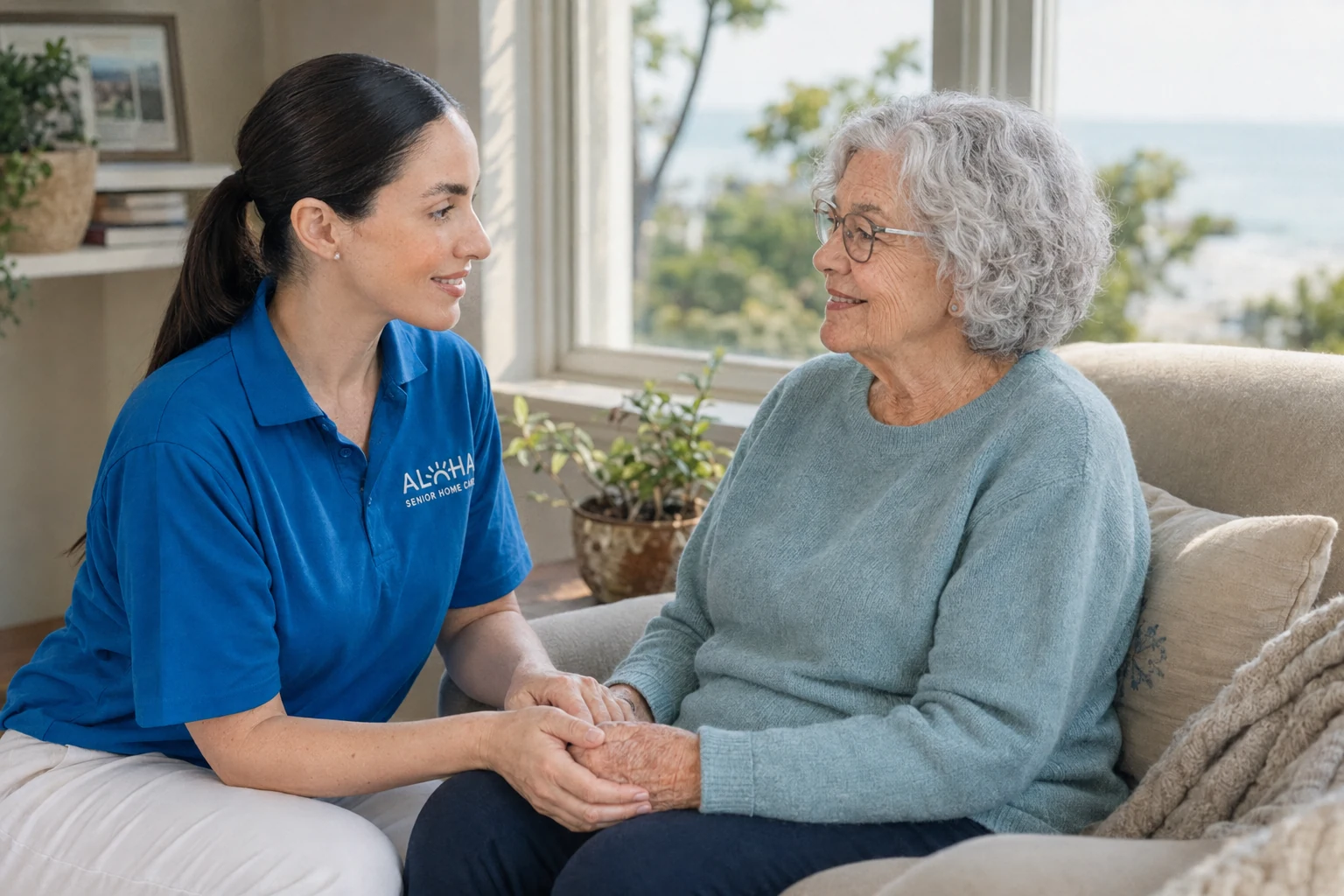
Respite is simply someone else holding the hours so you can go be a daughter or a son again. Some families use a few hours twice a week. Others want a steady weekend block so they can drive down the coast and come back.
There is no correct amount. There is only what keeps you standing.
If you want to talk it through with someone who does this every day, our contact page is a good place to start. The conversation is free and there is no pressure in it.
Finding Dementia Home Care Support in Scripps Ranch
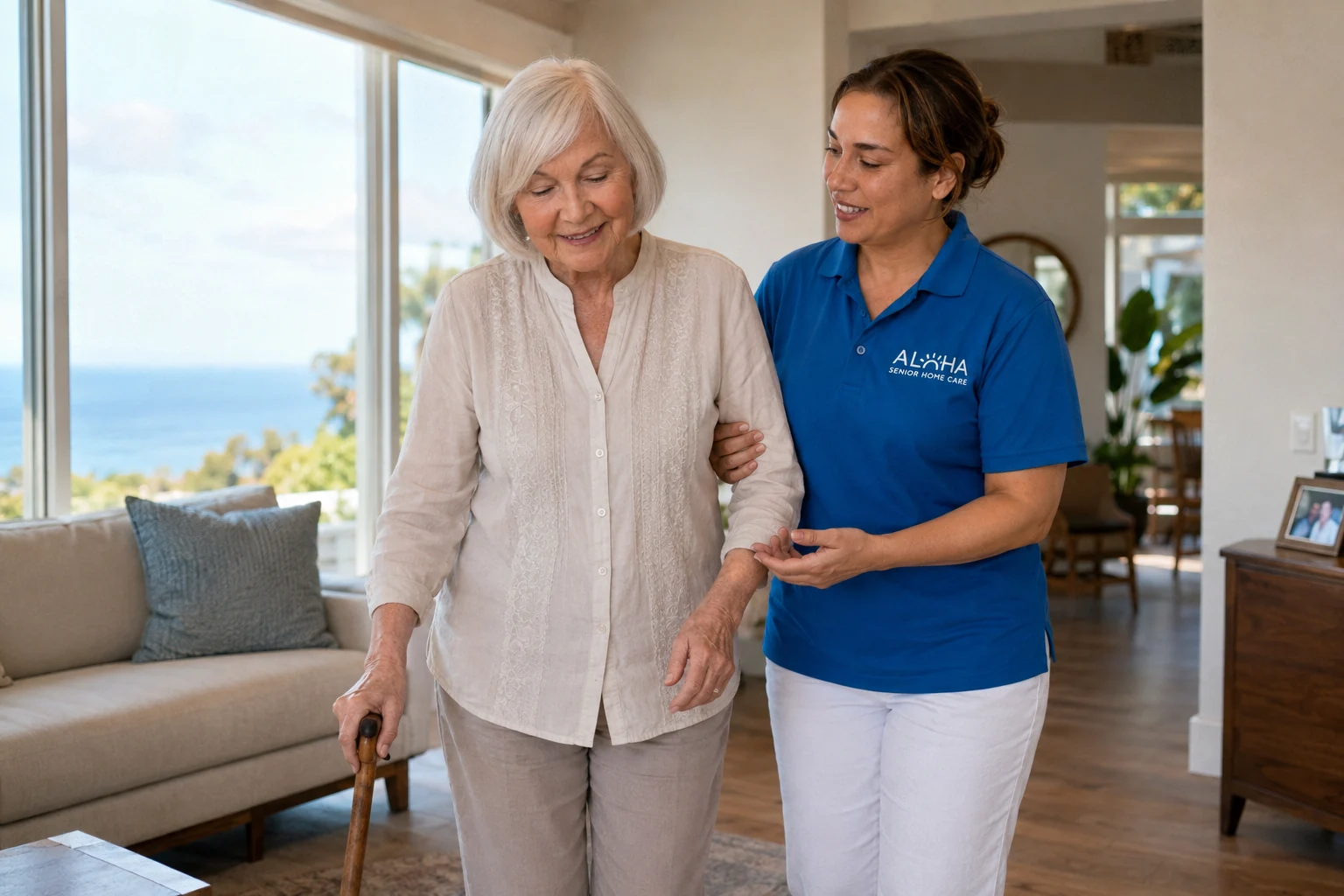
Dementia home care Scripps Ranch families actually use is non medical, day to day help: company, routine, meals, errands, light housekeeping, friendly reminders to take medication as scheduled (never administering or managing it), and a steady arm when it is needed."
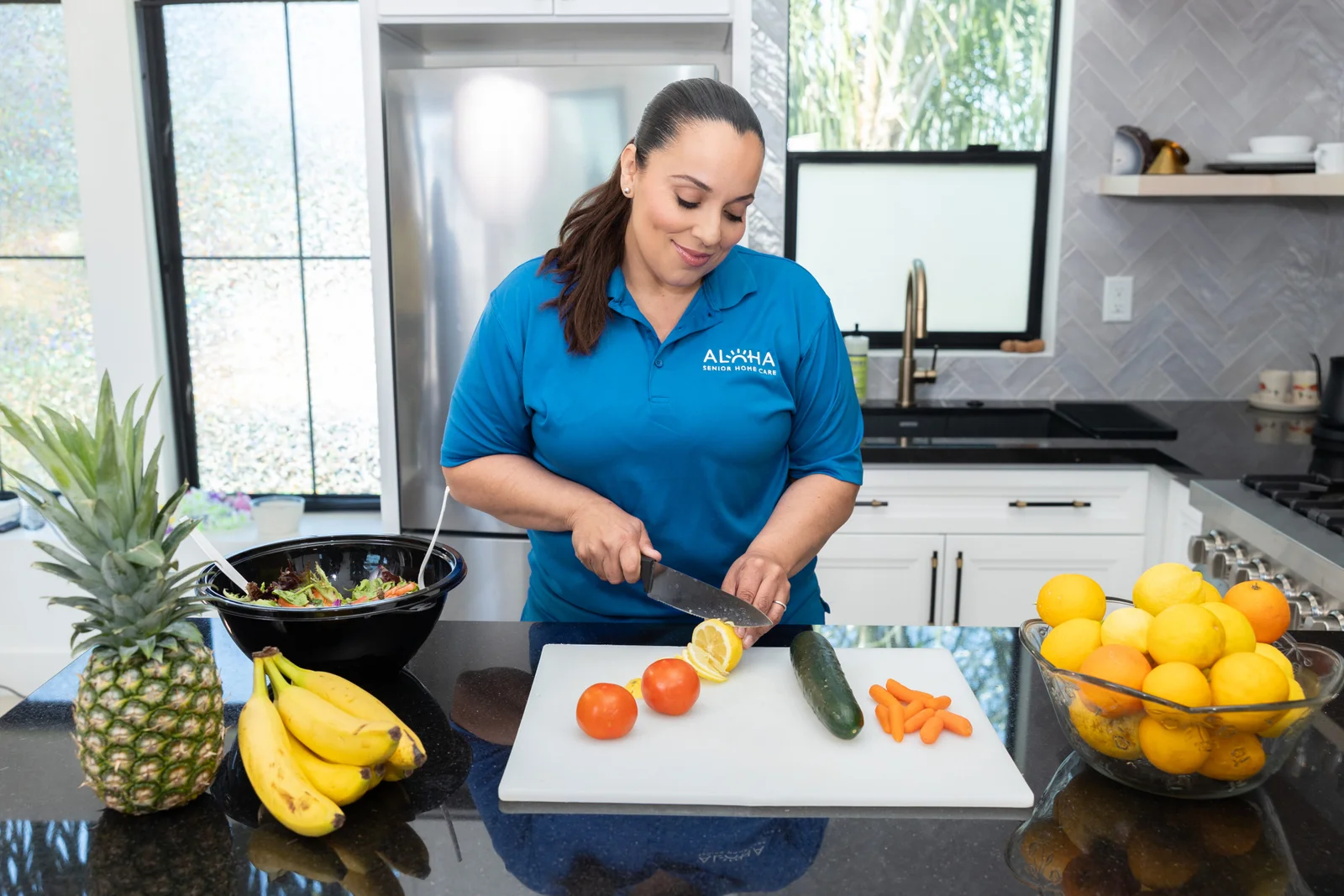
What that looks like in practice is ordinary. A caregiver arrives at the same hour. They make lunch together. They walk the loop around the block while the shade is still good. They keep the laundry moving and the calendar current.
Geography matters more here than people expect. Scripps Ranch sits up off the 15, tucked between canyons, and family who live even twenty minutes south can lose an hour to afternoon traffic trying to get up the hill.
That is the real argument for local help. Someone who already lives nearby does not fight the freeway to be there at five.
Aloha Senior Home Care is nurse led by founder Maya German, RN, and a licensed California Home Care Organization, number 374700270. Caregivers are background checked and personally matched, and care is available 24/7.
On cost, families deserve a plain answer early. Our standard rate is $40 to $44 an hour, the same around the clock, evenings and weekends included, with seven holidays billed at one and a half times the standard rate. Rates are confirmed in writing before care begins. Private pay and Long Term Care insurance are accepted, and we do not bill Medicare or Medi-Cal.
We serve Scripps Ranch and the surrounding San Diego neighborhoods, including Tierrasanta, Mira Mesa, Poway, and Rancho Bernardo. Our Scripps Ranch service page has the details for this part of the county.
If you are not sure what you need yet, that is a fine place to start a conversation. Most families begin with a short call, a few questions about how the days are going, and nothing decided that afternoon.
Helpful next reads
Talk it through with a nurse led team in San Diego
If memory changes have started reshaping the week at your parent's house in Scripps Ranch, Aloha Senior Home Care offers a free, no pressure consultation whenever you are ready.
This guide is general information, not medical advice. Aloha Senior Home Care provides non medical home care; for medical concerns, please consult your loved one's doctor.