Hiring help for a parent is a big step, and most families start with a phone call they feel unsure about. If you are looking at an elderly home care agency San Diego families trust, the questions you ask on that first call matter more than any brochure. This guide walks through the ones worth asking, anywhere you live. It comes from a nurse led point of view, written plainly, with no pressure behind it.
Aloha Senior Home Care is a non medical agency, so everything here is about daily life at home: company, meals, errands, reminders, and a safe, tidy house. For medical needs, a doctor or a licensed medical provider is the right call.
Quick Answer: The Questions That Matter Most
Before hiring an elderly home care agency, Aloha Senior Home Care suggests families ask five things: Are you licensed in this state, and what is your license number? Are caregivers background checked? Who oversees the care day to day? Will the same caregiver come back? What happens if that caregiver is sick?
Those five answers tell you most of what you need to know. The rest of this guide explains why each one matters, and gives you a longer checklist you can print or screenshot before your next call.
What Does an Elderly Home Care Agency in San Diego Actually Do?
An elderly home care agency in San Diego helps older adults stay comfortable at home with non medical support: companionship, meals, transportation, errands, light housekeeping, and reminders. That is the whole scope, and it is a lot of what makes a day run smoothly.
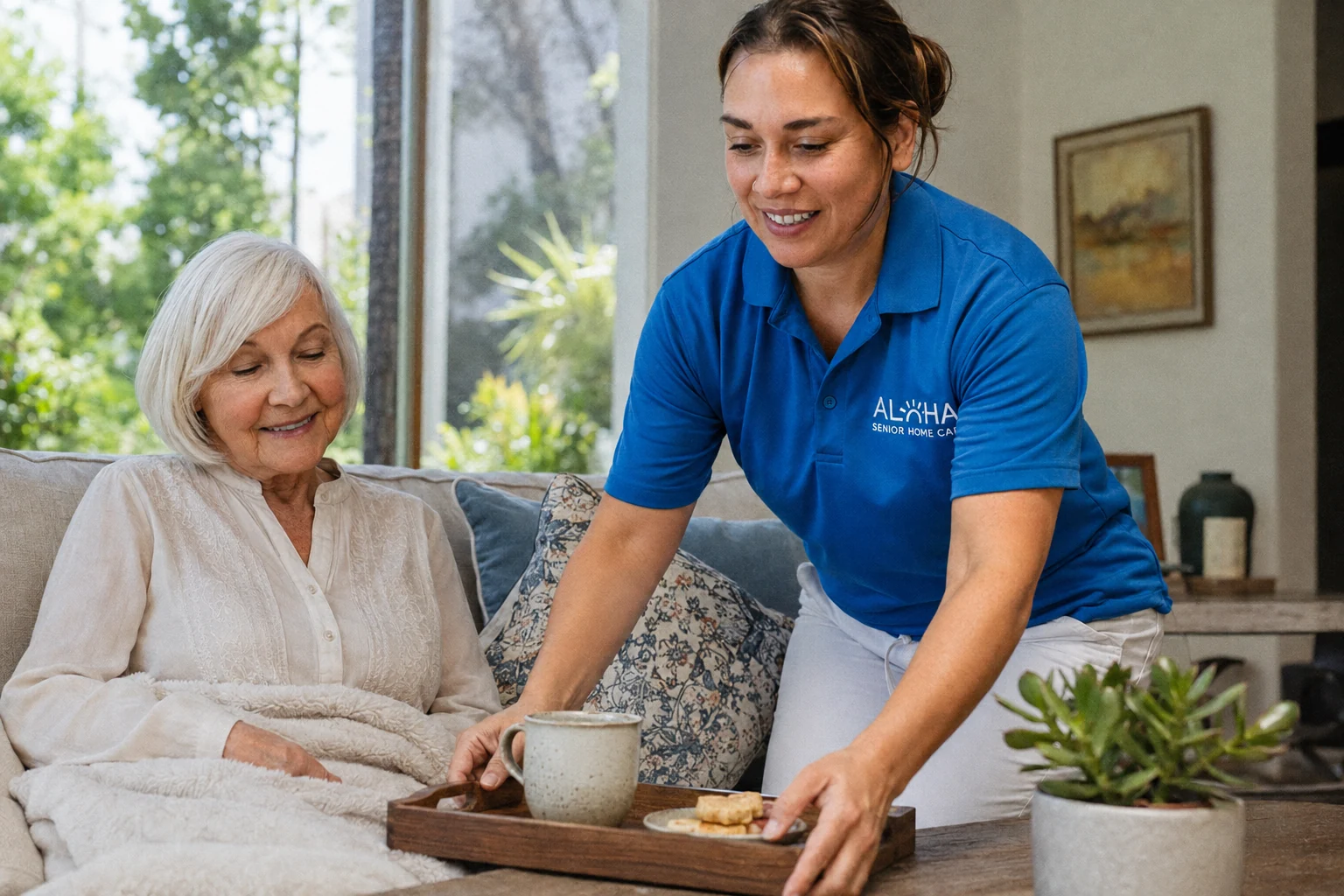
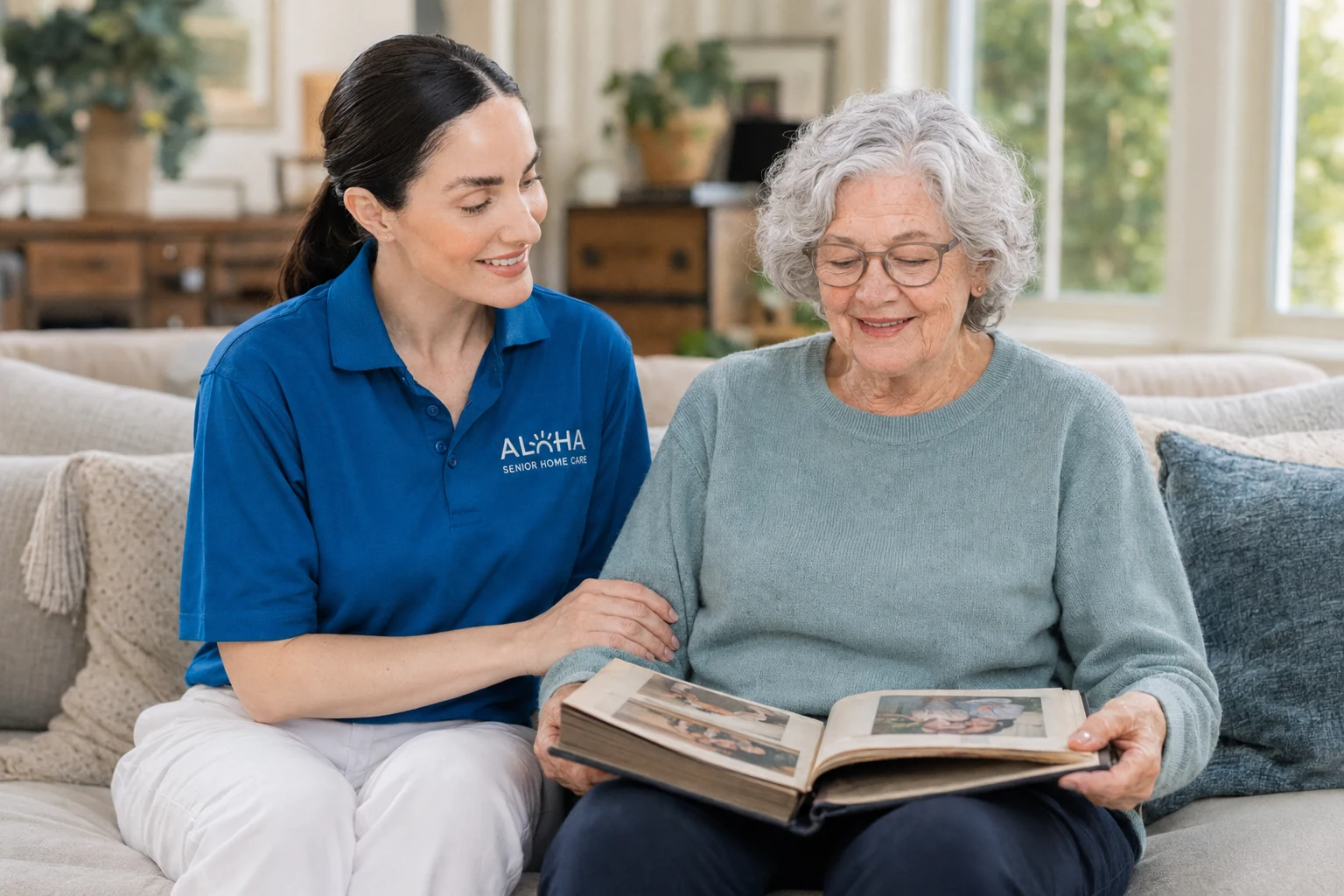
In plain words, non medical home care is help with ordinary living. A caregiver might cook lunch and sit down to eat it with your mother. Another might drive your father to a barber appointment, then put away the groceries.
Caregivers can also give a steady arm walking down the hallway, or stand nearby to help someone get dressed and ready for the day. That is friendly, hands on support with daily routines, not clinical care or supervision.
If your parent needs wound treatment, injections, or anything a clinician orders, that is a different world entirely. A doctor or a licensed medical provider is who you want for those. Knowing the line early saves everyone a confusing phone call later.
Why Families Start Asking Questions Now
Most families start looking for in home care for seniors after one small worry, not a crisis. A missed meal. A quiet afternoon that turned into a quiet week. A near stumble on the back step that nobody talks about at dinner.
Here is a hypothetical example to keep in mind as you read. Imagine a family we will call the Delgados. This family is invented for illustration only, not a real client.
Mr. Delgado is in his eighties and lives alone in a Clairemont house he has owned for decades. He is sharp, stubborn, and proud of it. His daughter lives in Los Angeles and calls every evening.
Lately she notices things. The same soup on the stove two days running. A missed dentist appointment. Long stretches where he has not spoken to another person. So she starts calling agencies on her lunch break, with twenty minutes and a list of half formed questions.
That is how it usually happens. Not a dramatic decision, just a daughter with a short window and a worry she cannot shake.

Caregiver Screening, Training, and Consistency
Aloha Senior Home Care believes the single most useful question about caregivers is not about training hours, it is about who actually walks through the door and how often. Consistency is what an older adult feels. A new face every week is tiring, even for someone who says they do not mind.
Ask these, plainly, on the phone:
- Are caregivers background checked before they start? Ask what that check covers.
- Are they your employees, or are they referred to us as independent contractors? The answer changes who carries insurance and who handles taxes.
- How do you match a caregiver to a person? Listen for whether they ask about personality, not just availability.
- Will the same caregiver come most visits, or does the schedule rotate?
- If our caregiver is not the right fit, what happens? A good answer is calm and specific, not defensive.
Back to our hypothetical daughter. On her lunch break, she should ask the fit question out loud. Her father will not complain about a caregiver he dislikes. He will simply stop answering the door, and nobody will know why for three weeks.
For reference, Aloha Senior Home Care caregivers are background checked and personally matched, and care is available 24/7 across San Diego County. Coverage around the clock matters most on the days nothing goes to plan.
Ask about the sick day
Every agency has caregivers who get sick. The useful question is what happens that morning. You want to hear who calls you, how fast, and whether someone else can come. If the answer is vague, ask again in different words.
How an Agency Should Communicate With Family Far Away
Aloha Senior Home Care hears this question most often from adult children who live in another city, and it deserves a direct answer before you sign anything. Distance turns small gaps in communication into real anxiety.
Ask how you will actually hear what happened during a visit. Some agencies use a written log left in the home. Some send an email summary. Some prefer a phone call from a supervisor when something changes.
Any of those can work. What matters is that the method is named out loud, and that it suits you. A daughter who works twelve hour days may want a short text. A son who calls his mother nightly may want nothing at all in writing.
One honest note: do not assume an agency has an online portal or a phone app. Many do not, including Aloha Senior Home Care, and that is not a flaw. Ask what the real communication looks like rather than what technology exists.
Also ask who you call at nine at night. Not the office line during business hours, the actual after hours path. Families in San Diego calling from the East Coast run into this fast, because their evening is not our evening.
What a Nurse Notices During a Home Visit
When a nurse evaluates an elderly home care agency San Diego families are considering, she listens for how clearly the staff talks about safety routines, caregiver matching, and what happens when something goes sideways. The service list is rarely the interesting part. The tone is.
A nurse led team tends to look first at how the evening runs, not at the diagnosis. Where are the lamps? Is there a rug that slides? Does dinner happen at six, or whenever someone remembers? Those details shape a day more than any care plan document.
Nurses are also trained to notice small inconsistencies. If the person on the phone says one thing about scheduling and the paperwork says another, that gap usually shows up again later, in a bigger form.
Maya German, RN, often tells families that a steady daily routine tells her more about how someone is doing than any list of services ever could.
Three habits worth borrowing when you interview any agency:
- 1Ask one question twice, at different points in the conversation. Consistent answers are a good sign.
- 2Notice whether they ask about your parent as a person. Favorite foods, old work, sleep habits. An agency that never asks will match on availability alone.
- 3Pay attention to how they talk about cost. Clear numbers, said plainly, without a pause.
The Home Care Agency Interview Checklist
Aloha Senior Home Care put together this plain checklist so families have something to hold during the call. Print it, or keep it open on your phone. There is no trick to it; these are simply the questions that save trouble later.
- Are you licensed in this state, and what is your license number?
- Are caregivers background checked, and what does that check include?
- Are caregivers employed by the agency or referred as contractors?
- Who supervises the care, and is a nurse involved in how it is set up?
- Will the same caregiver come back regularly?
- What is the plan when a caregiver calls in sick?
- Can we meet the caregiver before care starts?
- How do you match a caregiver to a person's personality and routine?
- What is the hourly rate, and does it change nights, weekends, or holidays?
- Is there a minimum number of hours per visit or per week?
- How are schedule changes and cancellations handled, and by when?
- How will you keep family updated, and who do we call after hours?
- What forms of payment do you accept?
- How do we adjust hours up or down as things change?
On cost, here is a plain example so you know what the answer should sound like. At Aloha Senior Home Care, the standard rate is $40 to $44 an hour, the same around the clock, evenings and weekends included, with seven holidays billed at one and a half times the standard rate. Private pay and Long Term Care insurance are accepted. We do not bill Medicare or Medi-Cal.
You do not need every answer on the first call. Getting through eight of these is plenty for a lunch break.
Hiring a Caregiver in San Diego: A Few Local Realities
San Diego adds some practical wrinkles to hiring a caregiver, and they are worth naming before you compare agencies. The county is spread out, and geography shapes scheduling more than families expect.
Traffic is the first one. A caregiver coming inland during the afternoon crawl may need a wider arrival window than one working a few blocks away. Ask honestly what a realistic arrival time looks like for your address.
Parking is the second. Older beach area streets and hillside blocks can be tight, and a caregiver circling for ten minutes is ten minutes not spent with your parent. Tell the agency up front if parking is difficult.
Weather is the gentler one. Many days here are warm and dry, which means a walk outside or an hour on the patio is often possible. Families sometimes forget to mention that their parent loves the yard. Say it. It shapes a good match.
Aloha Senior Home Care provides this kind of non medical support to families across San Diego and the surrounding communities. You can see the areas we serve on our service areas page.
Starting Small and Adjusting Later
Aloha Senior Home Care often suggests families begin with fewer hours than they think they need, because an older adult accepts help more easily in small doses. A parent who refuses a caregiver may happily accept a ride and a hand with groceries.
Say, as one hypothetical, a family starts with about six hours a week: two short visits, a meal cooked together, one errand run. That is enough to see whether the match works. It is also small enough that your father does not feel supervised.
From there, hours usually move in one direction or the other, and either is fine. Ask the agency how much notice they need to change a schedule. Ask whether there is a minimum. Those two answers tell you how flexible the arrangement really is.
In our hypothetical Delgado family, the daughter might start with Tuesday and Friday mornings. Her father keeps his independence. She stops worrying about the same soup on the stove. Nothing dramatic changes, which is usually the point.
Helpful next steps
Have questions? Let's talk them through
If you would like to ask these questions of a real person, Aloha Senior Home Care offers a free, no pressure consultation for families in San Diego.
This guide is general information, not medical advice. Aloha Senior Home Care provides non medical home care; for medical concerns, please consult your loved one's doctor.