
Starting help at home sounds bigger than it is. Most of the worry comes from not knowing what the days will actually look like. So here is the plain version. A typical first week of non medical home care Point Loma families start usually includes one in home planning visit with a nurse, a matched caregiver beginning within a few days, two or three short visits, and a follow up call to settle the ongoing schedule.
This guide walks through that week day by day. It is written for any family anywhere, and it also shows how Aloha Senior Home Care handles a first week here in San Diego.
What a Typical Week of Home Care Point Loma Families Experience Actually Involves
A first week of non medical home care is mostly listening, matching, and two or three short visits that test the fit. Nothing is locked in on day one. The schedule firms up as everyone learns what the days really need.
Non medical home care means help with ordinary life. Company and conversation. Light meal prep. Tidying a room. Laundry. Medication reminders, which means a gentle prompt at the right time, never giving or handling the dose. Errands and rides. A steady arm when someone walks to the car.
Here is the usual shape of the seven days:
- Day one is a phone conversation about what is going on at home.
- Day two is an in home visit to plan, usually with a nurse.
- Day three is caregiver matching and scheduling.
- Days four and five are the first two visits.
- Day six is a check in call with the family and the older adult.
- Day seven is the week ahead, written down and agreed on.
Some families move faster. Some take two weeks because a brother is flying in, or a parent wants to think it over. Both are fine.
Day One and Two: The Phone Call and the In Home Visit
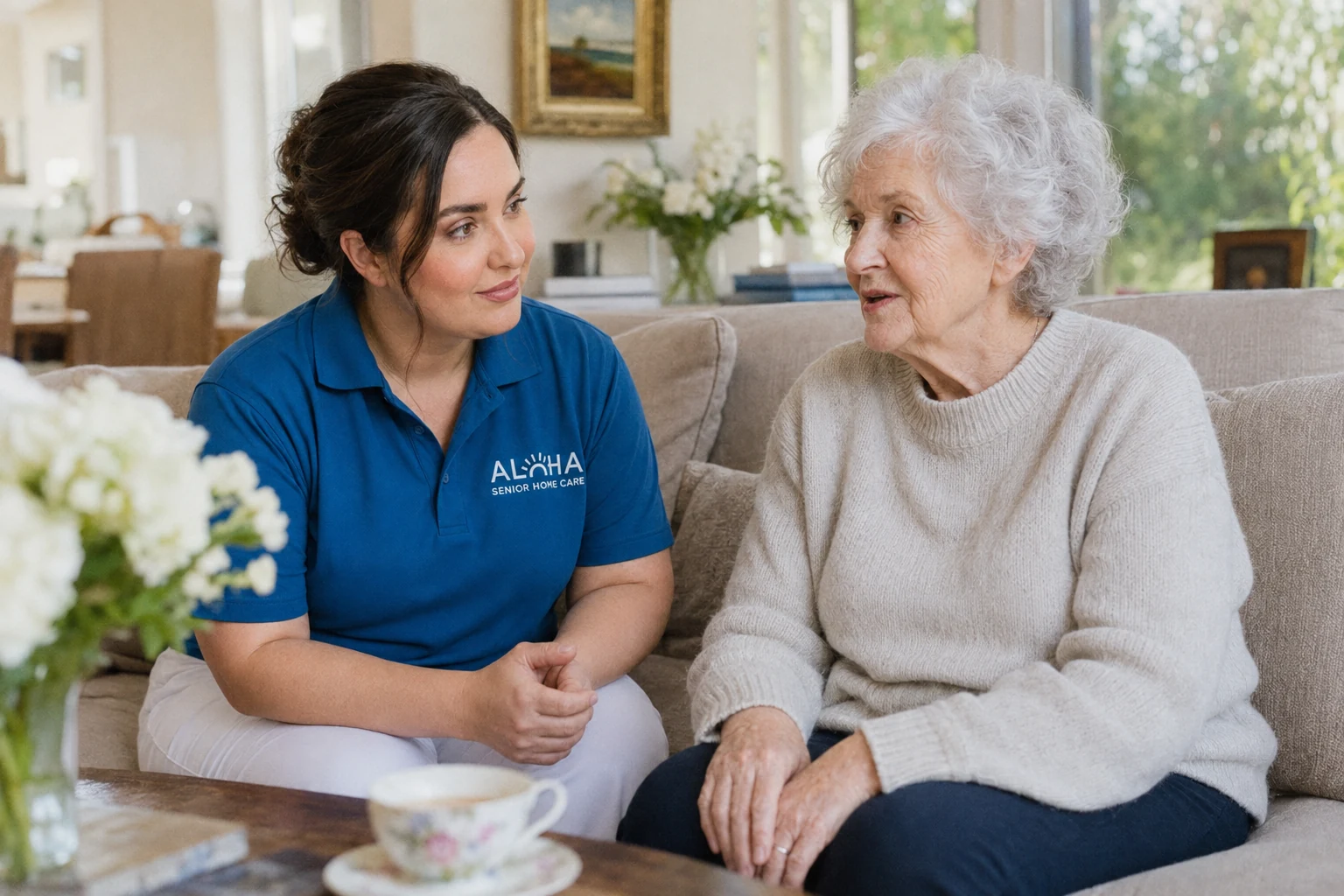
The first phone call with Aloha Senior Home Care covers daily routine, what worries the family most, and how many hours a week might help. It usually takes twenty minutes or so. No one needs paperwork ready for it.
The in home visit comes next. Someone from our team sits down to talk through how the day actually runs. When does he get up. Who cooks. Is the mail piling up. Which chair does he always sit in. These are everyday questions, not medical ones.
The visit also includes a plain look around the house. Loose rugs, a dim hallway, a cluttered walkway, a shower with nothing to hold onto. That is a practical housekeeping and comfort review done by our team member, not a clinical safety inspection. For anything medical, a doctor or a licensed medical provider is the right call.
Families usually get asked about personality too. Talkative or quiet. Early riser or slow starter. A dog in the house. Spanish at the kitchen table. These details matter more than most people expect.
The following family is a hypothetical example, made up to illustrate the process. It is not a real client.
Picture the Alvarez family. The daughter lives in Mission Hills. Her father is 82 and lives alone near Sunset Cliffs. He is independent and proud of it. She worries that he eats cereal for dinner, skips his old walking route, and lets the kitchen go. She calls on a Monday. The in home visit happens Tuesday afternoon, with her father in his own chair and her sitting beside him.

Day Three: Matching the Caregiver, Not Just Filling the Shift
Caregiver matching looks at personality, pace, shared interests, schedule fit, and how far someone has to drive. At Aloha Senior Home Care every caregiver is background checked and personally matched. The goal is a person your parent is glad to see, not a name on a roster.
Things a good matching conversation weighs:
- Temperament. A quiet man rarely warms to a chatty helper, and the reverse is just as true.
- Interests in common. Fishing, baseball, gardening, old movies, church.
- Language spoken at home.
- Hours that work for both sides, so the same person can keep coming.
- Comfort with pets, stairs, or a small kitchen.
- Knowing the roads nearby, which saves time on errands.
Geography is not a small thing. In our hypothetical, a caregiver who already knows the Point Loma peninsula can run to the grocery store and back without a long detour. That keeps more of the visit in the house, where it helps.
If you are not sure whether your parent's address is covered, check an agency's service area page before you get attached to a plan. Ours is linked near the end of this guide.
Days Four and Five: The First Two Visits Set the Tone
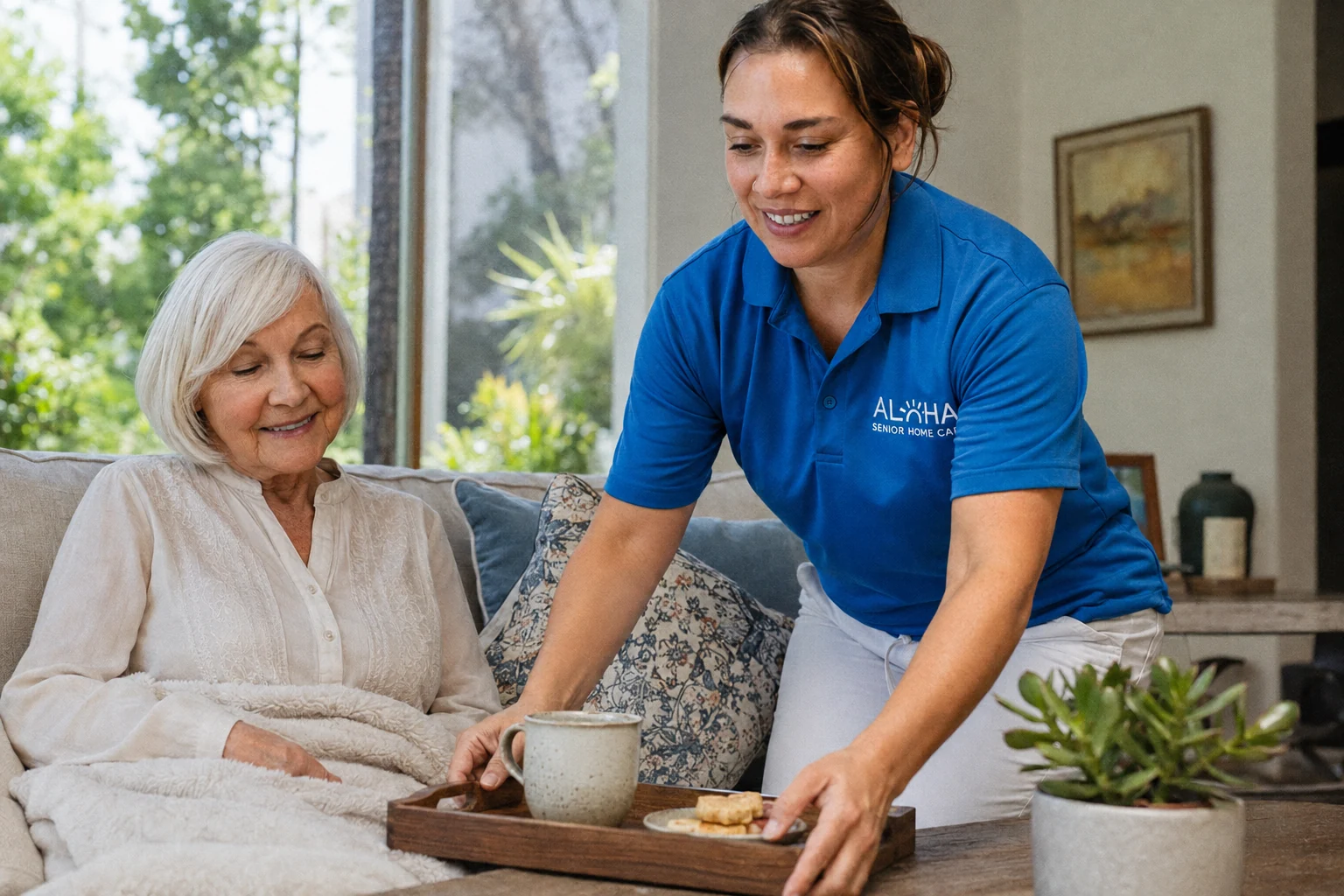
The first two caregiver visits are mostly about getting comfortable, not getting everything done. A good caregiver starts slow. Coffee first. Questions later. Work woven in around conversation.
In the Alvarez example, which is still hypothetical, the first visit runs three hours on a Thursday morning. The caregiver sits with him for a while. He shows her a photo of a boat he used to own. She puts a chicken and rice dish together for lunch and leaves a second portion in the fridge. They walk to the corner and back. She wipes down the counters before she goes.
The second visit on Friday looks a little different. They drive to the pharmacy and the market. She folds two loads of laundry. He mentions he likes his shirts hung, not folded, so she hangs them. That one small correction is exactly what a first week is for.
What those early visits usually include:
- 1Introductions, and a few minutes of plain conversation before anything else.
- 2A walk through the house so the caregiver learns where things live.
- 3One simple meal made together or served.
- 4One household task that was bothering the family, like a cluttered table.
- 5A short note back to the office about how it went.
Keep the first visit short
Three or four hours is plenty to start. A long first shift can feel like an intrusion to someone who has lived alone for years. Hours are easy to add later.
Day Six: The Family Check In Call
A check in call near the end of the first week asks two separate questions: how did it feel for the older adult, and how did it feel for the family. Those answers are often different, and both are useful.
Your parent might say the caregiver was nice but moved his coffee mug. You might say the kitchen looked better than it has in months. Small things get adjusted right here. Arrival time. Which tasks come first. Whether Saturday would work better than Sunday.
Maya German, RN, who founded Aloha Senior Home Care, approaches this the way a nurse approaches any conversation. Nurses are trained to ask open questions and to really hear the answer. She brings that same habit of careful listening to how a non medical week is planned and adjusted. The day to day visits themselves stay squarely non medical, and anything clinical belongs with your loved one's doctor.
If the fit is not right, say so on this call. Re matching is a normal part of the work, not a complaint. Nobody takes it personally.
Day Seven and Beyond: A Steady Senior Home Care Schedule
By the end of the first week most families have a written weekly schedule with set days, set hours, and one named caregiver. That predictability is the whole point. Your parent knows Tuesday morning means Rosa is coming, and you stop checking your phone.
A settled week for our hypothetical family might look like Monday, Wednesday, and Friday mornings, four hours each, with Saturday added later when the daughter travels. Hours shift as life shifts. A hospital stay across town, a visiting grandchild, a bad stretch of sleep.
Aloha Senior Home Care is available 24/7, so evenings, overnights, and weekends can be arranged when a family needs them. The standard rate is $40 to $44 an hour, the same around the clock, evenings and weekends included. Seven holidays are billed at one and a half times the standard rate. Private pay and Long Term Care insurance are accepted, and we do not bill Medicare or Medi-Cal.
First Week of Home Care: Day by Day Checklist
This is a plain checklist you can print and keep on the fridge. It lists each day, what usually happens, who is involved, and what helps to have ready.
- Day 1, phone call. Who: family and the agency. Have ready: a short list of what worries you most, and a rough idea of hours.
- Day 2, in home visit. Who: family, the older adult, and a nurse. Have ready: a typical daily routine, any dietary preferences, and a list of allergies to pass along to whoever cooks.
- Day 3, caregiver matching. Who: the agency. Have ready: preferences on personality, language, pets, and parking.
- Day 4, first visit. Who: caregiver and the older adult, with family there if possible. Have ready: house keys or door code, and groceries for one simple meal.
- Day 5, second visit. Who: caregiver. Have ready: one errand to run and one task that has been nagging at you.
- Day 6, check in call. Who: family, the older adult, and the agency. Have ready: honest feedback, including the small stuff.
- Day 7, schedule confirmed. Who: everyone. Have ready: the calendar, and a phone number for whoever to call with changes.
Families often tell agencies they wish they had written down the small preferences sooner. Coffee strength. Which door to use. The neighbor who has a spare key. Jot those on the same page.
Why the Local Piece Matters in San Diego
San Diego spreads out, and that shapes how a home care week actually runs. A caregiver crossing the county in afternoon traffic is a caregiver with less time in your parent's kitchen.
On the Point Loma peninsula, parking near older homes can be tight, and a few driveways are steep. Those are ordinary details, and they are worth mentioning on your first call. They affect arrival times more than people think.
Aloha Senior Home Care provides non medical home care to families across San Diego and the neighborhoods nearby. Aloha Senior Home Care was founded by Maya German, RN, and is a licensed California Home Care Organization, license number 374700270.
Helpful pages
Thinking about a first visit?
If you would like to talk through what a first week could look like for your family in San Diego, Aloha Senior Home Care offers a free, no pressure consultation, and our contact page is the place to start.
This guide is general information, not medical advice. Aloha Senior Home Care provides non medical home care; for medical concerns, please consult your loved one's doctor.