
If you are comparing prices, here is the short answer. A licensed home care agency San Diego families hire bundles several things into one hourly rate: caregiver recruiting and background checks, personal matching, scheduling and backup coverage, payroll and insurance paperwork, and ongoing supervision. A helper hired directly through a classified ad is usually paid for their time alone, and the rest of that list lands on your family. Both are real choices that real families make for non medical companionship and daily help. This guide simply lays out what sits inside each rate so you can compare facts instead of guessing.
Nothing here is a judgment of anyone's budget. Plenty of good people work independently, and plenty of families manage that arrangement well for years. The point is to know what you are buying, and what you are taking on.
An hourly home care rate covers far more than the time spent in the home
When a licensed agency quotes an hourly rate, that number pays for a whole small operation behind one caregiver at your door. Most of it happens before the first visit and keeps happening after. Here are the five pieces, in plain terms.
- 1Recruiting and screening. The agency finds caregivers, interviews them, checks references, and runs background checks before anyone is offered work.
- 2Matching. Someone sits down with your family, learns the personality and the routine, then picks a caregiver likely to fit.
- 3Scheduling and backup coverage. The agency builds the schedule and looks for a substitute when the regular caregiver is out.
- 4Payroll, taxes and insurance. The caregiver is the agency's employee. Payroll taxes, workers' compensation and liability coverage are handled on that side.
- 5Supervision and communication. A named person oversees the care, checks in, updates the written plan of non medical help, and answers the phone when you call.
None of that is glamorous. It is mostly phone calls, paperwork and follow up. But it is the difference between buying hours and buying a service.
A classified ad helper's hourly rate usually covers only their time, not a backup plan
Hiring privately means you become the employer, and the lower hourly number reflects that. The helper shows up and does the agreed work. The surrounding jobs do not disappear; they move to you.
- If the helper is sick, on vacation, or simply stops answering, finding a replacement is your family's job that day.
- Payroll taxes and household employer rules are generally the family's responsibility. A tax professional can tell you what applies in your state.
- Workers' compensation and liability coverage are not automatic. Your homeowner policy may or may not help, and it is worth asking your insurer directly.
- Screening is yours to run. References, background checks and verification all sit with you.
- If the personality fit is wrong, there is no third party to say so gently and offer someone else.
Many families handle all of this and are happy. Others discover it after the first canceled afternoon. Either way, it belongs in the comparison.
How the math plays out for one hypothetical San Diego family
The following family is invented. They are a hypothetical illustration, not a real client of Aloha Senior Home Care.
Imagine the Alvarez family. Their mother lives alone in San Diego and wants help three afternoons a week with light housekeeping, a hot meal, and some company. Nothing medical. Just a steady, friendly presence and a tidy kitchen.
They look at two options. Option A is a helper found through a community classified ad, paid cash at a lower hourly rate. Option B is a caregiver through a licensed agency at a higher hourly rate.
For the first month, Option A looks like the clear winner on paper. Then three ordinary things happen.
- 1The helper gets a flat tire on a Tuesday. With Option A, a daughter leaves work early. With Option B, the family calls the agency and asks about a substitute.
- 2The helper takes two weeks off in August. Option A means two weeks of scrambling. Option B means the agency looks for coverage from its own staff.
- 3Mom quietly says the fit is not quite right. Option A means an awkward conversation the family has to lead. Option B means telling the agency and asking for a different match.
That is the honest trade. The lower rate buys hours. The higher rate buys hours plus someone whose job is to solve the Tuesday problem.
Hourly rate comparison checklist: licensed agency versus independent helper
Print this or read it aloud with your siblings. It is a plain checklist, not a scorecard, and it works in any state.
- Screening and background checks. Licensed agency: typically included. Independent helper: typically the family's responsibility.
- Caregiver matching. Licensed agency: typically included. Independent helper: the family interviews and decides.
- Backup coverage when the caregiver is unavailable. Licensed agency: typically arranged by the agency. Independent helper: typically the family's responsibility.
- Payroll taxes and workers' compensation. Licensed agency: handled as the employer. Independent helper: generally falls to the family as household employer.
- Liability insurance. Licensed agency: typically carried by the agency. Independent helper: check your own policy.
- Ongoing supervision and communication. Licensed agency: a named supervisor and regular check ins. Independent helper: direct conversations between family and helper.
- Day to day scheduling. Licensed agency: the agency's scheduler. Independent helper: the family.
Ask for the rate in writing
Whichever path you take, ask what the hourly figure includes and what it does not. At Aloha Senior Home Care the standard rate is $40 to $44 an hour, the same around the clock, evenings and weekends included, with seven holidays billed at one and a half times the standard rate. Private pay and Long Term Care insurance are accepted. We do not bill Medicare or Medi-Cal.
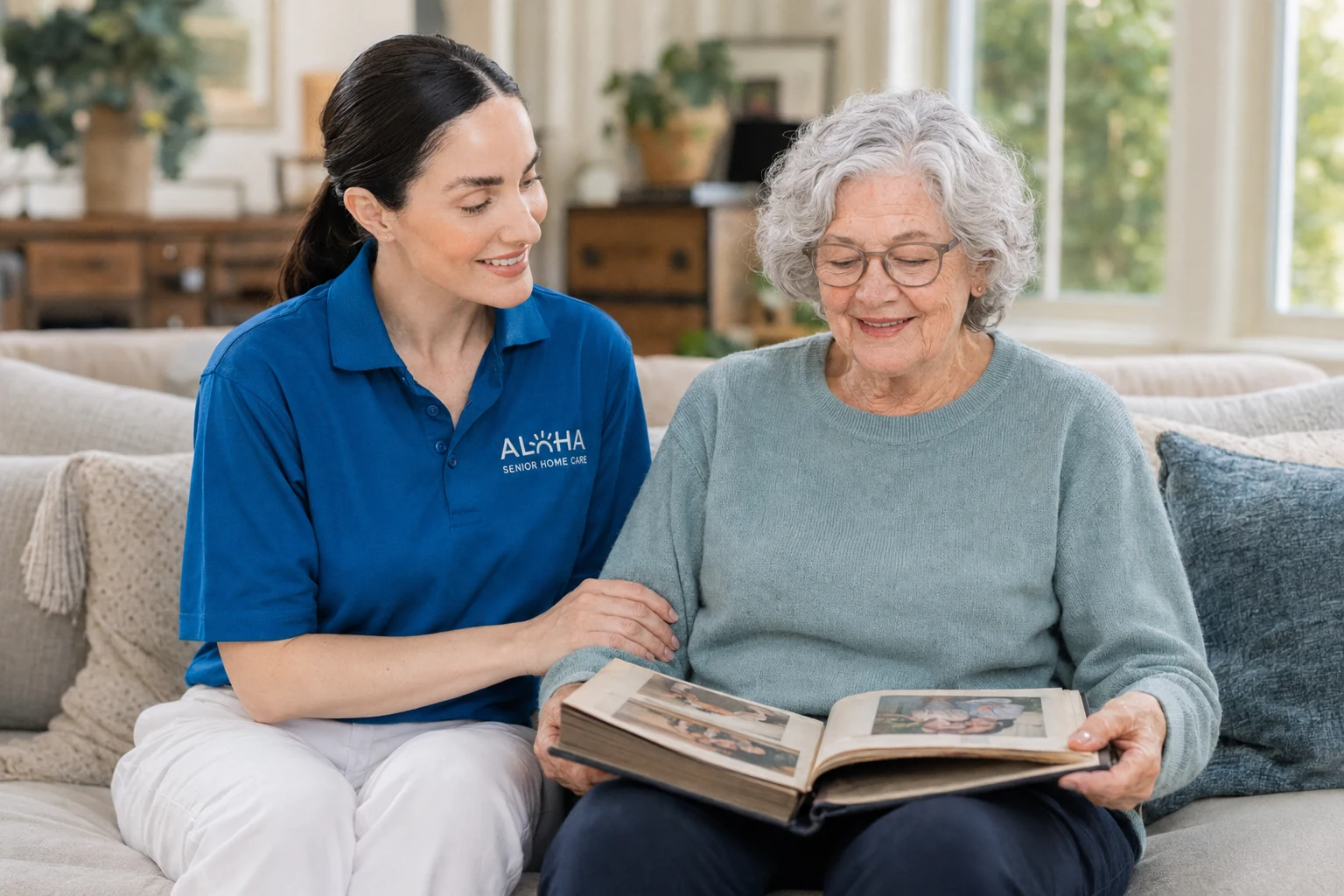
Caregiver matching is where a licensed home care agency San Diego families hire earns part of its fee
Matching is the quiet work that decides whether care lasts six weeks or six years. A good agency does not send the next available name. It asks about temperament first.
In a typical matching conversation, an agency might ask questions like these:
- Does your mother warm to someone chatty, or does she prefer quiet company?
- What does a normal afternoon look like right now, hour by hour?
- Is there a language, a faith, or a kind of cooking that would make her feel at home?
- What has not worked before, and why?
- Who in the family should get the call when something changes?
Those answers shape the pick. Skills matter too, of course. But the fit between two people in one kitchen is what families remember.
When hiring a caregiver in San Diego on your own, you can absolutely do this yourself. It takes interviews, reference calls, and a willingness to start over if the chemistry is off. That is real work, and it is worth pricing into your comparison.
Supervision and communication are the parts families notice most over time
Supervision is not someone hovering. It is a named person who knows your case and picks up the phone. In a nurse led agency, the structure tends to start with how the week actually runs, not with a diagnosis.
Maya German, RN, who leads Aloha Senior Home Care, often reminds families that steady routines and clear communication are what make non medical support feel calm rather than chaotic.
In practice, oversight of non medical help usually looks like a few ordinary habits:
- A written plan of the non medical help agreed on, updated when the routine changes.
- Notes from each visit so the next caregiver knows how the week went.
- Check ins with the family, especially in the first few weeks.
- A clear path to raise a concern without anyone feeling awkward.
- Someone reachable outside business hours. Aloha Senior Home Care is available 24/7.
With an independent helper, that loop still exists. It just runs through you. Many adult children keep a shared note or a group text with siblings, which works well if everyone keeps up.
Local realities that shape home care rates in San Diego
San Diego County is wide, and geography shows up in the rate conversation more than people expect. A caregiver may drive forty minutes between a coastal neighborhood and an inland one, and that travel time affects who can realistically take a short afternoon shift.
Agencies solve this by recruiting across the county so the pool near you is deep enough. Families hiring privately often find the opposite problem: one good person who lives twenty miles away and cannot do Tuesdays.
Cost of living here also sets a floor on what caregivers can accept and stay. If a quoted price seems far below everything else you have been told, it is fair to ask how it works. Not as an accusation, just as a question.
Choosing between a licensed agency and an independent helper comes down to what you are solving for
If your main constraint is the monthly budget, and your family has time and people nearby to cover gaps, an independent helper can be a reasonable fit. The independent caregiver versus agency decision is really a question about who absorbs the unplanned days.
If you live out of state, work full time, or simply cannot be the backup plan, the agency rate is buying you that coverage. That is the trade, stated plainly.
Aloha Senior Home Care is a licensed California Home Care Organization, license number 374700270, nurse led by founder Maya German, RN, with background checked and personally matched caregivers. The help is non medical: companionship, meals, light housekeeping, errands, medication reminders, and a steady arm when someone needs one. For medical needs, a doctor or a licensed medical provider is the right call.
One more practical note before you decide. Write down the three hardest hours of your loved one's week. Whichever option covers those three hours reliably is usually the one that holds up.
Helpful pages
Still weighing your options?
If you would like to talk it through with someone in San Diego, Aloha Senior Home Care offers a free, no pressure consultation.
This guide is general information, not medical advice. Aloha Senior Home Care provides non medical home care; for medical concerns, please consult your loved one's doctor.