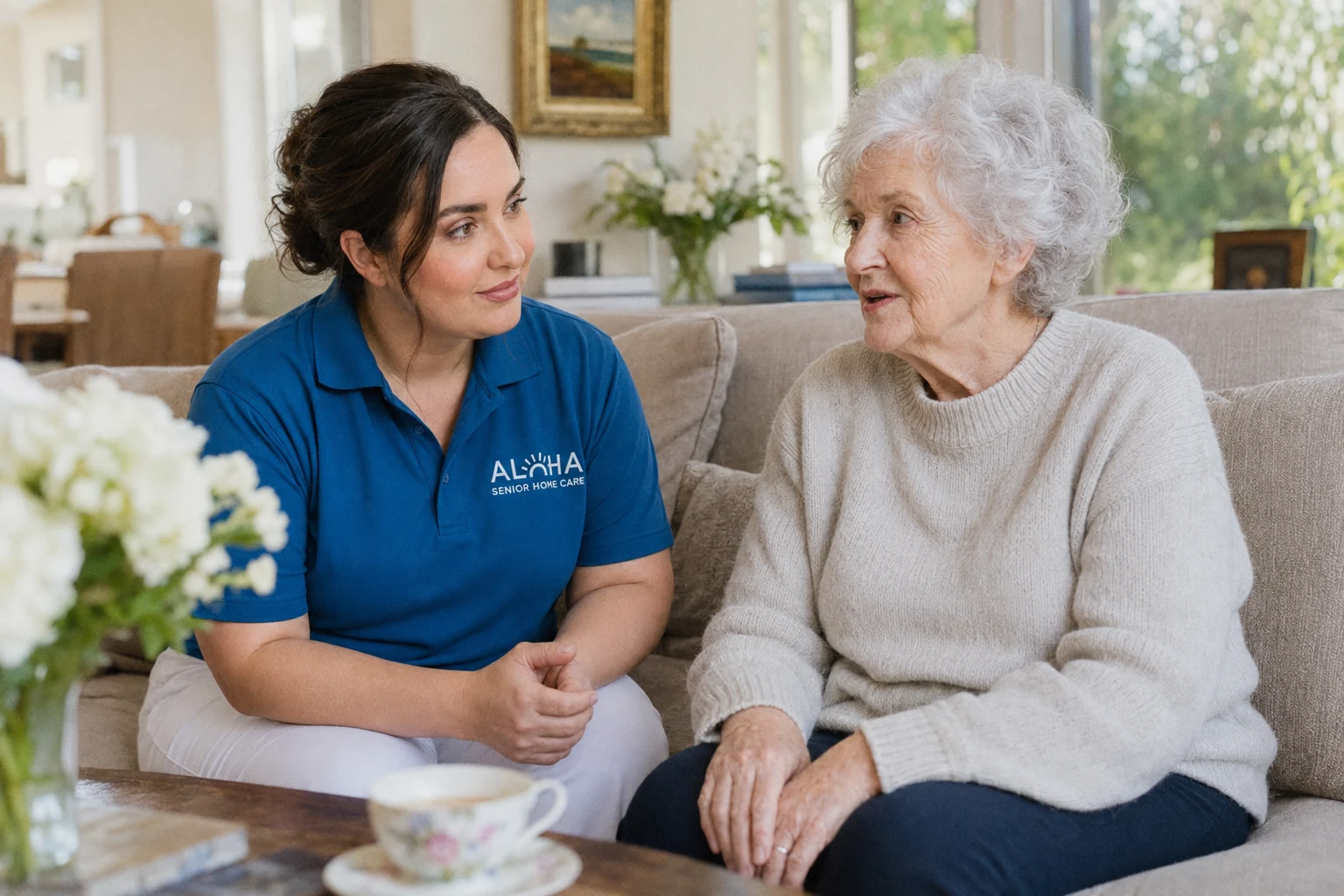

Choosing where a parent will live is one of the heaviest decisions a family makes. Most people start the search with no map at all. This guide puts the senior living options San Diego compared side by side, in plain words, so you can see what each path really asks of you. It is written from a nurse led point of view, and it is educational only. Nothing here replaces advice from your own doctor, attorney, or financial professional.
Senior living options in San Diego compared
Families in San Diego usually choose between three paths: a senior living community, a board and care home, or staying at home with in home support. Aloha Senior Home Care provides only the third one, non medical help at home, and we think you deserve a fair look at all three before you decide anything.
Here is the short answer, one sentence each.
- A senior living community is an apartment or suite in a larger building, with meals, housekeeping, and a calendar of activities included in a monthly fee.
- A board and care home is a licensed residential house, usually with a handful of residents, where staff cook, clean, and help with daily routines.
- Staying at home means your parent keeps their own house and their own habits, and scheduled non medical help comes to them.
None of these is the right answer for everyone. The right one depends on how your parent likes to spend a Tuesday, who in the family can show up, and what the household budget can carry.
A hypothetical family to keep this grounded
To make the comparison concrete, picture a made up family. This family is entirely hypothetical and is used here only as an illustration, not a real client.
We will call them the Nguyens. Their father is 84 and lives alone in a La Mesa house with a steep front walk and a laundry room downstairs. He cooks less than he used to. He still drives short distances but has stopped going across town. His two adult children both work, and they are starting to trade texts about what comes next.
Everything that follows about the Nguyens is logistics and daily life. Who cooks. Who drives. How often he sees his friends. Those are the questions families actually argue about at the kitchen table.
What a senior living community actually offers
A senior living community bundles housing, meals, and social activities into one monthly fee. In San Diego you will hear two labels used at these communities, and the difference matters.
Independent living is closer to an apartment with services. Residents come and go freely. Meals, housekeeping, transportation, and group activities are usually part of the package.
Assisted living adds hands on daily help, such as help getting dressed or bathing, usually priced in tiers on top of the base rent. Many buildings offer both, so a resident can shift from one to the other without moving towns.
What people tend to like is the built in social life. There is a dining room, a calendar on the wall, neighbors a few doors down. For someone who has grown quiet at home, that structure can be a real draw.
What people tend to find hard is the trade of privacy and square footage. A longtime homeowner may be moving from a three bedroom house to one room. Pets, furniture, and the garden all come into the conversation. Costs vary widely by building and by care tier, so ask each community for its fee schedule in writing rather than trusting a brochure number.
What a board and care home looks like day to day
A board and care home is a licensed residential house with a small number of residents and on site caregiving staff. In California these are often licensed as residential care facilities for the elderly. From the curb, most look like any other house on the street.
Inside, life is quieter and more routine based than a large community. Meals come out of a regular kitchen. Residents often eat together at one table. The number of residents is small, so staff get to know each person's habits quickly.
Board and care homes San Diego families tour are scattered through ordinary neighborhoods, which can be a plus if you want your parent to stay near the street where their friends and church already are.
The tradeoff is fewer organized activities and fewer amenities. There may be no fitness room, no bus, no events calendar. Outings often depend on family or on whatever the house arranges. Ask directly how a typical day runs, because it varies a lot from house to house.
Staying in your own house with in home support
Staying at home means a senior keeps their own routine while scheduled help comes to them. This is the path people usually mean by aging in place, and it is the one Aloha Senior Home Care supports in San Diego with non medical help.
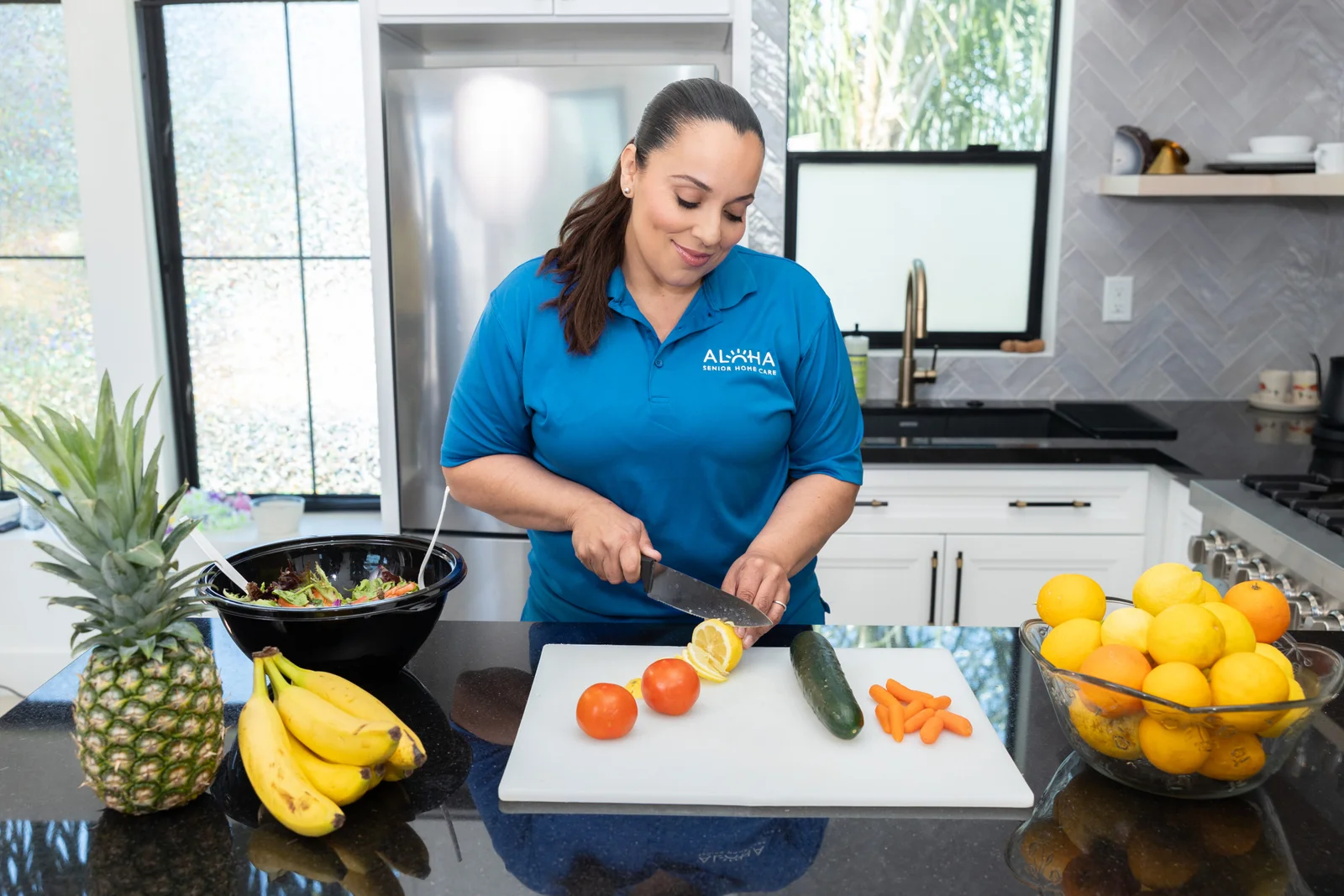
Non medical support at home covers the everyday things: meals cooked and shared, light housekeeping, laundry, grocery runs, rides to appointments, medication reminders, company for a walk, and a steady arm when someone is unsteady getting out of a chair. For medical needs, a doctor or a licensed medical provider is the right call.
In our hypothetical example, the Nguyens looked at their father's week honestly. The hard parts were dinner, the laundry stairs, and the long drives. None of that required a move. It required someone there a few hours a day.
Hours are the main dial here. A family might start with three mornings a week and add evenings later. Some families eventually move to around the clock coverage at home. Others never need more than a few hours.
The honest limits are worth naming too. Home has no built in dining room and no neighbors down the hall, so social contact has to be planned on purpose. And the house itself matters. If the only bathroom is up a flight of stairs, that is a real logistics problem no amount of help erases quickly.
A side by side way to compare the three options
Comparing these three paths side by side makes the tradeoffs easier to see at a glance. What follows is a plain senior living options comparison table. Copy it onto paper, fill in what you learn on each tour, and bring it to the next family conversation.
Senior living options comparison table
- Daily routine. Community: set meal times and a posted activity calendar. Board and care home: a household routine shared by a few residents. Home: your parent's own schedule, with help scheduled around it.
- Social contact. Community: built in, with neighbors and group events. Board and care home: a small, steady group at one table. Home: depends on visitors, outings, and planned company.
- Cost structure. Community: usually a flat monthly fee, plus tiers for added daily help. Board and care home: usually a flat monthly rate per resident. Home: usually hourly, so the total follows the hours you book.
- Family involvement. Community: staff handle meals and housekeeping, family handles visits and advocacy. Board and care home: similar, often with more direct contact with one or two caregivers. Home: family typically coordinates the schedule and fills the gaps between shifts.
- Flexibility to change. Community: changes usually mean moving tiers or units, often with notice periods. Board and care home: changes usually mean a conversation with the owner, sometimes a move. Home: hours can go up or down week to week.
In our hypothetical example, the Nguyens filled out this table after two tours. The row that decided it was flexibility. They were not sure what the next year looked like, so they wanted something they could adjust without a move.
Questions to ask about every option
Asking the same handful of questions about each option helps a family compare apples to apples. Ask these of every community, every board and care home, and every in home agency you talk to.
- 1Walk me through a typical weekday here, hour by hour, from waking up to bedtime.
- 2Who actually cooks the food, and can you show me this week's menu?
- 3How does someone get to a medical appointment across town, and who arranges it?
- 4What are the visiting hours for family, and can we join for a meal?
- 5What exactly is included in the base price, and what costs extra?
- 6How much notice is required to change the plan, pause, or leave?
- 7Is there a trial period, and what happens if the fit is wrong?
- 8Who do we call at 9 on a Sunday night, and will a person answer?
Write the answers down the same day. After three tours, buildings blur together, and a notebook beats memory every time.
How a nurse led team organizes a confusing decision
A nurse led team tends to start with the shape of the day, not with the paperwork. Nurses who have spent time across senior care settings often look first at how dinner happens, how the night goes, and who the person actually talks to in a week.
That is an observation habit, not a diagnosis. It helps because families often argue about the big word, move or stay, when the real question is smaller and more fixable.
In conversations with San Diego families, a recurring theme is guilt. One sibling lives nearby and is tired. Another lives out of state and feels helpless. A neutral list of criteria, like the table above, gives everyone the same page to argue from.
Maya German, RN, founder of Aloha Senior Home Care, often reminds families that there is no single right answer here, only the fit that suits this person and this household right now.
The San Diego angle: what is different locally
San Diego gives families a few practical advantages worth factoring into the assisted living vs home care question. The mild weather means outdoor time is realistic most of the year, which matters for someone who would rather sit on a patio than in a dining hall.
Geography is the other local reality. The county is spread out, and a specialist office can easily sit forty minutes from home in traffic. If your parent has stopped driving the freeway, transportation becomes a central part of the decision, no matter which path you pick.
Housing stock matters too. Many older San Diego homes have a step up at the front door, a narrow hallway, or laundry in a garage. Walk the house once with fresh eyes and note every spot that already takes effort.
Aloha Senior Home Care provides non medical in home support to families across San Diego and the surrounding neighborhoods, and our service areas page shows where we currently cover.
Keep the money question simple
Communities and board and care homes usually quote a monthly rate. In home support is usually hourly, so you control the total by controlling the hours. At Aloha Senior Home Care the standard rate is $40 to $44 an hour, the same around the clock, evenings and weekends included, with seven holidays billed at one and a half times the standard rate. We accept private pay and Long Term Care insurance, and we do not bill Medicare or Medi-Cal.
Combining paths, and changing your mind later
Many families do not pick one path forever, and that is a normal, reasonable way to handle it. A common sequence is in home support first, then a community later if the house stops working.
Some families also blend. A parent lives in an independent living apartment and still books private companionship for outings or quiet afternoons. Rules differ by building, so ask the community whether outside non medical help is permitted before you assume it is.
If you are early in this process and unsure, starting with a few hours a week at home is often the lowest risk first step. It buys information. You learn what your parent actually needs help with, and that makes any later decision less of a guess.
If you would like to talk through your family's specific situation, you can reach our team through our contact page. Aloha Senior Home Care is nurse led by Maya German, RN, and is a licensed California Home Care Organization, number 374700270, with background checked caregivers who are personally matched and available 24/7.
Helpful pages
This article is for general education and is not legal, financial, or medical advice. Every family's situation is different, and the licensing details and fee structures of any community or home should be confirmed directly with that provider and with the state.
Still weighing the options?
If you are in San Diego and want a calm, no pressure conversation about what a week at home could look like, Aloha Senior Home Care offers a free consultation whenever you are ready.
This guide is general information, not medical advice. Aloha Senior Home Care provides non medical home care; for medical concerns, please consult your loved one's doctor.