Here is non medical home care San Diego explained in one plain sentence: it is practical, hands on help with everyday life at home. Think meals, company, light housekeeping, errands, and rides, without any clinical treatment or medical decisions. Families search for this after a phone call that leaves them uneasy. A father who still drives and still cooks, but the mail is piling up. A mother who says she is fine, and sounds tired. You do not need to have it all figured out before you read on. You only need to know what this kind of help does, and what it does not.
Aloha Senior Home Care is a nurse led, non medical home care agency in San Diego. This guide is written to be useful wherever you live, then to show you what the local picture looks like here.
What Non Medical Home Care Actually Means in San Diego
Non medical home care is help with daily living, provided at home by a trained caregiver, with no clinical tasks involved. It is the kind of support that makes an ordinary day run smoother. Nothing about it requires a medical license.
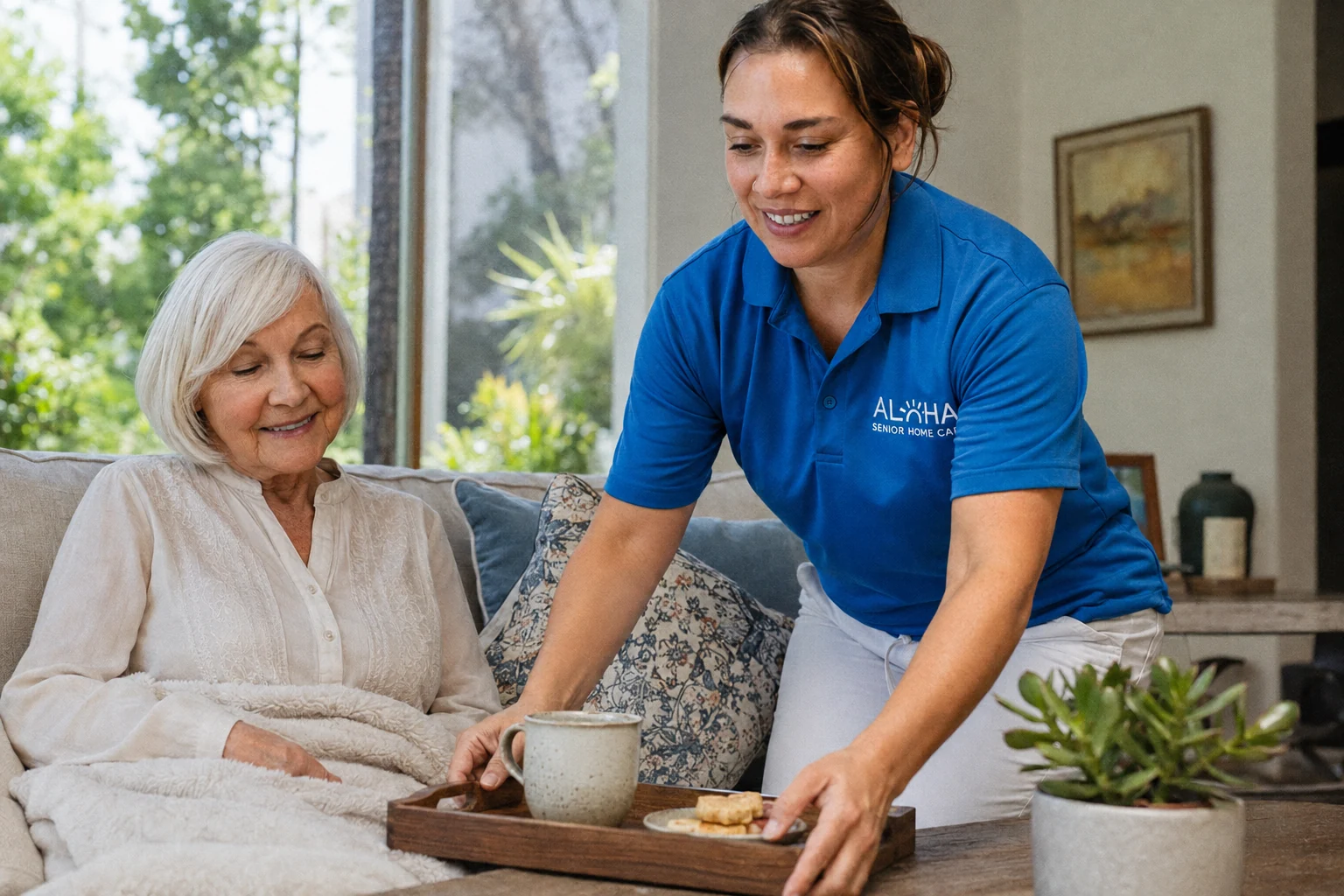
In practice, a caregiver from a non medical agency such as Aloha Senior Home Care may do things like this:
- Cook meals, sit down and eat together, and wash up afterward
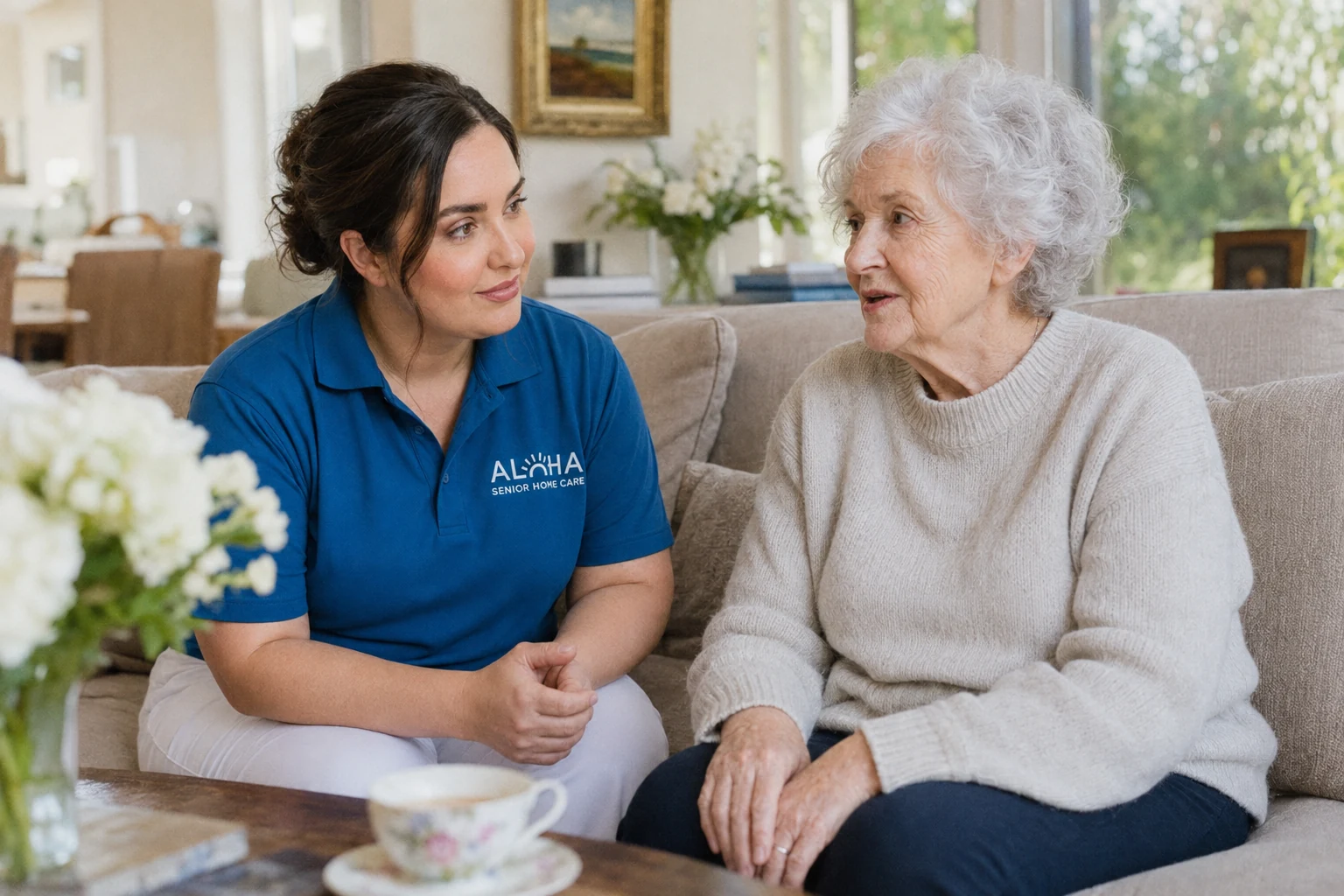
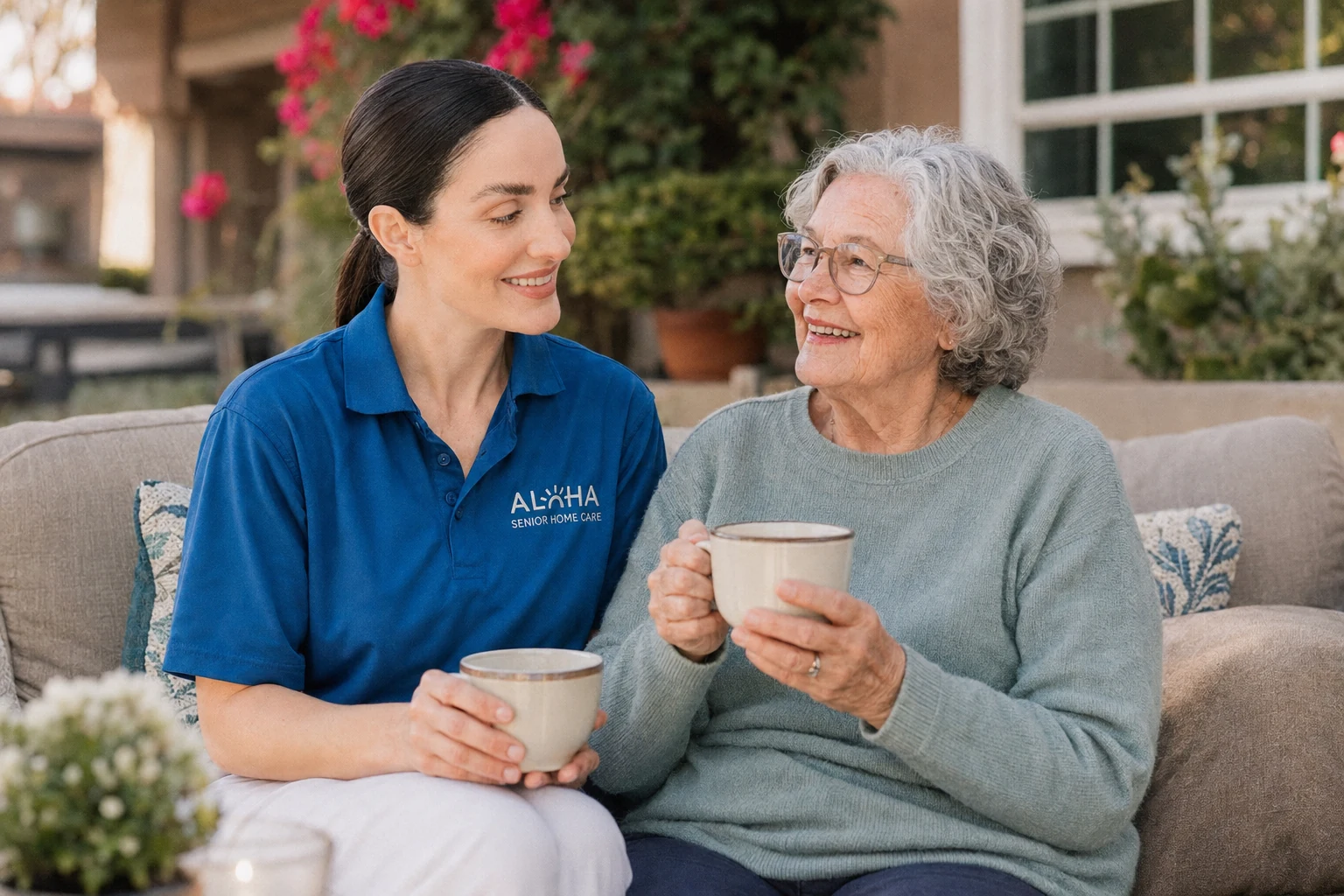
- Keep company through an afternoon, talk, play cards, look at old photos
- Tidy up, do laundry, change the sheets, keep the kitchen clear
- Drive to appointments, the grocery store, church, or a friend's house
- Give simple reminders, including a reminder that it is time to take a dose
- Offer a steady arm for walking, or standby help with bathing and dressing
- Notice when the mail is piling up or the fridge is empty, and tell the family
That last one matters more than families expect. A caregiver who is in the house a few times a week sees the small changes first.
What Non Medical Home Care Does Not Cover
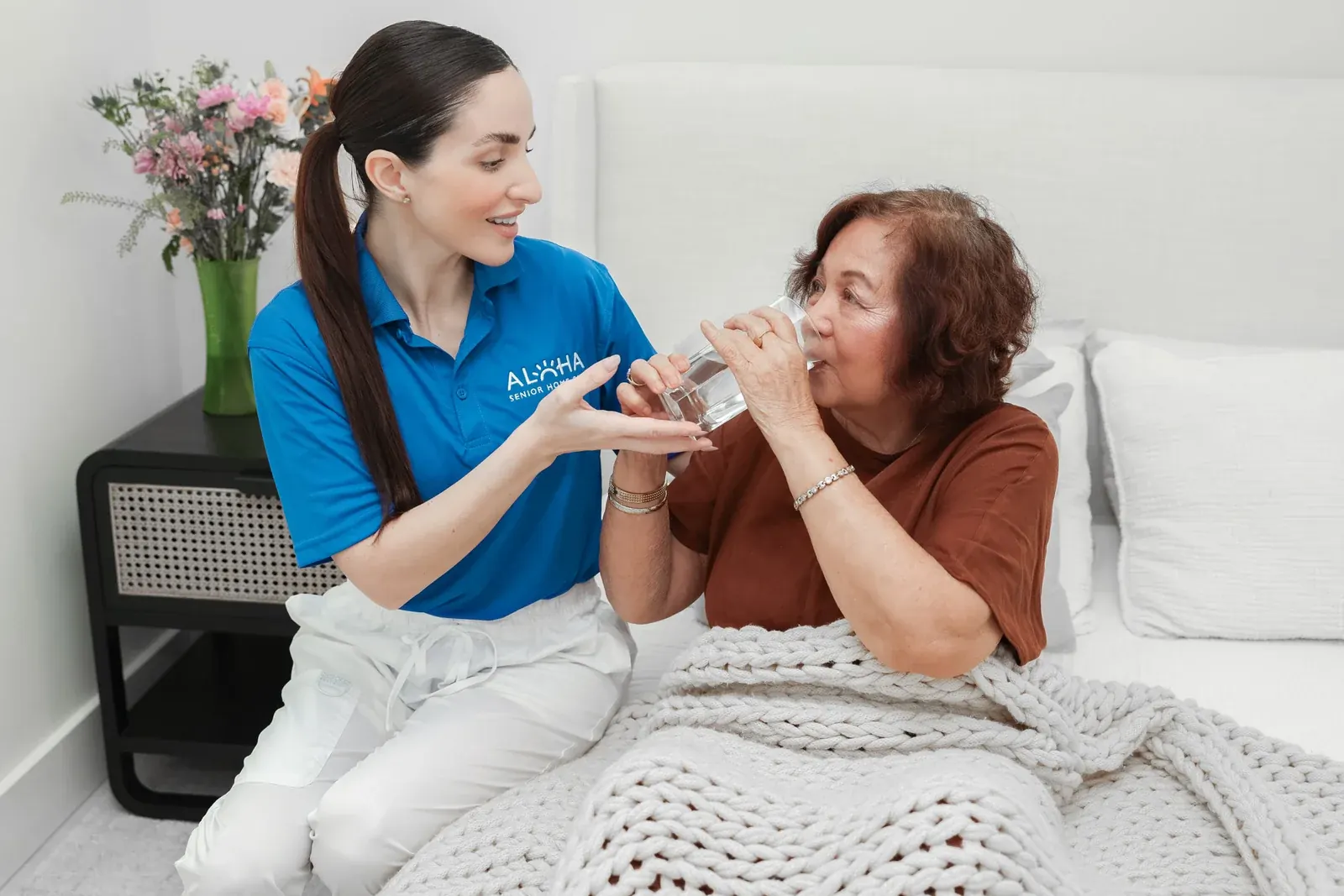
Non medical home care does not include any task that requires a medical license, and that boundary is firm. A caregiver does not handle doses, treat wounds, run therapy sessions, take clinical readings, or advise on treatment. A caregiver does not decide anything about a prescription, a symptom, or a health condition.
Here is the plain version of the line. A caregiver can say, gently, that it is four o'clock and time for the pills on the counter. A caregiver cannot sort those pills, hand them over, or change what is taken. That difference sounds small in a kitchen. In California it is the whole reason two separate kinds of agencies exist.
If your loved one needs treatment, testing, therapy, or any judgment about a health condition, a doctor or a licensed medical provider is the right call. Aloha Senior Home Care will say so plainly rather than stretch outside its scope.
A simple way to hear the difference
Ask yourself whether the task needs a license or just a kind, capable person. Making soup and driving to the dentist need a capable person. Anything touching treatment needs a licensed medical provider.
A Hypothetical San Diego Family, Sorting It Out
Picture a hypothetical family we will call the Nguyens, trying to decide whether their father needs a medical provider or non medical support at home. This family is invented purely as an illustration. Nothing here describes a real client.
The father is 82 and lives alone in a single story house in Clairemont. He still drives short distances. He still makes his own coffee. His daughter visits on a Sunday and notices two things. The mail is stacked unopened on the dining table. The refrigerator holds condiments and not much else.
Her first instinct is that he needs a nurse, since most families start there when worry reaches for the biggest answer. So she writes down what she actually saw, task by task, instead of guessing at a cause.
- 1Meals are being skipped, mostly dinner, mostly on days no one visits.
- 2Paperwork is not getting opened, so bills may be sitting unpaid.
- 3Freeway driving has quietly stopped, so appointments are getting pushed.
- 4The house is not dirty, but laundry and sheets are falling behind.
- 5There is no health emergency, no new symptom, no doctor's order in hand.
Look at that list. Four of the five items are daily living, not treatment. The honest first step for this hypothetical family is non medical support a few afternoons a week: someone to cook, sit down to eat with him, drive him to appointments, and keep the laundry moving.
And if his doctor later orders something clinical, that is a separate service with a separate provider. The two can run side by side. One does not replace the other.
How a Nurse Led Perspective Draws the Line
A nurse led agency draws a careful line between daily support and clinical work, and that line exists to keep everyone safe. Aloha Senior Home Care is nurse led, which shapes how caregivers are trained and what they are asked to notice. It does not turn a caregiver into a clinician, and it is not meant to.
A nurse led team tends to look first at how the evening runs. What time does dinner happen. Who is there. What does the walk from the bedroom to the bathroom look like at 2 a.m. Those questions come before any talk of a health condition, because that call belongs to the doctor and the evening belongs to the family.
Caregivers are also trained on what to do when something is outside their scope. They do not improvise. They report what they saw, in plain words, to the office and to the family, so the family can bring it to the doctor. Maya German, RN, who founded and leads the agency, keeps that habit simple on purpose: describe, do not diagnose.
Maya German, RN, often puts it this way: caregivers are taught to describe what they saw and leave the conclusions to the doctor.
Non Medical Home Care Decision Checklist
Use this plain checklist before you call any agency, because the answers decide which kind of help you are shopping for. Write your answers down. Bring the page to the first phone call.
- Is the main problem safety and daily living, or is it a health condition that needs treatment?
- In the last two weeks, which specific tasks got skipped? Name them, do not generalize.
- Are meals being made and eaten, or skipped when no one is there?
- Has driving stopped or shrunk, and are appointments getting missed as a result?
- Is mail, bill paying, or household paperwork falling behind?
- Does bathing and dressing need a steady arm nearby, or hands on clinical help?
- Is there a doctor's order for anything at home right now? If yes, ask the doctor who should provide it.
- Which hours of the day are hardest? Mornings, late afternoons, or nights?
- Who is covering those hours today, and how long can that person keep it up?
If most of your answers land in daily living, non medical home care is the right category to shop. If most land on treatment or doctor's orders, start with the doctor's office instead. If they are split, you may need both, and there is nothing unusual about that.
One more question worth adding for anyone in a spread out county like ours: how far is the drive between the house and the appointments that matter? In San Diego, a visit in one neighborhood and a specialist in another can eat an hour each way. That travel time is real, and it belongs in your plan. Aloha Senior Home Care talks through geography and hours before anything is scheduled.
What This Looks Like Locally in San Diego
San Diego families face a few local realities that shape non medical home care here. Plenty of older adults live in canyon rim or hillside neighborhoods, and a flight of steps or a steep driveway is often the first hurdle before the car. Adult children frequently work across town from where a parent lives, which turns a quick check in into a real freeway drive along routes like I-15, I-8, or the 163, sometimes with Balboa Park sitting right in the middle of the trip. Add in the fact that hospitals and specialist offices are scattered across the county, from the coast to the inland neighborhoods, and a specialist visit often ends up nowhere near the neighborhood pharmacy or the primary doctor. That is why rides matter as much as meals."
Aloha Senior Home Care provides non medical support to families across San Diego and its surrounding neighborhoods. Care is available 24/7, caregivers are background checked and personally matched, and the agency is a licensed California Home Care Organization, license number 374700270.
On cost, plain numbers help: the standard rate is $40 to $44 an hour, the same around the clock, evenings and weekends included, with seven holidays billed at one and a half times the standard rate. Private pay and Long Term Care insurance are accepted. Aloha Senior Home Care does not bill Medicare or Medi-Cal.
How Families Can Take the Next Step
Deciding between non medical and clinical help gets easier once you know which specific tasks need covering each day. Start with your checklist page, not with a brochure. Then call two or three agencies and ask the same questions of each, so you are comparing the same things.
- 1Read your task list out loud to whoever answers the phone, and listen for whether they say any of it is outside their scope.
- 2Ask for the license number, the hourly rate, and how a caregiver is matched to your parent.
- 3Ask who you reach on a Sunday evening, and how a schedule change gets handled.
- 4Ask what happens if the first caregiver is not the right fit for your parent.
- 5Start with a small, steady block of hours in the part of the day that is hardest.
A free, no pressure consultation is a fair place to test all of that. You are allowed to ask questions and then go think about it.
Helpful next reads
Talk it through with a nurse led team in San Diego
If you would like to walk through your own task list with someone, reach out to Aloha Senior Home Care for a free, no pressure consultation.
This guide is general information, not medical advice. Aloha Senior Home Care provides non medical home care; for medical concerns, please consult your loved one's doctor.