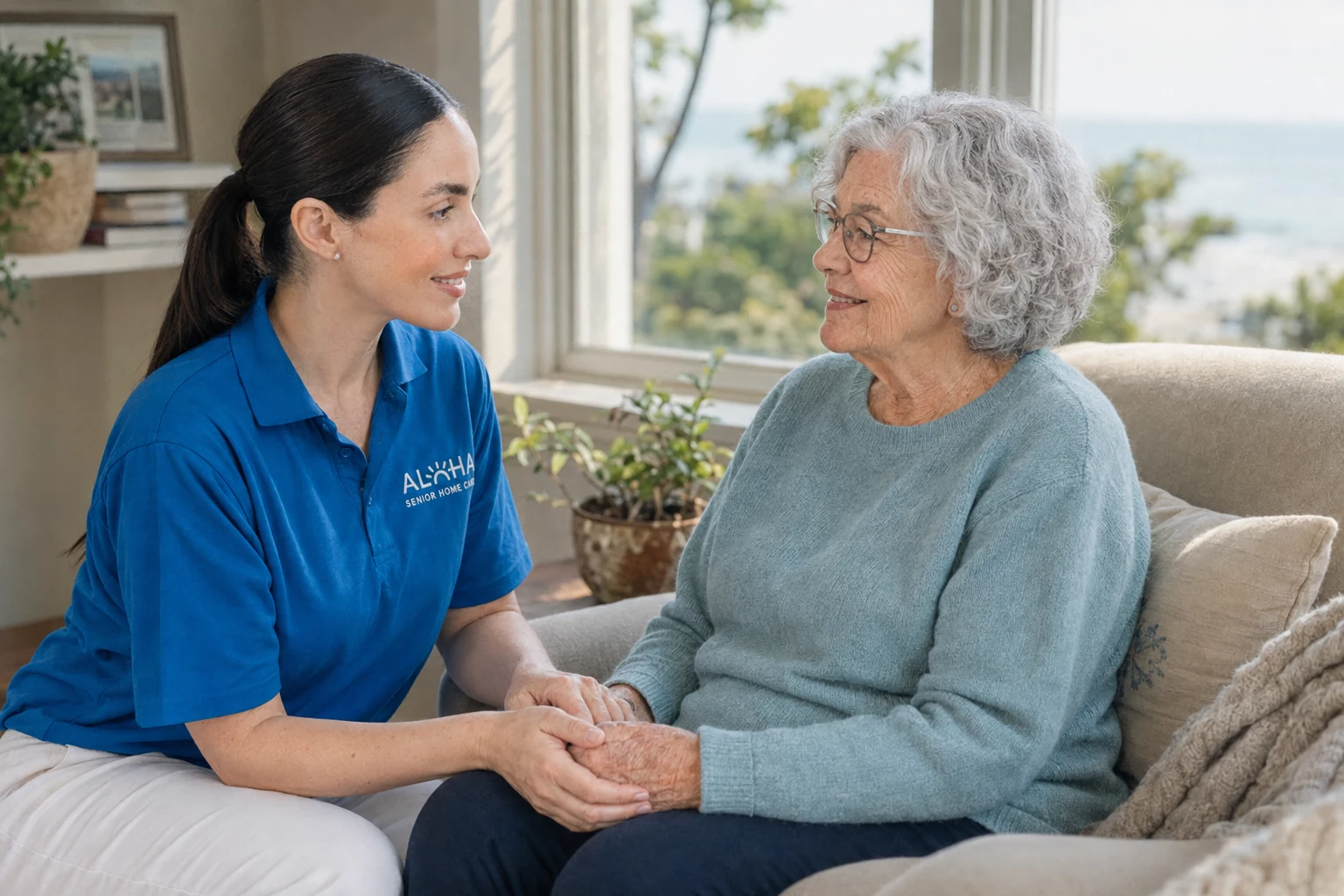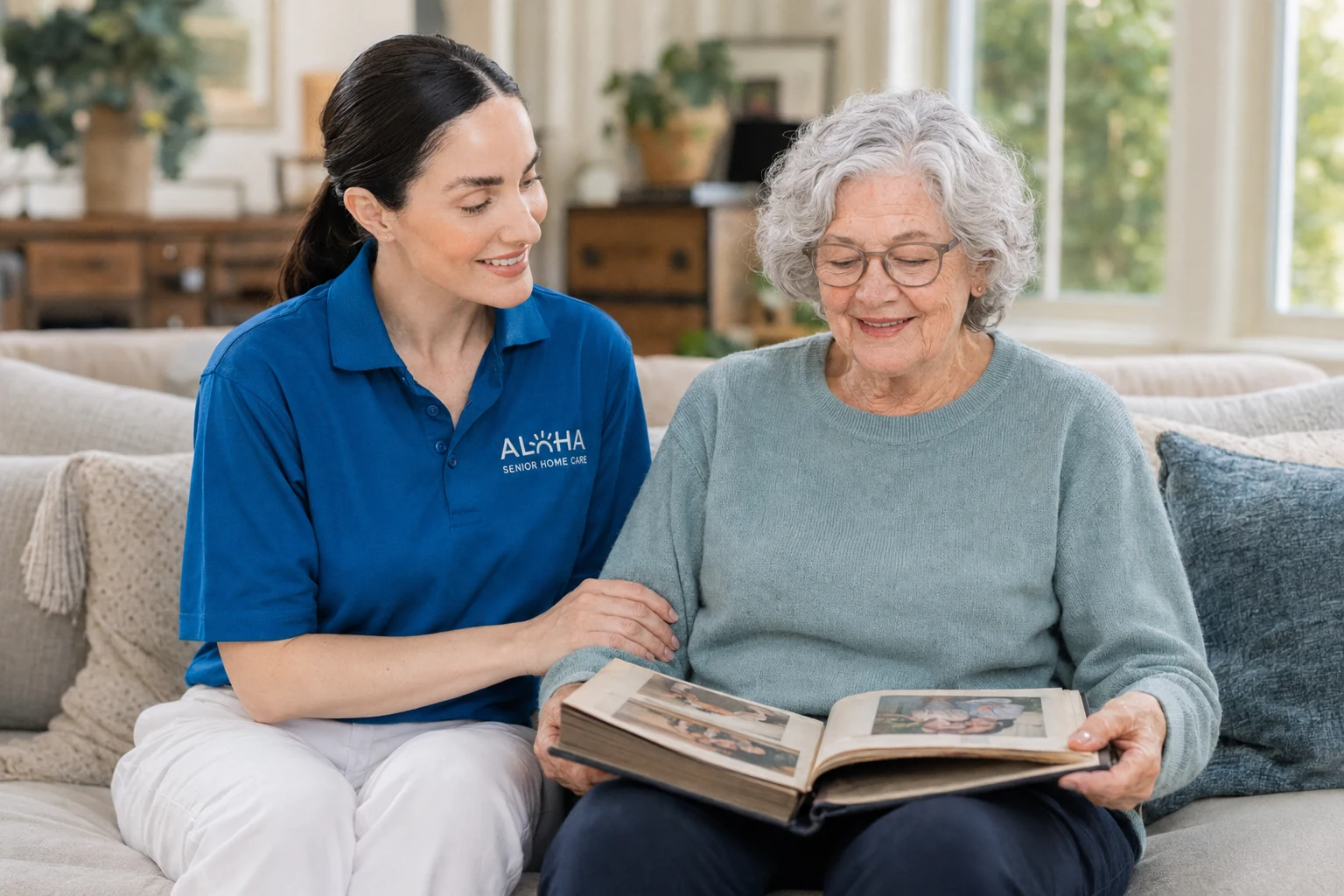


Most families start thinking about home safety for dementia after one small scare. A pot left on a warm burner. A parent standing in a dark hallway at 2 a.m., unsure which door is the bathroom. Nothing terrible happened. But something shifted, and now you are looking at the house differently.
This guide walks you through a home room by room. It works anywhere in the country, in a two bedroom apartment or a house someone has lived in for decades. I am Maya German, a registered nurse and the founder of Aloha Senior Home Care in San Diego, and this is how I look at a home when a family asks me to take a walk through it with them.
What Home Safety for Dementia Really Means
Home safety for dementia is not about locking a house down. It is about removing the small, daily confusions that make a familiar house feel unfamiliar.
Here is the short answer, from Aloha Senior Home Care. Home safety for dementia means looking at each room through the eyes of someone who may feel unsure about clutter, glare, or a changed layout. The goal is a home that feels clear and predictable. Better light, plain labels, and fewer lookalike objects often do more than any gadget.
I think of it as a calm home walkthrough. You are not hunting for danger. You are hunting for friction. Where does the day snag? Where does someone hesitate, or give up, or ask the same question twice?
Let me use an illustrative example. The Alvarez family below is a composite, not a real client, and the details are made up to show a pattern many families recognize.
Elena notices things at her dad Ramon's place. He leaves pots on the stove and wanders off. At night he cannot find the bathroom in the home he has lived in for most of his adult life. Is it the house, or is it her father? The honest answer is usually both, and only one of those you can rearrange.
I have walked into a lot of beautiful homes that were quietly working against the person living in them. Too many patterns on the floor. Too many cabinet doors that look the same. That is nobody's fault. It is just a home built for a different season of life. — Maya German, RN, founder of Aloha Senior Home Care
One more thing before we start walking. Go slowly. Change two or three things, then live with them for a week. A home that suddenly looks different is harder to read, not easier.
The Entryway and Living Room: Reducing Clutter and Confusion
A clear path from the front door to a favorite chair prevents more daily frustration than any lock ever will. This is where a calm home walkthrough begins, whether you live in San Diego or Ohio.
Stand in the doorway. Do not look at the room the way you always have. Look at it as a path.
- Clear one wide walking lane from the door to the chair your loved one uses most.
- Take up throw rugs that slide, curl, or sit at the edge of a doorway.
- Tuck cords along the baseboard and behind furniture, not across the floor.
- Add light so the room stays evenly bright, with no dark corner and no glare off a screen or window.
- Keep keys, glasses, and the phone in one visible spot, not three drawers.
- Put away the extra remotes and leave the one that matters, with the two buttons they use marked in plain tape.
- Move an extra side chair or ottoman out if it narrows the path.
Busy floor patterns are worth a second look. A dark rug on a light floor can read like a hole. A shiny tile can read like water. You do not need to replace anything. Sometimes a plain runner or a different lamp settles the whole room.
The Kitchen: Small Changes That Lower Everyday Friction
The kitchen is where most families notice the first sign that a home needs a second look. It is the busiest room in the house and the one with the most lookalike objects.
Back to our illustrative Alvarez example. Ramon starts a pot of beans, walks to the mail, and forgets it. Elena's first instinct is to take the kitchen away from him. That is understandable, and it is usually the wrong first move. Cooking is his. The goal is to keep him in the kitchen with fewer ways for the day to go sideways.
- Use stove knob covers, or pull the knobs off when no one is cooking.
- Unplug the toaster, kettle, and coffee maker when they are not in use.
- Move cleaning sprays and dish soap out of the food cupboard. Bottles that sit side by side get mixed up.
- Label cabinets with big plain words, or tape a photo of what is inside on the door.
- Leave out one set of plates, one set of utensils, one pan. Fewer choices, less standing and staring.
- Swap dark plates for light ones if the table is dark, so food is easy to see.
- Toss what is past date each week so the fridge holds only what is good today.
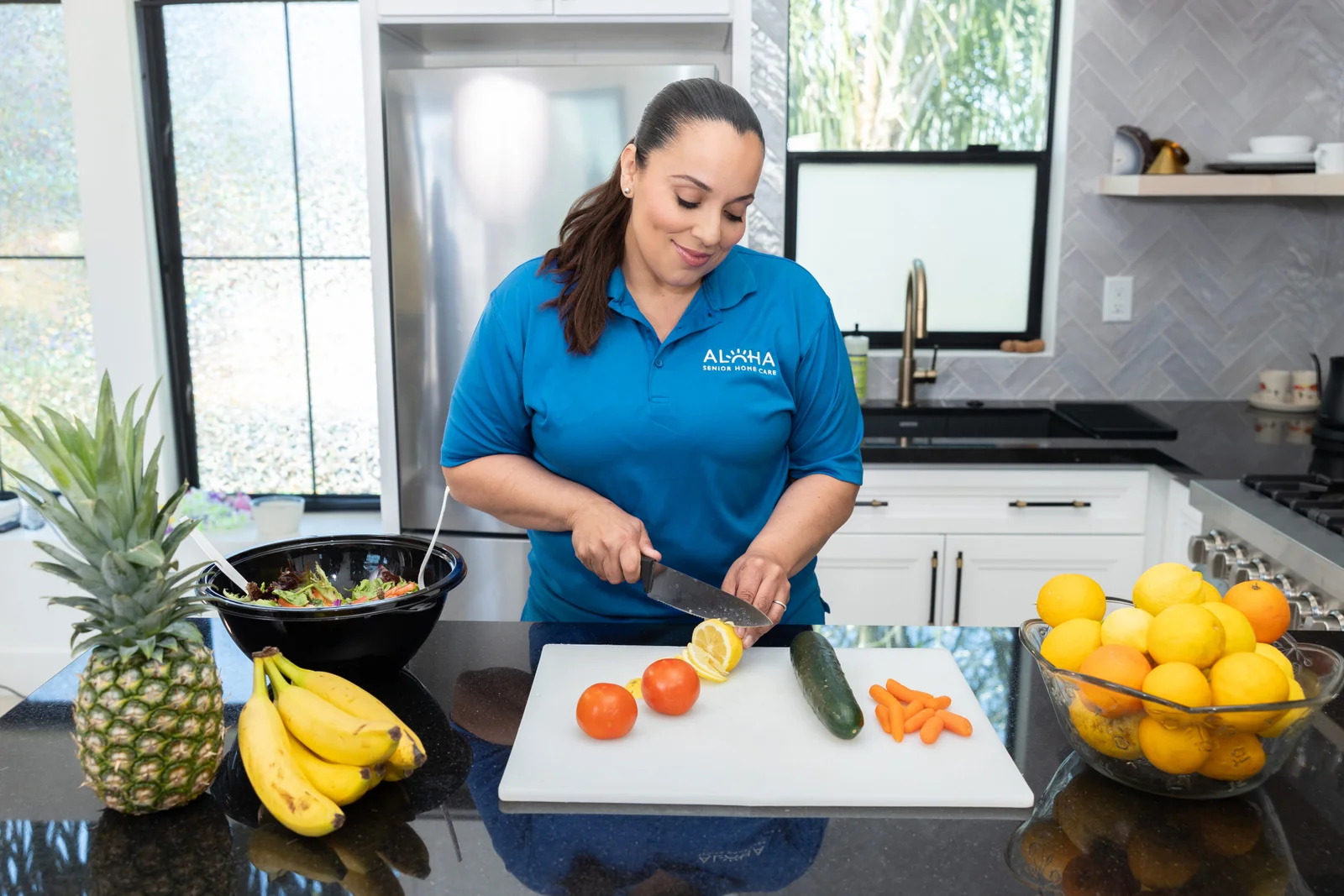
Cooking together is often the real fix. A caregiver or a family member peels and chats while your loved one stirs. The stove is watched without anyone announcing that the stove is being watched. That is the difference between supervision and company.
The Bathroom and Hallway: Supporting Nighttime Independence
Nighttime confusion is rarely about memory alone. Darkness, glare, and three identical doors in one hallway do a lot of the damage.
In our illustrative example, Ramon gets up at night and stands in the hall. Every door is white. Every door is closed. He is not lost in his mind so much as lost in his hallway.
Walk the route yourself at night with the lights off. That walk tells you more than any list I could write.
- 1Plug in low nightlights along the whole path, from the bed to the bathroom door. Not one. The whole path.
- 2Leave the bathroom door open at night, or mark it with a picture of a toilet at eye level.
- 3Add contrast in the bathroom. A colored toilet seat on a white toilet is easier to find than white on white.
- 4If a grab bar would help by the toilet or in the shower, have a handyman or contractor mount it into the wall studs. That is not a caregiving task, but it is worth arranging.
- 5Use a rubber mat in the tub and take out the small bath rug that slips.
- 6Setting the water heater lower is a household comfort preference some families choose, so hot water feels gentler at the tap.
- 7Cover or move a mirror if your loved one seems unsettled by the reflection at night.
- 8Clear the counter down to the few things used daily, so the toothbrush is never buried.
If bathing has become hard, a caregiver can stand close by, hand over the towel, and offer a steady arm. Aloha Senior Home Care provides that kind of non medical help across San Diego. For anything involving health, a doctor or a licensed medical provider is the right call.
The Bedroom: Creating a Calm, Predictable Space
A predictable bedroom often becomes the one room where a person living with dementia feels most like themselves. It is worth protecting.
Start with what is already loved. The quilt from a sister. The photo on the dresser. Familiar objects in familiar places do real work here, and they cost nothing.
- Keep a clear, lit path from the bed to the door.
- Put a lamp within arm's reach of the bed, with a switch that is easy to feel for.
- Thin the closet to a handful of outfits, so getting dressed is a small decision.
- Use a large face clock that shows day and night, if that helps mornings feel less confusing.
- Keep the bed at a height where feet reach the floor easily.
- Hold the same order of evening steps, in the same room, at about the same time.
That last one matters more than people expect. A small evening routine can bring real calm, and the order of it is the point, not the length. Tea, then teeth, then the same chair, then bed. When the sequence stays steady, the person does not have to work out what comes next.
A Simple Room by Room Dementia Home Safety Checklist
Most families do not need to renovate a home. They need a short checklist they can walk through once a season, in about twenty minutes, with a cup of coffee in hand.
Here is the one I use. Five words, five questions, every room.
- 1Light. Is every path bright enough, including the path at 2 a.m.?
- 2Lookalikes. Is anything easy to mix up, like sprays near food or three identical doors?
- 3Landmarks. Is there a photo, label, or color that says clearly what this door or drawer is?
- 4Loose ends. Are rugs, cords, or piles sitting in a walking path?
- 5Less. Can this room be simplified so there is one clear choice instead of six?
Do it four times a year and you will catch drift. Homes drift. A box comes in at the holidays and never leaves. A lamp bulb burns out and nobody swaps it. Seasons change the light itself, and a hallway that was fine in June gets dim by December.
Write down what you changed and the date. When a sibling calls and asks what is being done, you will have an answer, and next season you will not redo the same work.
Bring one other person
Walk the house with someone who does not live in it. A neighbor, a friend, an adult child who visits twice a year. Fresh eyes catch the extension cord you stopped seeing in 2019.
Where Non Medical Dementia Care at Home Fits In
Aloha Senior Home Care is a nurse led, non medical home care agency in San Diego, founded by Maya German, RN. Our caregivers are background checked, and support is available 24/7.
A checklist fixes the house. It does not fill the hours. What many families find hard is not the grab bar. It is the long afternoon, or the 20 hours a week that a working daughter cannot cover. That is an illustrative figure, not a rule, and every family lands somewhere different.
Non medical dementia care at home looks like ordinary things done steadily. Company and conversation. Meals cooked and shared. Light housekeeping so the floor stays clear. Medication reminders. Errands and a ride to a nearby senior center's art class. A steady presence during the hours that feel longest.
Homes here have their own quirks. Older San Diego bungalows and hillside houses often have a step down into a back patio and bright afternoon glare through west facing windows. If the glare makes a hallway hard to read, a sheer curtain and a lamp go a long way. That is the sort of thing our team notices when we visit a home in San Diego and the neighborhoods nearby.
Aging in place safely is usually a mix of both: a house that stops arguing with the person in it, and a person who shows up regularly. Maya often reminds families that the point of all this tidying is not control. It is so someone can still pour their own coffee, find their own bathroom, and stay the head of their own household a while longer.
Helpful next reads
Want a second set of eyes on the house?
If you are in San Diego and would like to talk through what a safer, calmer week at home could look like, call Aloha Senior Home Care for a free consultation with no pressure.
This guide is general information, not medical advice. Aloha Senior Home Care provides non medical home care; for medical concerns, please consult your loved one's doctor.