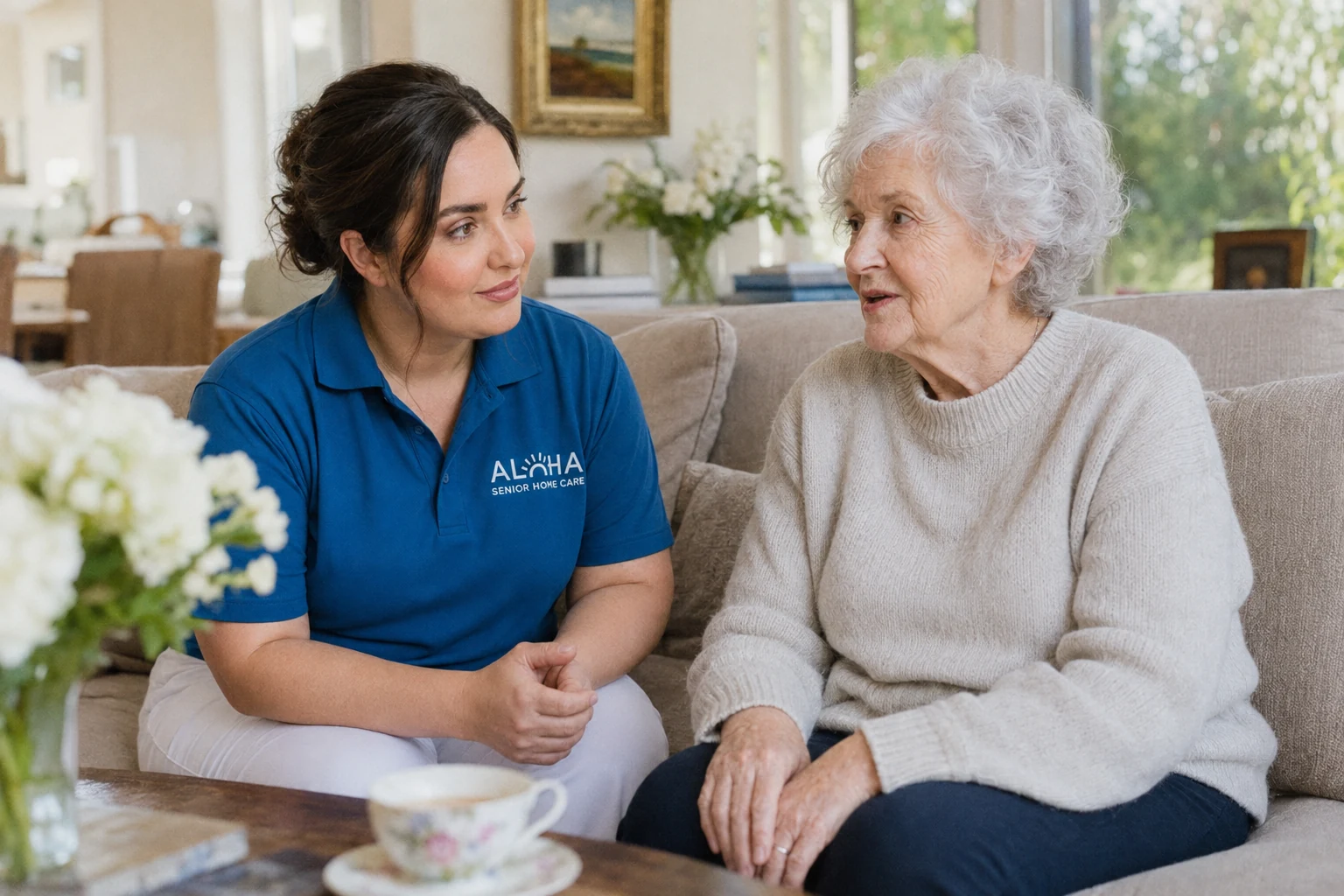

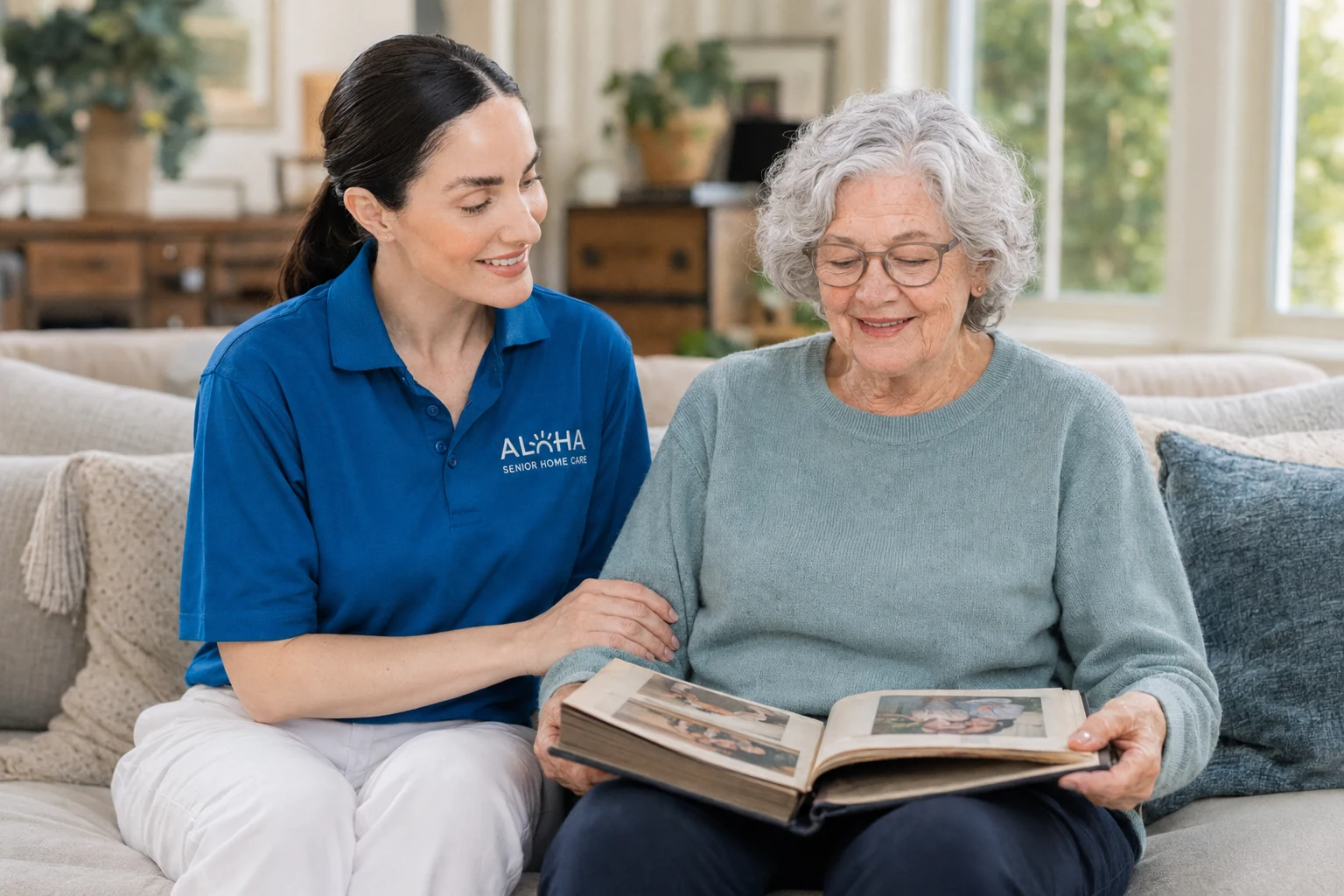
When someone you love is living with dementia, the way you talk together starts to change, and it can feel confusing, even heartbreaking. Good dementia communication is less about getting the facts straight and more about staying connected. The goal is to meet your loved one where they are today, protect their dignity, and keep the moment calm. This guide offers gentle, practical ways to do that, drawn from what our nurse led team sees every day supporting San Diego families at home.
Meet Them Where They Are
Arguing rarely wins with dementia, and it often leaves everyone hurt. If your mother believes she still needs to pick up children who are now grown, correcting her can feel like losing the same news over and over. Instead, step gently into the world she is describing. Follow the feeling underneath her words and let the moment pass without keeping score.
Some people call this joining their reality. You are not lying to your loved one. You are choosing connection over being right, which is almost always the kinder trade.
Small Changes That Make Dementia Communication Easier
You do not need a script. A few small habits, repeated with patience, tend to smooth the hardest moments.
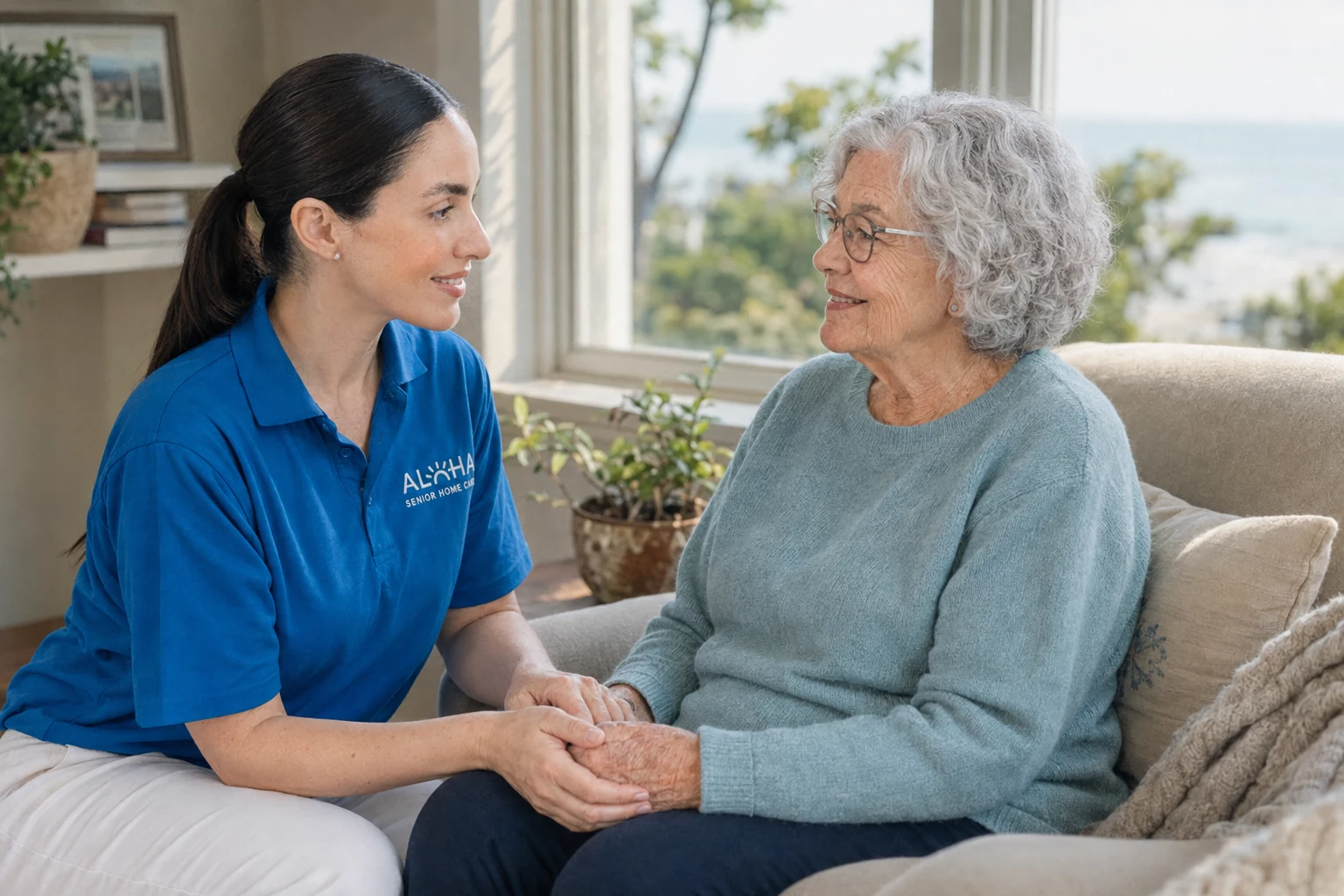
- Come into view first and say who you are before you begin, so you are never a surprise.
- Use short, simple sentences and share one idea at a time.
- Ask this or that questions instead of open ended ones. Tea or water is easier to answer than what would you like to drink.
- Slow down. Leave a long pause after you speak and give plenty of time for a reply.
- Watch your face and your hands. A warm expression and calm posture say more than the words do.
- Lower the noise. Turn off the television and find a quiet spot so your voice is easy to follow.
Pause before you rephrase
When a question does not land, resist the urge to repeat it louder or faster. Wait quietly for a slow count of ten, then say the very same thing again in the same gentle way. Processing can take longer than you expect, and that extra breath often brings the answer you were waiting for.
When Feelings Matter More Than Facts
As memory shifts, emotion often stays clear long after the details fade. Your loved one may not recall what you said, but they will remember whether they felt safe, respected, and heard. That is why meeting the feeling first matters so much.
If he says he wants to go home while sitting in his own living room, he may be reaching for a feeling of comfort rather than a place on a map. Try saying, it sounds like you are missing home, tell me about it. You are meeting the emotion, not debating the address.
You will not always find the right words. Presence, a soft voice, and an unhurried hand on the shoulder often say everything that needs saying.
Offer Simple Choices and Reduce Overwhelm
Too many options at once can feel like a test, and tests can feel stressful. Offering two clear choices restores a sense of control without the pressure of an open ended decision. Would you like the blue sweater or the gray one is far kinder than what do you want to wear.
Keep the day to day rhythm familiar. Predictable routines, favorite music, and a calm room can ease the background stress that makes conversation harder. When agitation rises, it is rarely about the moment in front of you. It is often hunger, tiredness, discomfort, or simply too much happening at once. Meet the need, and the words tend to soften.
Every person living with dementia is different, and what they need can change over time. When new or worsening changes show up, it is always worth checking in with their doctor, who knows their history best.
You Do Not Have to Do This Alone
Caring for someone with dementia is tender, patient work, and it can stretch a family thin. Trading off with a trusted person, even for a few hours, protects your own patience so you can show up calm when it counts. A familiar, background checked caregiver can share the day to day, follow the routines you have built, and offer companionship and a steady presence at home.
Our team is nurse led and available 24/7 across San Diego County, and our support is non-medical. It is focused on safety, comfort, and connection, not treatment.
How Aloha Senior Home Care can support your family
Talk it through with someone who listens
If you are caring for a loved one living with dementia, we are glad to have a free, no pressure conversation about what daily support could look like. Reach out through our contact page whenever you are ready, and we will listen first.