
Most families think aging in place is a housing question. It is really a question about authority. Not whether a parent can stay in the house, but whether the house still feels like theirs. This guide is written for families anywhere who are sitting with that question, and for families in San Diego who would like a hand nearby.
Here is the short answer from Aloha Senior Home Care, a nurse led, non medical home care agency in San Diego. Aging in place with dignity, day to day, means an older adult still makes the ordinary decisions about their own home. They choose the coffee time, the grocery list, the TV channel, and who comes through the front door. Support shows up beside those choices, not on top of them.
What Aging in Place With Dignity Really Means
Aging in place with dignity means an older adult keeps making everyday decisions about their own home and routine, with help nearby only where it is wanted. It is about authority, not address. A person can live in the same bungalow for forty years and still lose the feeling of running it.
That loss rarely arrives in one big moment. It arrives when someone else starts answering the phone. When the mail gets opened by a well meaning daughter. When the grocery list stops being written by the person who eats the food.
Dignity is what is left when those small jobs stay where they belong. The goal is not to remove every task. The goal is to keep the ones that carry meaning.
Where you live shapes what is possible. A mild climate means a short walk or a little gardening most months of the year. A snowy winter means the outdoor routine needs a plan by October. Flat blocks, a corner market, and a sidewalk a person can manage at their own pace all matter more than they sound, because an outdoor routine is often the last routine to go.
The Small Daily Choices That Add Up to Independence
Independence at home is made of small choices: who makes the coffee, what time the walk happens, who picks the tomatoes, and who decides the blinds go up at seven.
Families tend to look for one big decision. Should she move? Should someone move in? Meanwhile the real story is in a dozen tiny handoffs that nobody planned.
What follows is a made up example. It is not a real client, and the person is not real.
Picture an eighty something widow in a quiet older neighborhood, the kind with flat blocks and a market two streets over. Let us call her Mrs. R. She has always done her own shopping and grown tomatoes in the back yard. Her daughter worries about her being alone in the afternoons.
The family could take over the shopping. Instead they bring in a companion two afternoons a week who rides along to the farmers market. Mrs. R still picks the produce. She still pays. Someone is simply there, carrying the heavy bag.
- Choosing the menu, even when someone else does the chopping
- Writing the grocery list in her own handwriting
- Answering her own phone and her own front door
- Deciding when the day starts and when the lights go out
- Keeping the thermostat and the blinds under her control
- Handling her own mail, with help only for what she asks about
- Watering her own garden while someone sits nearby
- Picking which outings are worth getting dressed up for
None of that is dramatic. All of it is the difference between a household and a room someone lives in.
How a Companion Fits Into the Household Without Taking It Over
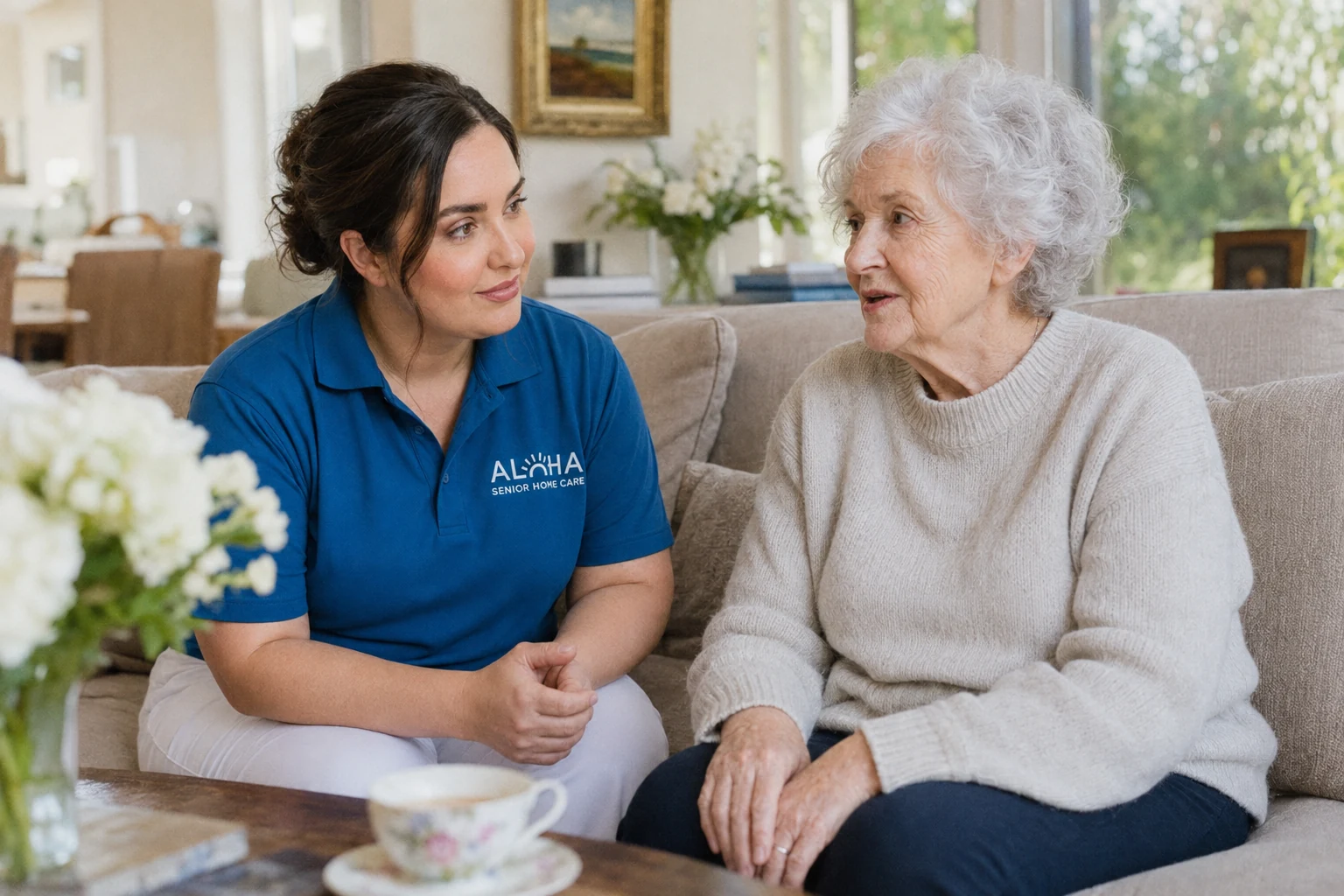
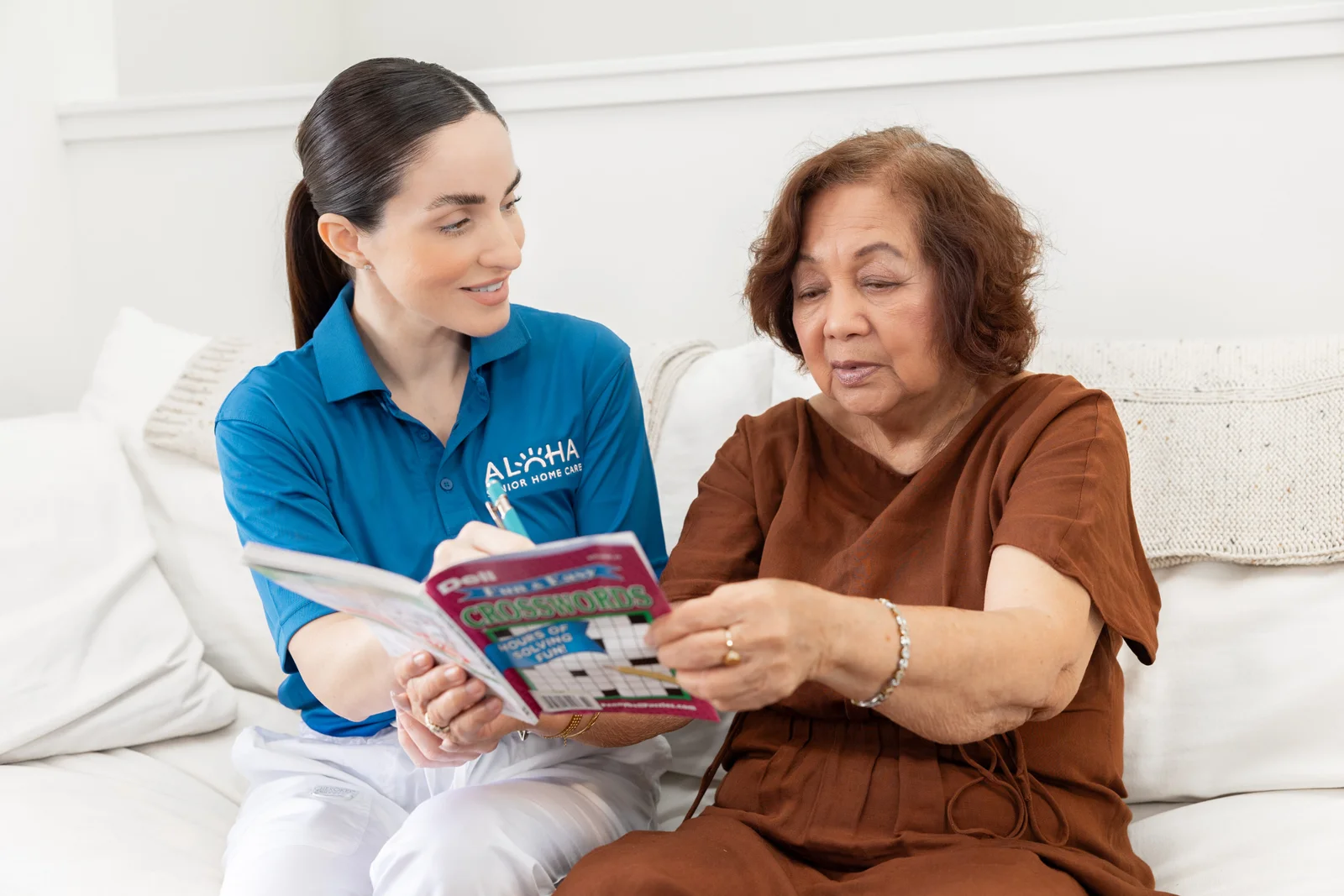
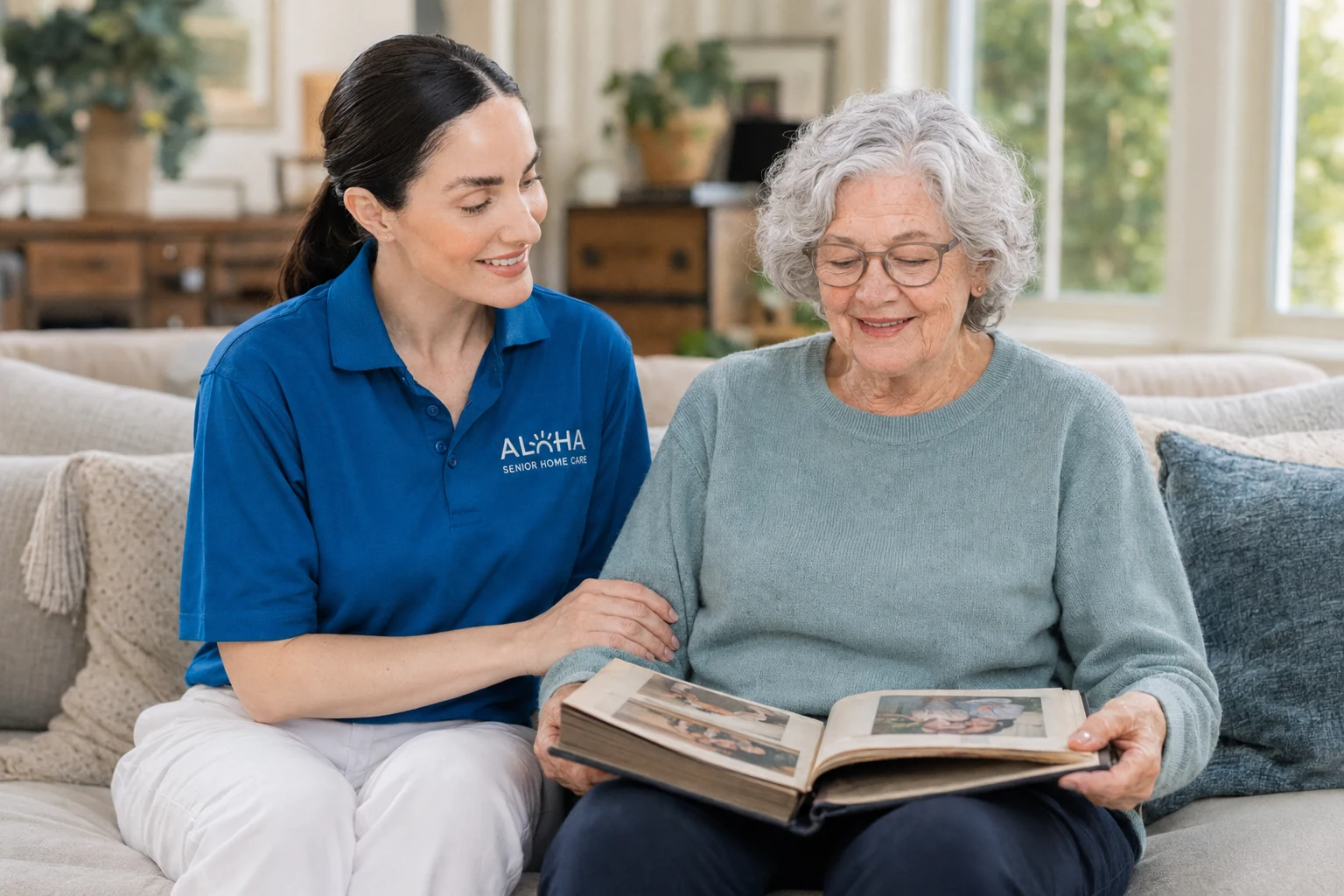
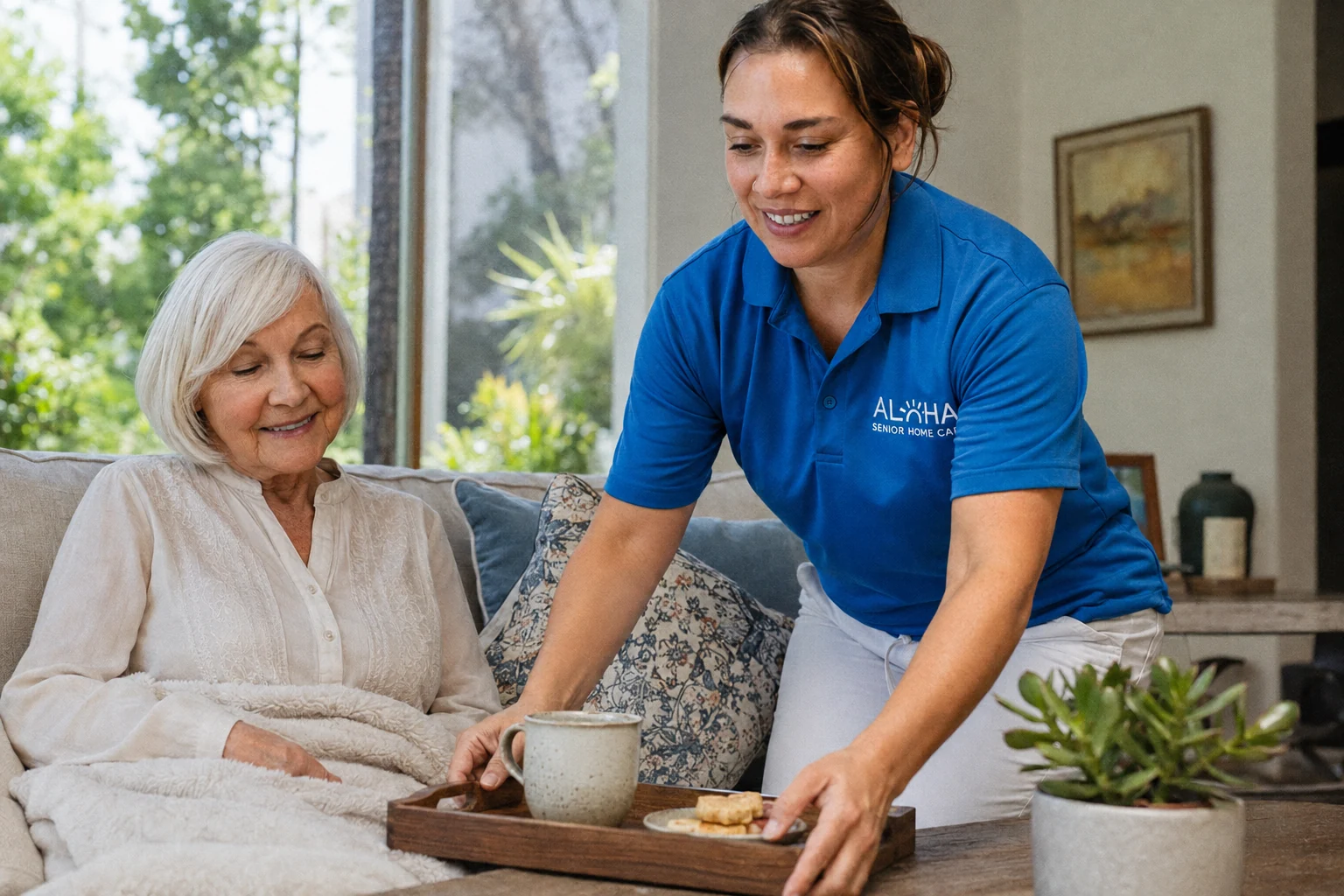
A companion's job in the home is to stand beside a routine, not replace it. Companion care means non medical help: friendly company, conversation, shared activities, meals, light housekeeping, errands, rides, and simple reminders. At Aloha Senior Home Care in San Diego, that support comes from background checked caregivers, personally matched, with a nurse led team behind them.
The line matters. A good companion notices that the hallway rug has curled at the corner and asks if she can smooth it down. She does not rearrange the living room because it seems more sensible to her.
Everyday, non medical support can look like this. Keeping walkways clear. Carrying laundry up from the garage. Sitting in the kitchen while dinner cooks. Driving to a hair appointment. A steady arm on the way down the porch steps, if that is wanted.
It can also look like doing very little on purpose, because the person wants to fold her own towels.
Aloha Senior Home Care does not provide medical or clinical services of any kind. For medical needs, a doctor or a licensed medical provider is the right call. What a companion offers is presence, steadiness, and hands for the parts of the day that have gotten heavy.
Let her introduce the companion
If neighbors ask who the new person is, let your parent answer in her own words. Some people say friend. Some say helper. The answer is hers to give, and it sets the tone for everything after.
A Nurse Led Perspective on Everyday Dignity at Home
A nurse led team looks first at how the evening actually runs, not at a list of what a person can no longer do. That is a different starting point than most families expect. It is observational, and it is respectful.
Experienced home care teams tend to watch for rhythm. Is there a shape to the day? Is there something worth getting up for on Tuesday? Does the kitchen still get used, or has it quietly gone cold?
Maya German, RN, founded Aloha Senior Home Care on that nurse led approach. In general terms, it holds that a familiar routine is worth protecting before anything gets rearranged. Change the least, and change it with the person, not around them.
Consistency is part of it too. Where scheduling allows, the same caregiver arrives at the same hour and learns that the mugs live on the second shelf. Familiarity is not a small detail in a home. It is most of what makes a place feel like yours.
A Household Independence Checklist Families Can Use
A short walkthrough of the home and the daily schedule can show exactly where independence is being supported, and where it has quietly slipped away. Aloha Senior Home Care offers this plain checklist for families to use together, out loud, with the parent in the room. It is a conversation starter, not a test, and none of it is medical.
- 1Does she still choose what she eats most days?
- 2Does she still write or approve the grocery list?
- 3Does she answer her own phone and her own door?
- 4Is the path from the car to the door clear and uncluttered?
- 5Does she control the thermostat, the blinds, and the TV remote?
- 6Does she still handle her own mail, with help only when she asks?
- 7Is there one thing each week she genuinely looks forward to?
- 8Does she still get outside, even for ten minutes?
- 9Are the things she uses daily within easy reach, where she put them?
- 10When help arrives, does she decide what gets done first?
Walk through it once a season. Two or three no answers is not an emergency. It is information, and usually it points to something small and fixable.
Write the no answers on the back of an envelope and keep it on the fridge. Next season you will see whether the same items keep showing up, which tells you more than any single afternoon does.
In the made up example above, the checklist would show a strong week. Mrs. R chooses her meals and her outings. What slipped was carrying bags and reaching the top shelf, which is a very different problem from losing her household.
When to Bring In Extra Support, and How to Keep It Feeling Like Her Home
Bringing in a companion does not have to mean giving up control of the household, and in many families it is what protects that control. The way it is introduced usually decides how it lands.
Start small. A few hours, one or two afternoons, tied to something she already wants to do. An errand run, a garden afternoon, a ride to church.
Let her be part of choosing. Which days, which hours, and whether the match feels right to her. If it does not, say so plainly and ask for a different match. That request is normal and it is hers to make.
Language helps more than families expect. Someone to ride along beats someone to watch you. An extra pair of hands beats supervision. The service is the same; the framing is not.
What This Looks Like for San Diego Families
In San Diego, aging in place with dignity often hinges on driving and on the outdoors. A parent who gives up the car keys has not given up her errands, only the driving, and a ride keeps the errand hers. The long stretch of mild weather means a morning walk or a few minutes with the hose can stay in the week nearly year round.
Hills and steps are the other local reality. Plenty of older homes here sit above a short flight of stairs or a sloped driveway, so a hand with the grocery bags on that climb is often the first help a family actually needs.
Aloha Senior Home Care provides this kind of non medical support to families across San Diego and its surrounding communities, with care available 24/7. If you are wondering whether we cover your parent's street, our service areas page lists where we work.
Common Questions From Families
These are the questions families raise most often when they start thinking about in home companion care and senior independence at home.
Helpful next steps
Autumn is as good a season as any to sit down with a parent and ask what they want their ordinary Tuesday to look like. Most people have an answer ready, often something plain, like coffee on the patio before the street wakes up. Very few get asked.
Talk it through with us
If you would like to think out loud about what a good week could look like for your parent in San Diego, book a free consultation with Aloha Senior Home Care and we will talk it through.
This guide is general information, not medical advice. Aloha Senior Home Care provides non medical home care; for medical concerns, please consult your loved one's doctor.