


There is a particular quiet that settles over a home in the evening. The day to day tasks are done, the house grows still, and for many families living with Parkinson's, this is when things feel harder. Overnight Parkinson's care exists for exactly these hours — the long evenings and restless nights when a familiar routine and a calm, steady presence matter most. This is not medical treatment. It is simple, human company and gentle help with the ordinary things that get harder when the sun goes down.
Why the Evenings Can Feel Harder
Parkinson's does not follow a clock, but many families notice a pattern. As the day winds down, tiredness builds, and the small tasks that felt manageable at noon can feel like a lot by nine at night. Getting ready for bed, moving from room to room, or simply feeling settled can take more time and more patience.
Evenings can also feel lonelier. A spouse may be worn out after a full day of helping. An adult child may live across town, or across the country, quietly wondering how the night will go. That worry does not switch off at bedtime.
None of this means you are doing anything wrong. It simply means the evening asks more of everyone in the house, and reaching for a little extra support during these hours is a reasonable, caring choice.
Building a Gentle Wind Down Routine
Routines are reassuring. When the end of the day looks and feels the same each night, there is less to decide and less to worry about. A predictable rhythm can make the whole evening feel calmer, even on the harder days.
- Dim the lights an hour or so before bed so the house signals that the day is ending.
- Keep the path to the bathroom clear and softly lit, so the way is easy to follow at night.
- Lay out comfortable night clothes and anything needed for the morning while there is still energy to do it.
- Wind down with something familiar, like a favorite record, a warm drink, or a chapter read aloud.
- Keep water, a lamp, and a phone within easy reach of the bed.
A simple evening card
Write the evening routine on a card and keep it on the fridge. On tired nights, no one has to remember the order of things, you just follow the list. It also helps a visiting caregiver step in smoothly without asking a dozen questions.
How Overnight Parkinson's Care Eases the Night
For some families, the hardest hours are the ones after everyone else has gone to sleep. This is where overnight companionship can make a real difference. A caregiver who is awake and nearby means the person with Parkinson's is not facing the night alone, and the rest of the household has a better chance to settle too.
Aloha Senior Home Care is a nurse led, licensed California Home Care Organization, and overnight support is non-medical. Our caregivers work alongside your family and, when there is one, your medical team, never in place of them. The help is simple and human, not clinical, with nurse led oversight standing behind it.
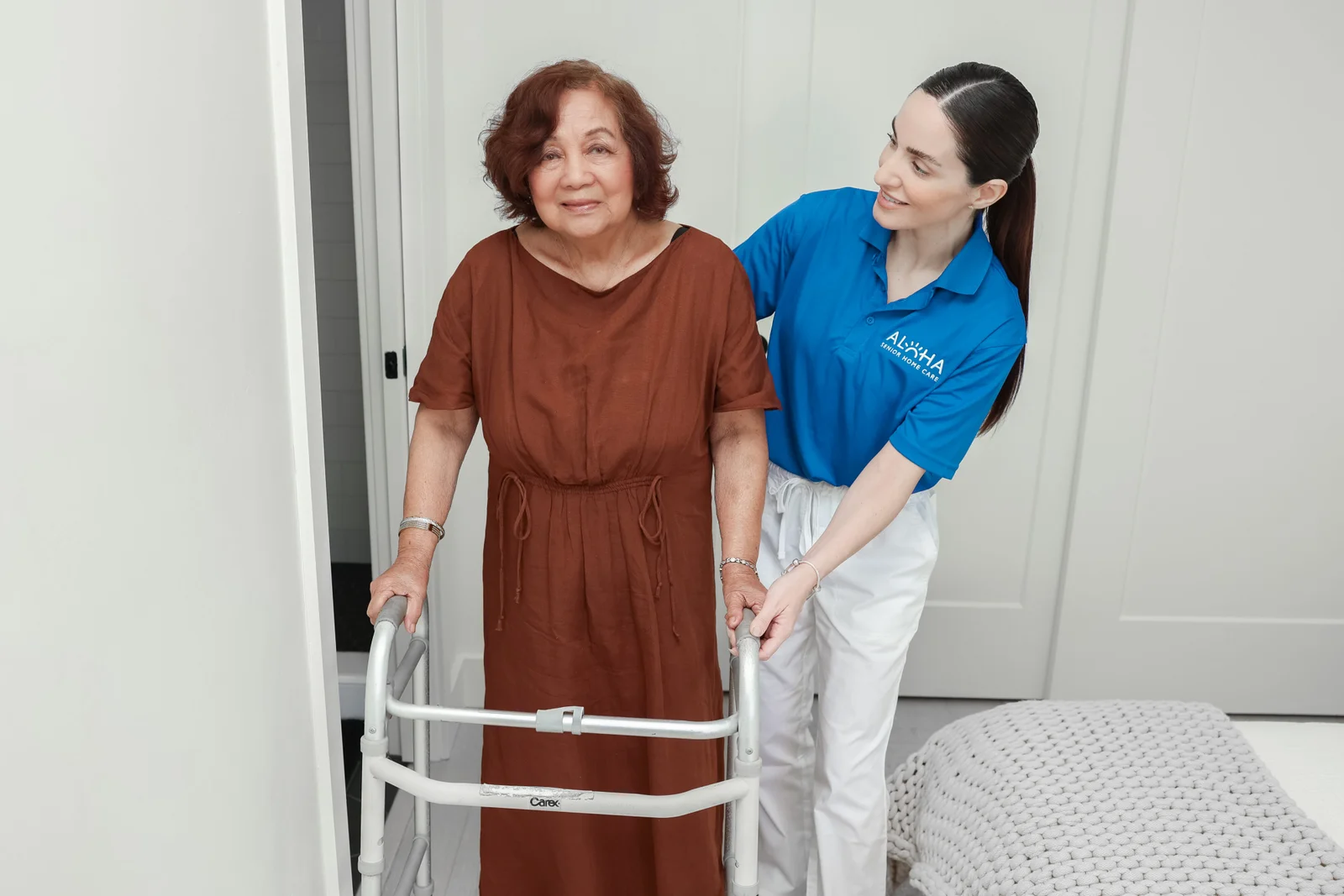
In practice, a caregiver is there for the ordinary, important things: a steadying arm on the way to the bathroom, a hand smoothing the blankets, a calm voice at 3 a.m. when the house feels too quiet. They can help with a change of clothes, a fresh glass of water, or simply sit close by so no one feels alone.
For the primary caregiver at home, that steady presence can mean a better chance at real rest. Rest is not a luxury for family caregivers. It is often what helps the next day feel manageable.
Good overnight support is not about doing more. It is about making sure no one has to face the small hours by themselves.
Small Comforts That Carry Through the Night
Comfort is often found in small, familiar things. What soothes one person can be different from what soothes another, and part of good care is learning those preferences and honoring them.
- A warm blanket or a favorite quilt within easy reach.
- Soft, low lighting rather than full dark, so the room feels calm and familiar.
- A familiar scent, a photo on the nightstand, or gentle background sound if it helps the room feel settled.
- Loose, easy clothing that is simple to change.
- A short, unhurried chat before bed, so the last voice of the day is a kind one.
Knowing When to Ask for Overnight Help
There is no prize for doing everything yourself. Many families wait until they are worn thin before they ask, and there is a gentler moment to start, before exhaustion sets in.
It may be time to consider overnight help if the nights have become unpredictable, if the family caregiver is not sleeping, or if worry about the night is shaping the whole day. Bringing someone in does not mean stepping back from your role. It means looking after yourself so you can keep showing up with patience and love.
A note on scope: this article is general information about non-medical support, not medical advice. For anything to do with symptoms, sleep, movement, or medications, please talk with your loved one's doctor or care team. We are glad to help with the comforts of day to day life while the medical questions stay with the right professionals.
Explore related care
Let's talk about the harder evenings
If the nights have become the hardest part of caring for someone with Parkinson's, we are here to listen. Call Aloha Senior Home Care at (858) 399-1400 or write to hello@alohaseniorhomecare.com for a free, no pressure conversation about overnight support across San Diego County. Nurse led, licensed, and available 24/7, with no obligation, just a caring place to start.