


If you help an older parent keep track of their pills from across town, you already know the quiet hum of worry that comes with it. Medication reminders at home are one of the most common reasons families call us, and also one of the most misunderstood. So let us be clear and honest from the very start about what a caregiver can do, what we never do, and exactly where the line sits.
What medication reminders at home include, in plain terms
At heart, this kind of help is about structure and gentle nudges. A caregiver is a steady, friendly presence who helps the daily routine stay on track, so it is easier to remember a scheduled dose. In practice that looks like a handful of small, practical things.
- A gentle spoken reminder when it is time for a scheduled dose, at the times your family has set.
- Keeping the area around the pillbox tidy and the written schedule current and easy to read.
- Bringing a glass of water and making the moment calm and unhurried.
- Noting what you have asked us to note, then passing it along to the family or the person themselves.
- Helping reorder from the pharmacy or arranging a ride to pick up a prescription, when the family asks.
None of this replaces the pharmacy label or the doctor's instructions. It sits alongside them, adding a human layer of consistency to a plan that other people have already made.
Where our help ends, clearly
Here is the honest part, and it matters. Aloha Senior Home Care provides non-medical home care. Our caregivers give reminders and keep things organized. They do not make medical decisions, and they never step into clinical tasks.
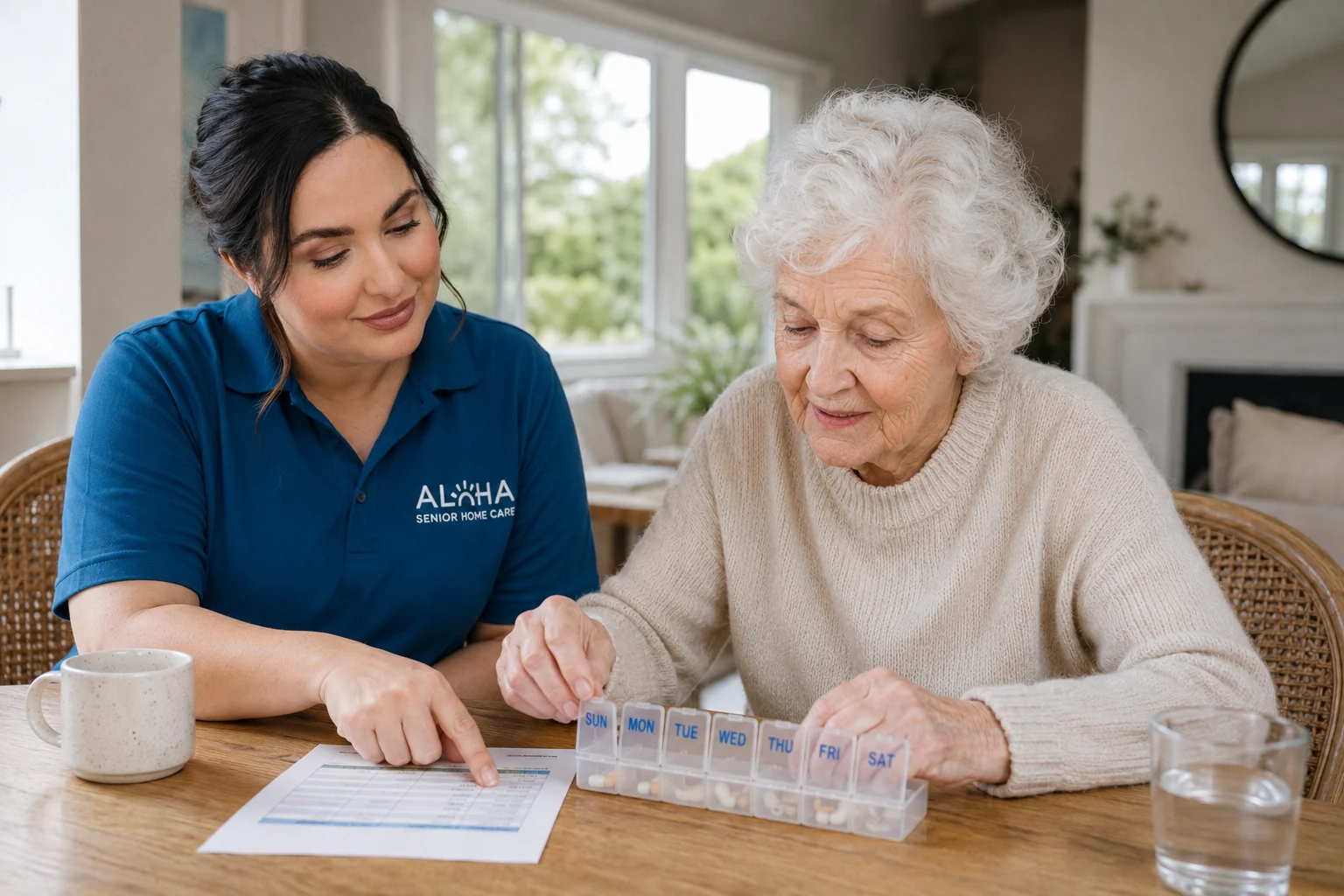
This is general information, not medical advice. Every decision about medications belongs to the person, their family, the pharmacist, and the doctor. In practice, that means a caregiver will not:
- Fill, sort, or set up the pillbox or a pill organizer. The person, family, or pharmacy does that.
- Decide what to take, how much, or when to change a dose.
- Fill a syringe, give an injection, or handle anything that goes under the skin.
- Physically place medication in someone's hand or mouth.
- Split, adjust, or stop a medication, or suggest that anyone should.
- Advise on what a symptom means or whether a medication is working.
If a question comes up that touches any of these, the answer is always the same and we say it plainly: that is a conversation for the pharmacist, the doctor, or the family. We are glad to help you reach them.
A simple way to picture it
Think of a caregiver as the friendly reminder on the calendar, not the person who writes the calendar. The doctor and pharmacist decide the plan. The person and family own it. We help the day to day stay on schedule.
Why we hold this line so firmly
Some families ask us to bend it, usually out of love and exhaustion, and we truly understand the impulse. But the line is not red tape. It is safety, and it is the rule for a non-medical home care agency in California.
Keeping reminders separate from medical decisions protects the very person we all care about. It keeps the doctor's plan intact, avoids well meaning mistakes, and keeps everyone clear on who is responsible for what. Being nurse led means Maya German, RN, built our training around knowing that boundary cold, so caregivers are confident about when to help and when to pause and pick up the phone.
What reassures a worried family is not us offering to do more than we should. It is the honesty to tell you exactly where our help stops, and to help you find the right person for the rest.
Working as one team around the person
Reminders work best when everyone shares the same picture. Before care begins, we sit down with the family to write down the schedule exactly as the doctor and pharmacy set it, note any preferences, and agree on who to call with what. Roles stay clear:
- The doctor sets and changes the plan.
- The pharmacist fills it and answers questions about the medications.
- The person, and the family they trust, make the choices.
- The caregiver keeps the daily routine steady and flags anything worth a call.
Because our caregivers are background checked and available 24/7 across San Diego County, that steady routine holds up on weekends, holidays, and the odd hard night, which is often when a forgotten dose worries families most.
Related services and resources
Talk it through with us, no pressure
If you are weighing whether reminders would help at home, we are happy to talk it through and answer your questions honestly. Call (858) 399-1400 or email hello@alohaseniorhomecare.com for a free, relaxed conversation. There is nothing to sign and no rush.